Kenya Steps Up to Tackle Climate Loss and Damage

Learn about Kenya’s urgent climate crisis response, utilizing the Fund to Respond to Loss and Damage to mitigate severe ecological and socio-economic impacts.
Kenya is confronting increasing climate impacts that are exceeding the limits of adaptation, resulting in severe losses and damage to communities, infrastructure, and livelihoods. Rising water levels in the Rift Valley Lakes and Lake Victoria pose urgent threats, making timely action critical
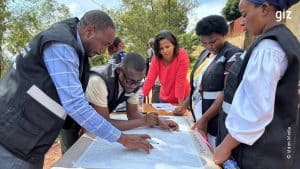
In response to this impending crisis, the climate Change Directorate (CCD) under the Ministry of Environment, Climate Change and Forestry, in partnership with the United Nations Population Fund (UNFPA) Kenya, held a workshop to fast-track discussion on solutions to address this existential threat by enhancing access to the newly established Fund to Respond to Loss and Damage (FRLD) through its Barbados Implementation Modalities.
The Barbados Implementation Modalities (BIM) guides the operationalization of the global response to loss and damage under Article 8 of the Paris Agreement. The BIM also reaffirms that support for Parties (Nation States) that have suffered Loss and Damage will be needs-based The BIM also stipulates priorities for climate-vulnerable countries.
Kenya’s bold step to tap into the FRLD is critical in addressing the escalating climate crisis that continues to inflict severe ecological, economic, and social impacts. The current dire consequences of rising lakes being witnessed in the country is unprecedented. This move is timely, after the proposal submission window for application for the funds was announced during the just concluded COP 30 signaling the start for proposal development.
Over the last 3 decades, Kenya has witnessed a dramatic shift in its water landscape. Rising water levels have transformed the physiognomy of lakes and rivers, with for example Lake Baringo expandingby 107%% , thousands of communities and threatening biodiversity.
Speaking during one of the sessions, James Thonjo, a senior climate change officer with Kenya’s Ministry of Environment, Climate Change and Forestry, said, “The losses and damages from climate change can no longer be ignored.”
“We have witnessed rising water levels in the recent past that have ravaged communities of their livelihoods,” Thonjo continued, highlighting the immediate and visible impacts.
Notably, in 2024 flash floods, exacerbated by an unprecedented El Niño, ravaged the country, claiming over 174 lives, displacing over 500,000 households. The unabated floods also destroyed 17,000 acres of farmland.
Markedly, these climate-related disasters were not isolated incidents. Kenya faces an annual economic loss of approximately 2.6% of its GDP due to climate variability and extreme weather events. The country’s arid and semi-arid lands (ASALs), which cover approximately 90% of its territory, are particularly vulnerable, with droughts affecting 8 million Kenyans and forcing 286,000 to migrate.

Lerenten Lelekoitien, the Deputy Director Climate Change Adaptation, at the Climate Change Directorate, Ministry of Environment, Climate Change and Forestry said, “The journey that led to establishment of the FRLD has been tough and challenging and developing countries should take advantage of the funds to support the local communities cope with the ever-worsening climate induced loss and damage impacts.”
Lerenten however stated that developing a comprehensive and compelling proposal requires high quality robust and evidence-based data hence the need for the development of practical and fit for purpose data collection tools during the workshop.
With the same tone, Professor Simon Onywere from Kenyatta University said, “Climate change is one of the major drivers of the rising lakes and hence application for FRLD funds are quite in order.” The Professor who has done extensive research on rising water levels along the Rift Valley Lakes reiterated the worsening impacts faced by the communities.

Professor Onywere further, underscored the need for government to increase funds allocation to support these communities including through accessing the available global funding like the FRLD.
As parties commence the process of accessing FRLD, it’s important to note that the funds cannot adequately address all the devastating impacts and hence the need for all relevant stakeholders to come together to support the affected communities. The developed countries to continue to capitalize this fund to make it adequately address ever expanding need for funds.
About The Author


SUBSCRIBE TO OUR NEWSLETTER