More Than Trees: 5 Unexpected Ways a Rwanda-Based Organization is Reinventing Environmentalism

In a world saturated with environmental crises, it’s easy to miss the stories of quiet, relentless success. For 30 years, one such story has been unfolding in Africa, where the Albertine Rift Conservation Society (ARCOS) has been patiently building a legacy of resilience and community-led restoration.
This isn’t just another story about planting trees. While ARCOS has planted millions, their true impact lies in a holistic and often counter-intuitive model for change. They have demonstrated that lasting environmental action is deeply connected to education, economic independence, and local leadership. This article explores five of the most powerful and surprising lessons from their transformative work.
The Author is Mr. DUSABEMUNGU Ange de la Victoire

1. Real Change Starts in the Classroom, Not Just the Forest
One of ARCOS’s core strategies is the understanding that long-term conservation is built by future generations. Instead of focusing solely on the landscape, they invest heavily in the classroom through their Eco-Schools Programme, which operates in both Rwanda and Uganda and has already reached over 140,000 students. This isn’t passive learning; the program uses “action-based learning” with a structured, seven-step process that requires students to form an “Eco-Committee” and develop a detailed “action plan.”
Within designated “Green Learning Zones,” schools become living laboratories where students tackle real-world challenges like improving school feeding programs and implementing climate-smart agriculture. What this demonstrates is a profound long-term strategy that creates future environmental leaders from a young age. It transforms education from a theoretical exercise into direct, measurable action that benefits the community today.
“This Green Flag Award is a testament to the power of environmental education in shaping future generations of sustainability champions. Seeing these 11 schools achieve this milestone proves that when young people are given the right tools and knowledge, they become powerful agents of change.” — Dr. Sam Kanyamibwa, Founder and CEO of ARCOS

2. Communities Aren’t Waiting for Help—They’re Leading the Way
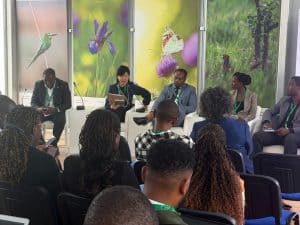
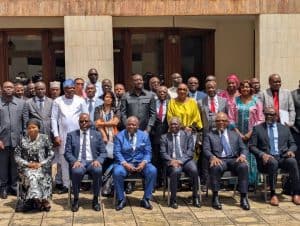
ARCOS hosted the “Africa Community-to-Community Exchange 2025,” an event that brought together 150 innovators and farmers from 19 different African countries. Organized with high-profile partners like AUDA-NEPAD and the Bezos Earth Fund, the gathering’s purpose was not for an external organization to teach communities what to do. Instead, it was a platform to showcase the creative solutions these communities are already driving in agroecology and conservation. The event culminated in an awards ceremony where winners received financial backing to expand their projects, turning recognition into tangible investment.
The strategic genius here is that this approach flips the traditional aid narrative on its head. It recognizes that people on the front lines of climate change are not passive recipients of help but are active leaders with invaluable expertise. By creating a space for peer learning and celebrating local knowledge, ARCOS helps amplify what its founder calls the “blueprint for a sustainable Africa”—one designed and built by its own people.
“This exchange proves that communities are not waiting to be helped—they are leading with courage, knowledge, and innovation. What we see here in Kigali is the blueprint for a sustainable Africa shaped by its own people.” — Dr. Sam Kanyamibwa, Founder and CEO of ARCOS

3. Turning Small Grants into Sustainable Fortunes
A common challenge for community conservation is dependency on short-term grants. ARCOS has pioneered an innovative financial model focused on creating long-term sustainability. Dr. Kanyamibwa shared a powerful example: a modest grant from the Rwanda Green Fund a decade ago was strategically leveraged over time to attract a massive 52 million euro initiative now being implemented in landscapes like the Mukura landscape.
This long-term vision extends directly to the communities themselves. ARCOS helped establish a “nature-based community fund” called Umusave with an initial investment of $850,000. This fund empowers communities to finance their own micro-projects, catalyze savings, and take ownership of their development. This financial scaffolding is what allows the educational and community-led initiatives to become self-perpetuating rather than grant-dependent, creating a paradigm shift from relying on external funding to building lasting independence.

4. The Surprising Numbers Behind 30 Years of Work
Over three decades, the work of ARCOS has resulted in staggering numbers that go far beyond simple environmental metrics. These figures paint a picture of deep economic and social transformation woven into the fabric of landscape restoration.
- Over 13.9 million trees grown
- 60,000 hectares of land under restoration
- 90,000 households empowered
- More than 165,000 jobs created through nature-based solutions
- Over 140,000 students supported through sustainability programs
- Nearly 3.4 million biodiversity records mobilized
These statistics demonstrate a scale of impact that connects ecological health directly to human well-being. The jobs created, households empowered, and scientific data mobilized show that for ARCOS, restoring nature and building resilient communities are one and the same mission.

5. Conservation Isn’t Just for Rural Landscapes—It’s for Thriving Cities
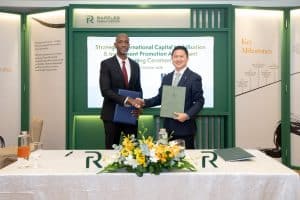
While ARCOS has a long and successful history in rural areas, one of its most forward-thinking moves is a new partnership with Green City Kigali (GCK). This collaboration is focused on restoring urban ecosystems, starting with the former Deutsche Welle forest site in Kinyinya, a sector of Rwanda’s capital. The project involves concrete actions like eradicating invasive species, reintroducing native flora, and creating green jobs within an urban setting.
This is a critical and counter-intuitive strategy. As Africa continues to urbanize, the health of its cities becomes paramount. By bringing their expertise into the urban fabric, ARCOS is demonstrating a commitment to building climate-resilient cities where nature and modern development are not in conflict, but are integrated for a sustainable future.
“This partnership reflects our shared commitment to building communities where people and nature thrive together.” — Basil Kalimba, CEO of Green City Kigali Company

A New Blueprint for a Thriving Planet
The success of the Albertine Rift Conservation Society lies in its proven, replicable blueprint for change—a holistic model that seamlessly integrates education, community leadership, sustainable finance, and action in both urban and rural landscapes. Their 30-year journey proves that Africa is not just a recipient of conservation aid but a leader in developing innovative and scalable solutions to global environmental challenges. As the world seeks solutions to climate change and biodiversity loss, what can we learn from a model that places its trust not in top-down plans, but in the resilience and innovation of local communities?
About The Author


SUBSCRIBE TO OUR NEWSLETTER