UGHE graduates urged to put Resilient health systems at the center of Africa’s future

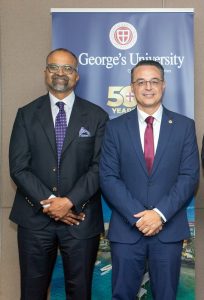
As the University of Global Health Equity marks a decade of investing in equity-driven health education, Rwanda’s Prime Minister Dr. Justin Nsengiyumva has challenged the University’s graduates to place resilient health systems at the center of their professional journey.
Addressing students, faculty, and partners at UGHE’s graduation ceremony and 10th anniversary celebrations held at the university’s Butaro Campus in Burera District on January 25, 2026, Dr. Nsengiyumva said the Class of 2025 is stepping into leadership at a moment when health systems across Rwanda and the continent are being tested by complex and interconnected pressures.
“This milestone reflects years of disciplined training and a clear commitment to public service,” the Prime Minister said, describing graduation as a shift from academic preparation to public responsibility.
Health systems under pressure

Dr. Nsengiyumva warned that emerging diseases, workforce shortages, and tightening health financing are no longer distant risks but lived realities confronting health systems globally.
“These challenges are no longer abstract. They demand practical, well-coordinated solutions,” he said.
He emphasized that success in today’s health sector depends on more than clinical excellence, urging graduates to apply skills in policy, management, data use, and implementation science to translate ideas into measurable impact.
“You are expected to serve not only as practitioners, but as leaders who strengthen institutions and improve service delivery,” he added.
UGHE and Rwanda’s human capital strategy
The Prime Minister praised UGHE for establishing itself over the past decade as a key contributor to Rwanda’s broader human capital development agenda, particularly in training professionals capable of addressing real-world health challenges through systems thinking and leadership.

He commended the university’s faculty, researchers, and leadership for shaping graduates equipped to support sound decision-making across the health sector.
“Africa’s progress depends on strong and resilient systems supported by a skilled and accountable workforce,” Nsengiyumva said, noting that Rwanda, together with its partners, continues to invest in expanding medical education at all levels.
An institution built to serve Africa
Describing UGHE as an African institution with continental purpose, the Prime Minister highlighted the diversity of the graduating class, drawn from seven African countries and one European country.
“UGHE is hosted in Rwanda, but it is designed to serve Africa,” he said, noting that the graduates reflect the shared talent and purpose needed to strengthen health systems across borders.
He reassured graduates that Rwanda would remain their home, regardless of where their careers take them, and encouraged them to lead with professionalism, integrity, and a strong sense of service.
“When challenges arise, do not see them as barriers, but as opportunities to innovate and create meaningful solutions,” Dr. Nsengiyumva said.
The ceremony marked three major milestones in UGHE’s history: its 10-year anniversary, the graduation of its inaugural Bachelor of Medicine, Bachelor of Surgery–Master of Science in Global Health Delivery (MBBS–MGHD) cohort, and the graduation of the 10th cohort of the Master of Science in Global Health Delivery (MGHD).
A total of 78 students from 10 countries graduated, including 30 from the MBBS–MGHD program and 48 from the MGHD program.
The MBBS–MGHD graduates completed a dual-degree program that integrates clinical training with leadership in health systems strengthening and equity-centered care.
They specialized in One Health, Health Management, Gender, Sexual and Reproductive Health, or Global Surgery.

UGHE Chancellor Dr. Jim Yong Kim said the graduation marked both a celebration of student achievement and the maturation of an institution built on the belief that excellence in medicine must go hand in hand with equity.
He noted that the inaugural medical students began their journey at a time when UGHE itself was still taking shape, without long-standing traditions or alumni to follow.
Kim reminded graduates that completing their studies does not mark the end of their relationship with UGHE, but the beginning of a lifelong connection to a community grounded in service, accompaniment, and social justice.
“Practicing medicine, especially in Africa, will bring deep meaning and also real frustration,” he said, urging graduates to remain connected to the institution during moments of professional strain. He emphasized that the values instilled at UGHE, particularly the commitment to underserved populations, should guide their work as they take on demanding roles in health systems across the continent and beyond.


About The Author


SUBSCRIBE TO OUR NEWSLETTER