Conflict and Fragility Account for Nearly Two-Thirds of Global Maternal Deaths

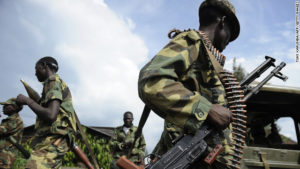
Nearly two-thirds of maternal deaths worldwide are occurring in countries affected by conflict or fragility, according to a new analysis linking the stability of health systems to women’s survival during pregnancy and childbirth.
The technical brief, released by the World Health Organization (WHO) and HRP, the UNDP/UNFPA/UNICEF/WHO/World Bank Special Programme of Research, Development and Research Training in Human Reproduction, reveals that women living in conflict-affected countries face dramatically higher risks of dying from preventable maternal causes.
In 2023 alone, an estimated 160,000 women died from maternal causes in fragile and conflict-affected settings. That accounts for six in every 10 maternal deaths globally, even though these countries represent only about one in 10 of the world’s live births.
Stark disparities in maternal mortality
The findings show a striking gap in maternal mortality ratios (MMR) depending on a country’s stability. Conflict-affected countries recorded an estimated 504 maternal deaths per 100,000 live births. Countries considered institutionally and socially fragile had an MMR of 368. In contrast, countries outside both categories reported a much lower ratio of 99 deaths per 100,000 live births.
For young girls, the risk is even more alarming. A 15-year-old girl living in a conflict-affected country in 2023 faced a one in 51 lifetime risk of dying from a maternal cause. In institutionally fragile settings, the risk was one in 79. In relatively stable countries, it dropped sharply to one in 593.
The brief builds on last year’s global maternal mortality estimates for 2000–2023, which showed that progress in reducing maternal deaths has stalled, particularly in low-income and crisis-affected countries.\
How instability disrupts care
Health experts say the data confirms what frontline workers witness daily: crises weaken health systems and disrupt access to lifesaving maternal services.
Conflict can damage hospitals, displace health workers and restrict access to facilities. Fragility also intersects with gender, ethnicity, age and migration status, further increasing the vulnerability of pregnant women and girls.
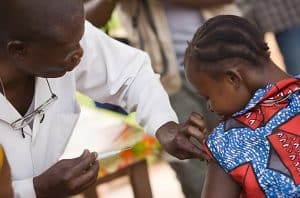
When essential services such as antenatal care, skilled birth attendance and emergency obstetric care are interrupted, preventable complications can quickly become fatal.
Lessons from countries under pressure
Despite the grim statistics, the report highlights examples of resilience from countries working to maintain maternal health services amid instability.
In Colombia, training traditional birth attendants has strengthened trusted community networks, helping women access timely care in remote or insecure areas.
Ethiopia has focused on restoring continuity of care through mobile health teams, renovated facilities and the deployment of additional midwives following periods of disruption.
In Haiti, removing financial and infrastructure barriers, including offering free or low-cost caesarean sections and ensuring reliable electricity in health facilities, has expanded access to lifesaving care for displaced women.
Meanwhile, Myanmar, Papua New Guinea and Ukraine demonstrate how reorganizing services, improving safe childbirth practices and strengthening subnational planning can help protect maternal health even during complex emergencies.
Without targeted action, experts warn, preventable maternal deaths will remain concentrated in the world’s most unstable regions. But with sustained investment and innovative approaches, even fragile health systems can be strengthened to protect mothers and save lives.
About The Author


SUBSCRIBE TO OUR NEWSLETTER