Rwanda, UK Boost Green Investment Through Cooling Systems

Rwanda and the United Kingdom have stepped up efforts to unlock green investment and climate innovation, with a strong focus on sustainable cooling and cold-chain systems as critical drivers of economic growth, food security, and public health.
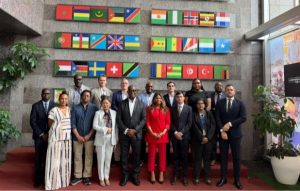
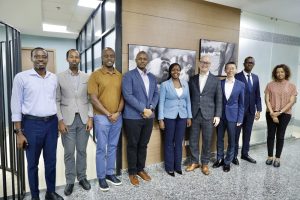
The push was highlighted on March 24, at the UK–Rwanda Climate Partnership Conference held at the Africa Centre of Excellence for Sustainable Cooling and Cold Chain (ACES) in Rubirizi, where government officials, investors and development partners gathered under the theme “Catalysing Green Investment in Africa: The UK–Rwanda Climate Partnership.”

In her opening remarks, Dr. Bernadette Arakwiye, Rwanda’s Minister of Environment, said the conference is not just a meeting, but “a catalytic platform for action” aimed at turning climate commitments into practical and investable solutions.
She emphasized that while often overlooked, cooling systems are essential to livelihoods and economic efficiency.
“Cooling is often invisible, but it is foundational. It is the difference between food that nourishes and food that is lost,” she said.
Rwanda currently loses more than 30 percent of its food after harvest, largely due to inadequate cold-chain infrastructure. Across Africa, post-harvest losses reach nearly 40 percent, underscoring the scale of the challenge.
Arakwiye noted that the issue is not only about technology, but also weak systems, citing non-functional cooling equipment caused by poor maintenance, lack of skilled technicians and gaps in system design.
“This is not just a technology gap. It is a systems gap,” she said.
Arakwiye called for a national network of cold-chain systems, increased training of technicians, and stronger standards to ensure efficiency and sustainability.
“The question before us is not whether the opportunity exists, but whether we will act with the speed, coordination, and boldness required to seize it,” she said.
From Climate Ambition to Investment
The conference placed strong emphasis on mobilising finance and building systems that attract private investment into climate solutions.

Billy Stewart, Development Director of the British High Commission to Kigali, said the partnership between Rwanda and the UK is focused on turning climate commitments into real investments that benefit communities and economies.
“Today is about turning climate commitment into investment,” he said, adding that attracting private capital alongside public funding is key to achieving climate and development goals.
He added, “East Africa is full of ideas, energy, and innovation, the challenge is unlocking the finance and partnerships to match.”
Stewart noted that while Rwanda has already mobilised significant resources for climate action, more investment is needed, particularly in building pipelines of bankable green projects.
Cooling as Critical Infrastructure

Prof. Toby Peters, Founding Director of ACES, highlighted that sustainable cooling as one of the most underdeveloped yet vital sectors.
He said, “Sustainable cooling and cold chains are not optional, they are critical infrastructure, as important as a water pipe or a road.”
He added, “The UK-Rwanda Climate Partnership reflects a shared commitment to advancing practical investment-led climate solutions within a coherent delivery framework, and ACES for me is an example of the route forward.”
He announced a new collaboration with Rwanda’s Ministry of Agriculture to restore ten non-functional cold rooms and return them to operation, aiming to improve market access for farmers.
Peters also challenged traditional development models, arguing that Africa should not rely on imported solutions.
“Africa is not a place to deploy what you build for someone else. Africa needs to build technology and industry of its own,” he said.
Rwanda Positioned as Green Investment Hub

Hongpeng Lei, Chief of the Mitigation Branch, Climate Change Division, at the United Nations Environment Programme (UNEP), said Rwanda has demonstrated that environmental sustainability and economic development can go hand in hand, making it an attractive destination for green investment.
He highlighted the country’s strong regulatory frameworks, data systems and institutions such as the Rwanda Green Fund as critical in reducing investor risk.
“Climate ambition is not just about setting goals, it’s about creating a stable, predictable policy environment that attracts long-term capital,” he said.
Lei added that sustainable cooling is emerging as a major investment opportunity across Africa, with the potential to reduce food loss, strengthen health systems and create green jobs.
“We need multiple solutions, from efficient technologies to nature-based and passive design, to address both mitigation and adaptation,” he said.
The two-day conference is expected to generate partnerships and concrete commitments aimed at accelerating Rwanda’s transition to a low-carbon, climate-resilient economy while positioning the country as a regional hub for sustainable cooling and green investment.


About The Author


SUBSCRIBE TO OUR NEWSLETTER