Faith Leaders Urged to Use Their Influence to Build Healthy, Conflict-Free Families in Rwanda

Religious leaders in Rwanda have been called upon to leverage the trust they enjoy among their followers to promote positive mindsets and help build healthy, conflict-free families, seen as the foundation of national development.
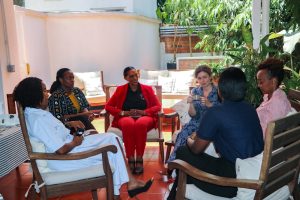
The call was made on April 28, 2026, during a National Consultation Meeting to Strengthen Interfaith Action to Promote Health and Family Well-being in Rwanda, held in Kigali. The meeting was organized by the Rwanda Interfaith Council on Health (RICH) and brought together faith leaders and key stakeholders to address pressing health and social challenges affecting women, children, and youth.

Speaking at the event, Minister of Gender and Family Promotion, Consolee Uwimana, highlighted Rwanda’s significant progress in improving public health over the past three decades, particularly in maternal and child health.
“In the past 32 years, Rwanda has made remarkable progress in improving the well-being of its population, especially mothers, children, and adolescents. This has been possible through strong collaboration between government and partners, including religious institutions, whose followers are the very citizens we serve,” she said.
She cited findings from the 2025 Demographic and Health Survey, showing that maternal mortality declined from 203 deaths per 100,000 live births in 2020 to 149, while under-five mortality dropped from 45 to 36 deaths per 1,000 live births. Stunting among children also decreased from 33 percent to 27 percent.
Despite these gains, Uwimana stressed that challenges persist, including low uptake of maternal health services, malnutrition, family conflicts, alcohol abuse, teenage pregnancies, gender-based violence, drug use, and mental health issues among youth.
“Development begins at the family level. A stable family with good health and strong values becomes a pillar of happiness and national progress,” she said.

She urged religious leaders to use their platforms, churches, mosques, and schools, to influence attitudes and behaviors.
“I encourage you to continue guiding your followers. The trust they place in you is powerful. Use your teachings to promote mindset change, because transformation begins in the way people think,” she said.
Uwimana further called on faith leaders to promote dialogue within families, support vulnerable households, and guide young people with accurate information and values that protect their well-being.

Presenting data on maternal, child, and adolescent health, Dr. Aline Uwimana, Division Manager of Maternal, Child and Community Health (MCCH) at Rwanda Biomedical Center (RBC), noted steady progress in key indicators over the past five years.
Modern contraceptive use increased from 58 percent to 65 percent, while the unmet need for family planning dropped from 14 percent to 9 percent. Nearly all births (98 percent) are now attended by skilled health personnel, and 94 percent of children aged 12 to 23 months are fully immunized.
However, Dr. Uwimana emphasized the need for stronger community engagement.
“Religious leaders must increase their participation, take the lead, and inspire communities to strive for healthy families,” she said.

His Eminence Antoine Cardinal Kambanda, Archbishop of Kigali and Chairperson of RICH, underscored the importance of unity among faith groups in addressing social challenges.
“These values we share bring us together and strengthen us,” he said. “We must work together on what unites us, respect our differences, and in all things, live in love.”
He recalled the role of interfaith collaboration during the HIV/AIDS crisis, noting that collective action helped mobilize communities at a critical time.


About The Author


SUBSCRIBE TO OUR NEWSLETTER