A Tale of Two Climate Futures: Comparing Rwanda and Singapore’s 2035 Climate Commitments
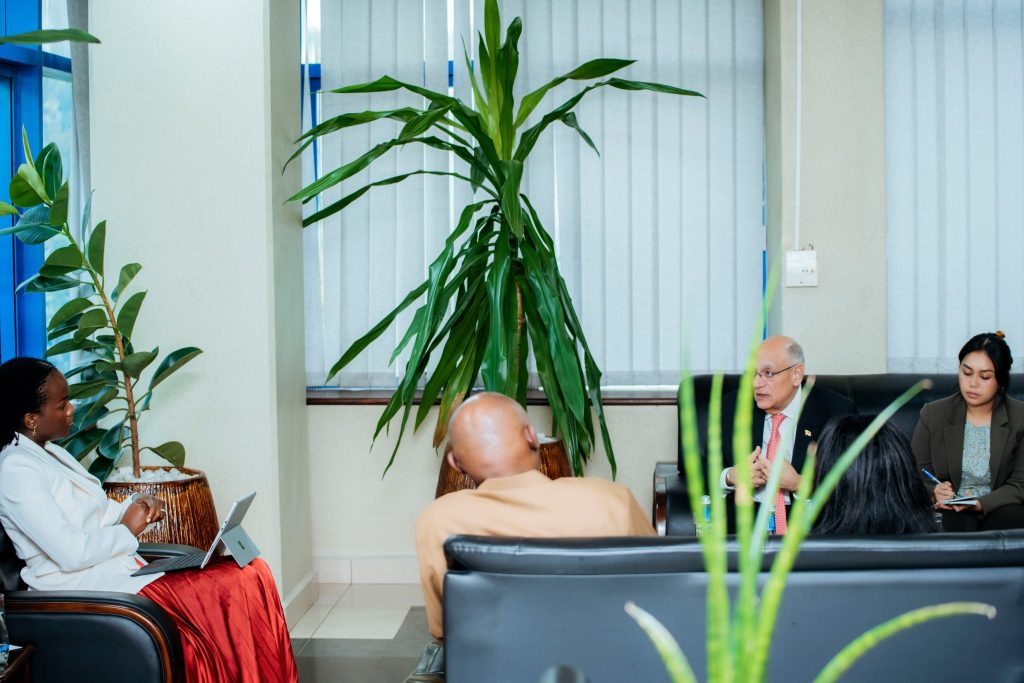
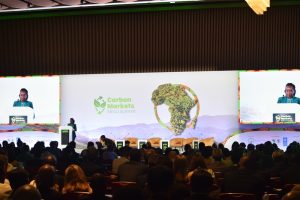
Environment Minister Dr. Arakwiye Bernadette met with H.E. Jaspal Singh, Singapore’s Non-Resident High Commissioner to the Republic of Rwanda.
As the world races toward critical climate milestones, the latest Nationally Determined Contributions (NDCs) offer a window into how vastly different nations plan to tackle the climate crisis. A comparative analysis of Rwanda’s newly enhanced NDC 3.0 and Singapore’s Second NDC reveals how geography, economic status, and national vulnerabilities shape climate policy. While both nations have set ambitious 2035 targets, their roadmaps reflect two distinct paradigms of environmental action: the developing, adaptation-driven agrarian state versus the advanced, tech-forward, land-scarce island nation.
The Numbers: Absolute Caps vs. Relative Reductions
The most striking difference between the two nations lies in how they frame their goals.
- Singapore has set an absolute greenhouse gas (GHG) emissions reduction target, committing to cap its emissions at 45 to 50 million tonnes of carbon dioxide equivalent (MtCO2e) by 2035. This serves as a critical stepping stone toward its long-term strategy of achieving net-zero emissions by 2050.
- Rwanda, recognizing its status as a developing nation with one of the lowest per-capita emissions globally, frames its target relatively. It aims for an economy-wide 53% reduction in GHG emissions by 2035 compared to a business-as-usual (BAU) scenario. This is a massive leap from its previous 38% target, expanding its scope to include the Land Use, Land-Use Change, and Forestry (LULUCF) sector.
Mitigation Strategies: Technology vs. Nature and Livelihoods
Singapore’s decarbonization faces severe physical constraints. With a highly dense, urbanized land area of just 735.6 km², it lacks the space to deploy conventional renewable energy on a massive scale. Consequently, Singapore leans heavily on technological innovation, regional cooperation, and market mechanisms. It plans to import around 6 gigawatts (GW) of low-carbon electricity by 2035 and is aggressively pursuing Carbon Capture and Storage (CCS) projects—such as targeting 2 million tonnes of CO2 abatement annually in its industry sector by 2030. Singapore also wields one of the most comprehensive carbon taxes globally, aiming for S$50 to S$80 per tonne by 2030, covering 80% of its total emissions.
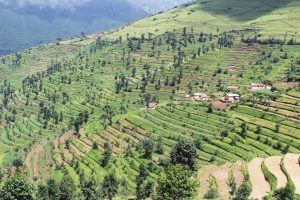
Conversely, Rwanda’s mitigation strategy is deeply intertwined with agriculture, land management, and basic infrastructure. Key measures include promoting solar irrigation, transitioning to climate-resilient seeds (targeting 77% of farms by 2035), and massively scaling up efficient cookstoves to replace traditional biomass cooking. Furthermore, Rwanda integrates the creation of “green jobs” into its climate plan, focusing on protecting informal biomass workers, smallholder farmers, and restoration jobs in forestry.
Adaptation: Sea-Level Rise vs. Immediate Natural Disasters
For both countries, climate change is an existential threat, but the impacts look very different.
- Rwanda declares adaptation as its “foremost climate priority”. The urgency is immediate: in 2023 alone, floods and landslides claimed 131 lives and caused over $415 million in damages. In response, Rwanda is not only planning extensive flood protection and integrated water resources management but is also pioneering a dedicated Loss and Damage (L&D) response mechanism. This aims to unlock international funding to manage residual climate impacts that bypass what adaptation alone can solve.
- Singapore, as a low-lying island state, faces the creeping but devastating threat of sea-level rise. Its adaptation strategies involve high-cost, long-term coastal protection measures and urban planning to defend its borders and communities, which impose significant fiscal costs on the government.
The Financial Divide: Self-Funded vs. Conditional Reliance
The implementation of these ambitious plans highlights the global climate finance divide. Rwanda requires an estimated $12 billion by 2035 to achieve its goals ($5 billion for mitigation and $7 billion for adaptation). Recognizing its domestic fiscal limits, Rwanda splits its targets: it commits to an unconditional 7% emissions reduction funded domestically, but the remaining 46% conditional reduction relies entirely on international climate finance, grants, and technology transfers.
Singapore, on the other hand, relies heavily on domestic resource mobilization. It actively utilizes Article 6 of the Paris Agreement, intending to use internationally transferred mitigation outcomes (ITMOs) to address residual emissions. Far from just seeking funds, Singapore acts as a regional financing hub, facilitating transition credits to retire coal plants early in Asia and pledging up to US$500 million in concessional capital to crowd-in commercial finance for regional green transitions.
🌍 A Tale of Two Climate Futures
Comparing Rwanda and Singapore’s 2035 Climate Commitments
2035 Climate Ambition
Singapore and Rwanda represent two sides of the global climate coin. Singapore models how an advanced, land-scarce economy can use aggressive carbon pricing, high-tech carbon capture, and regional energy markets to force absolute emissions down. Rwanda models how a vulnerable, developing nation can craft a highly ambitious, economy-wide plan that intertwines aggressive emissions reductions with poverty eradication, sustainable agriculture, and pioneering Loss and Damage frameworks. Both, however, underscore a shared truth in the 2035 climate battle: aggressive national ambition is meaningless without robust international cooperation.
About The Author


SUBSCRIBE TO OUR NEWSLETTER