Expert highlights Underutilized Legumes as Pathway to Stronger Food Security
IBADAN, Nigeria – 3 August 2026 – Agricultural experts have called for increased investment in Nigeria’s underutilized legumes, describing them as a strategic solution to improving food security, nutrition, climate resilience, and economic growth.
The call was made during Agversation, the flagship dialogue series of Farmer Square Africa, themed “Beyond Cowpea and Soybean: Unlocking the Potential of Underutilized Legumes.” The virtual discussion featured Dr. Taofeek Tope Adegboyega, President of the Society for Underutilized Legumes (SUL), who urged governments, researchers, development partners, and private-sector investors to prioritize neglected indigenous legumes that hold immense promise for transforming Africa’s food systems.
Founded by communications and agricultural development advocate Timilehin Osunde, Farmer Square Africa is a platform dedicated to connecting agricultural research with farmers, policymakers, agribusinesses, young professionals, and the wider public through knowledge sharing, dialogue, and innovation. Through Agversation, the platform provides a space for evidence-based conversations that inspire practical solutions to some of Africa’s most pressing agricultural challenges.
Speaking during the session, Dr. Adegboyega warned that Nigeria’s continued dependence on a few staple crops leaves the country’s food systems increasingly vulnerable to climate change, declining soil fertility, and rising nutritional deficiencies.
“Nigeria possesses one of Africa’s most diverse legume gene pools—drought-tolerant, nitrogen-fixing, nutritionally dense, and culturally significant. Yet these crops remain largely absent from formal research agendas, national budgets, commercial seed systems, and food industry value chains. The reasons are structural, not agronomic,” he said.
Hidden crops with enormous potential
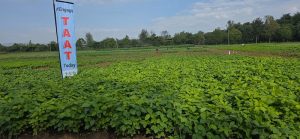
Dr. Adegboyega identified Bambara groundnut, African yam bean, pigeon pea, Kersting’s groundnut, and winged bean as some of Nigeria’s most promising but underutilized legumes. Despite being cultivated in several communities, these crops continue to receive limited research funding, weak policy attention, and minimal commercial investment.
He explained that many of these legumes contain between 18 and 39 percent protein, with winged bean ranking among the world’s richest plant-based protein sources. They also provide essential micronutrients such as iron, zinc, and calcium, making them valuable in addressing hidden hunger, child malnutrition, and micronutrient deficiencies. Beyond household consumption, the crops can be processed into bread, noodles, flour, and complementary foods, reducing dependence on imported raw materials while creating new agribusiness opportunities.
Building climate-resilient food systems
According to Dr. Adegboyega, the benefits of underutilized legumes extend beyond nutrition. Their natural ability to fix nitrogen improves soil fertility, reduces fertilizer requirements, and enhances resilience to drought and changing climatic conditions.
He noted that expanding their cultivation and commercialization could generate employment, strengthen rural livelihoods, empower women farmers who traditionally cultivate many of these crops, and contribute to Nigeria’s import substitution agenda while opening new export opportunities.
Despite their significant potential, several barriers continue to limit widespread adoption and commercialization. These include poor access to quality seeds, inadequate research investment, pests and diseases, limited processing facilities, weak market systems, poor infrastructure, and policy preferences that continue to favor cereals over legumes.
Dr. Adegboyega cautioned that these constraints reinforce one another, creating a cycle in which inadequate research limits improved varieties, discourages commercial investment, and ultimately slows the development of viable value chains.
The session concluded with a call for stronger collaboration among government agencies, research institutions, universities, development partners, food manufacturers, farmer organizations, and the private sector.
Recommendations included increasing dedicated research funding, integrating underutilized legumes into national agricultural development plans, strengthening seed production systems, encouraging food manufacturers to develop legume-based products, and supporting women-led community seed enterprises. Dr. Adegboyega also emphasized the need for stronger partnerships between researchers and industry to transform scientific innovations into commercially viable products that improve livelihoods and strengthen national food systems.
Speaking on the significance of the initiative, Timilehin Osunde, Founder of Farmer Square Africa, said Agversation was created to make agricultural knowledge more accessible while connecting research with real-world action.
“Africa’s agricultural transformation depends not only on scientific breakthroughs but also on meaningful conversations that bring together researchers, farmers, policymakers, agribusinesses, development partners, and young people. Agversation was established to bridge these communities, amplify practical solutions, and inspire collaborative action that advances sustainable food systems across the continent,” she said.
As Farmer Square Africa continues to convene conversations on emerging issues in agriculture, Agversation is reinforcing the platform’s commitment to promoting knowledge exchange, encouraging innovation, and building partnerships that contribute to resilient, inclusive, and sustainable agricultural development across Africa.
About The Author


SUBSCRIBE TO OUR NEWSLETTER