How Proven, Community-Led Restoration Redefines East Atlantic Flyway Protection
KIGALI — Conservation efforts along the East Atlantic Flyway are showing that restoration of degraded ecosystems can support local livelihoods.
Moreover, Community-Led Restoration shows how participation becomes a central factor in sustaining environmental gains.
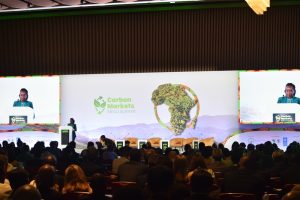
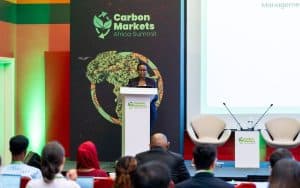
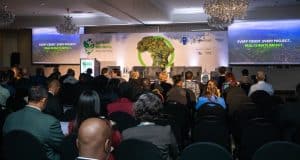
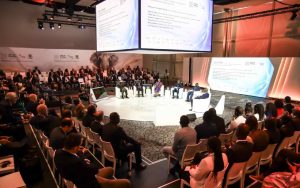
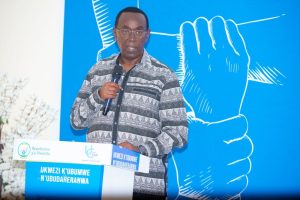
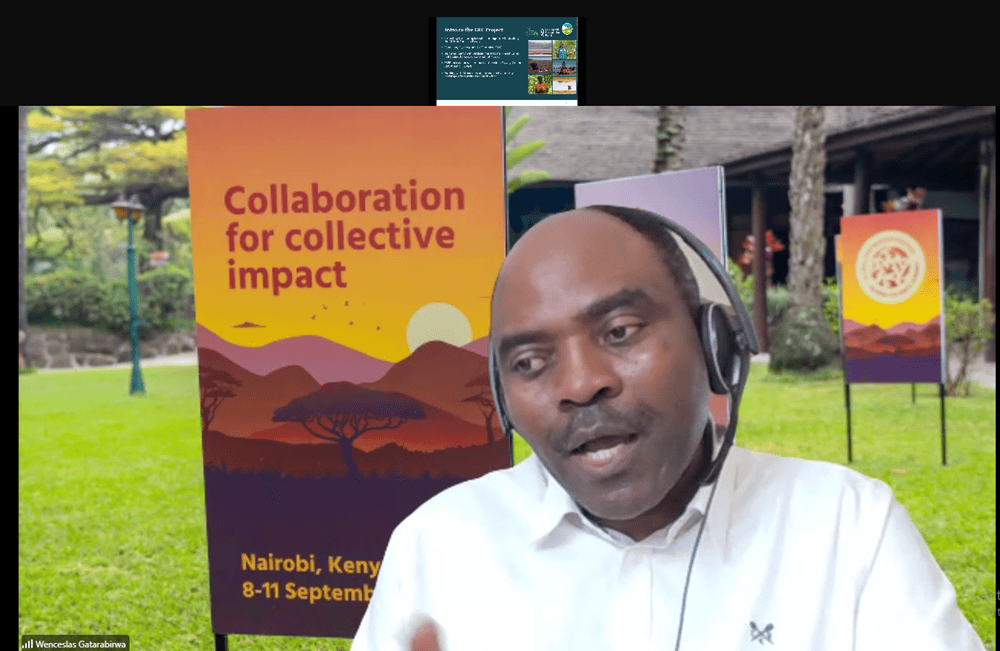
Speaking during the ARCOS Network Nature Talk on September 25, 2026, Wenceslas Gatarabirwa presented experiences from restoration initiatives.
Moreover, As Head of Flyway Conservation at RSPB, he discussed partnerships with BirdLife International and Community-Led Restoration.
The initiatives spanning landscapes from Ghana to South Africa place local communities at the center of Community-Led Restoration.
Moreover, conservation activities are linked to livelihoods, local governance, and community decision-making.
Indeed, those are champions on the ground delivering the work.
Gatarabirwa said this, highlighting the role of local communities in implementing Community-Led Restoration activities.
In northern Ghana, livelihoods underpin restoration
Near Mole National Park in northern Ghana, restoration efforts are addressing environmental degradation alongside economic challenges facing surrounding communities.
The project draws on the “Birds, Bees and Business” model, originally pioneered by BirdLife Netherlands and NATURAMA in Burkina Faso within the Great Green Wall framework.
The approach links conservation with income-generating activities based on natural resources. Women are involved in sustainable shea butter harvesting and processing, while men participate in organic honey production.
Gatarabirwa stressed that conservation initiatives need to address community livelihoods if they are to achieve lasting results.
Moreover, without involving communities to generate revenue, success is unlikely, he said, reflecting Community-Led Restoration.
The project also works through Ghana’s Community Resource Management Area (CREMA) framework.
Thus, this framework provides a mechanism for communities to participate in natural resource management and supports Community-Led Restoration.
Reluctance from some residents stemmed from historical grievances about Mole National Park’s creation six decades ago.
Moreover, local leaders began building trust and encouraging participation.
This Community-Led Restoration effort complements that groundwork.
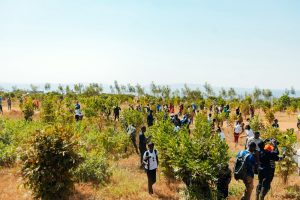
Under Chief Nursery Officer, local nurseries raised and planted more than 10,000 native tree seedlings.
Additionally, these efforts advance targeted landscapes through Community-Led Restoration.
Additionally, Community-Led Restoration received formal recognition through a CREMA certificate issued by Ghana’s Ministry of Lands.
It was issued to the Kani-Kani communities.
South Africa turns to Community-Led Restoration through co-design
At the other end of the East Atlantic Flyway, conservationists are applying a similar community-centered approach at the Berg River Estuary in South Africa’s Western Cape.
The estuary contains the country’s largest salt marsh and provides important habitat for migratory waterbirds. However, parts of the ecosystem have been affected by riverbank erosion linked to agricultural water extraction and recreational boating.
Rather than relying solely on top-down restrictions, the project sought to involve communities in identifying problems and developing solutions.
“Instead of lecturing communities and trying to get them to change, we change to say: can we listen to the communities and hear what the issues are?” Gatarabirwa said.
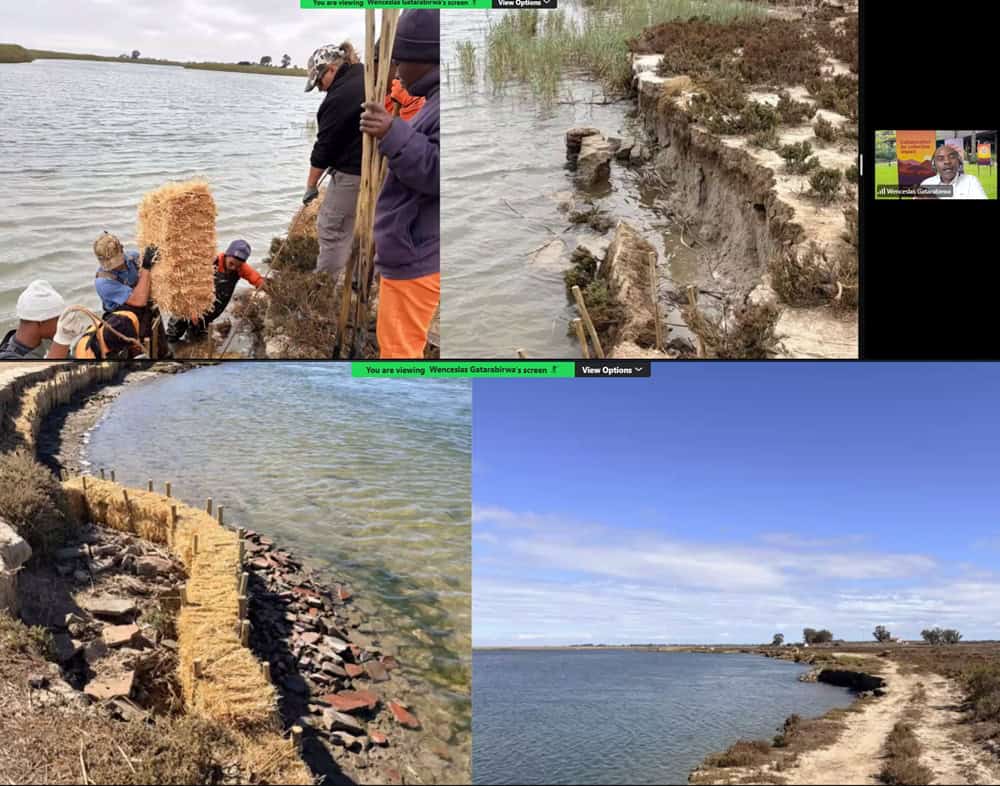
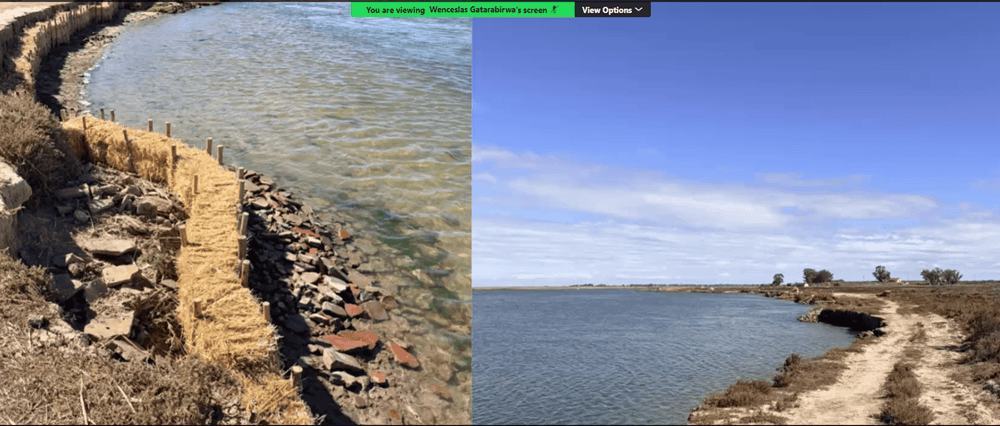
One restoration response involved replacing hard concrete rubble along riverbanks with softer barriers made from hay bales to absorb wave energy.
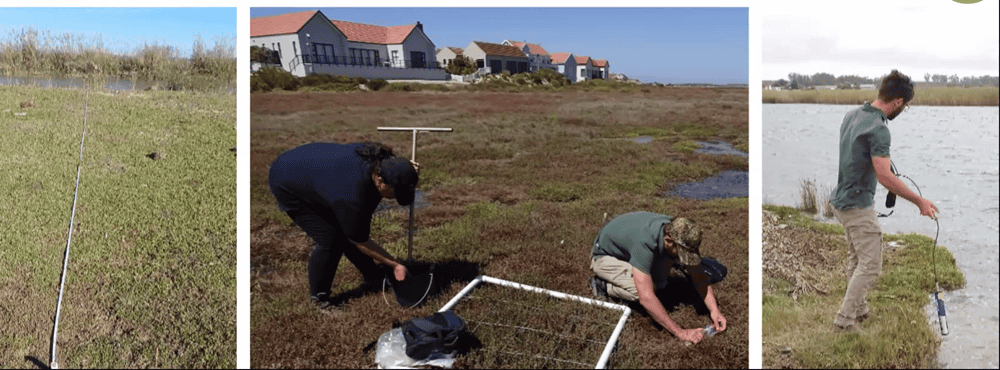
A research team led by Giselle Murison also identified 20 native salt-marsh plant species in local nurseries and propagated them across eight pilot sites covering approximately 7,000 hectares.
The project also addressed erosion associated with boat traffic. Instead of relying only on prohibition signs, conservationists invited landowners, boaters and local businesses to observe the effects of boat wakes on the riverbanks.
The engagement contributed to the development of voluntary “No Wake Zones”, allowing communities and businesses to participate in protecting vulnerable sections of the estuary while maintaining local tourism activities.
Three lessons for lasting restoration
Drawing on the two experiences, Gatarabirwa identified three priorities for conservation initiatives seeking long-term results.
The first is placing local communities at the foundation of restoration. This includes involving communities in governance, management, communication and the distribution of financial incentives.
The second is bridging the power gap between national and regional authorities and communities at the local level. According to Gatarabirwa, communities need appropriate legal rights and management responsibilities if they are to play a meaningful role in conservation.
The third is ensuring that financial incentives are targeted and responsive to local needs. Funding, he argued, should support community decision-making after awareness and local ownership have been established.
The experiences from Ghana and South Africa demonstrate how restoration can move beyond protecting habitats alone. By combining ecological recovery with livelihoods, local governance and community participation, conservation initiatives can create conditions for communities to become active partners in protecting the landscapes on which both people and migratory species depend.
Along the East Atlantic Flyway, the approach offers a practical example of how community empowerment can become a foundation for long-term ecosystem restoration.
About The Author


SUBSCRIBE TO OUR NEWSLETTER