President Kagame Hosts AU Facilitators as Panel Presses Ceasefire in Eastern DRC
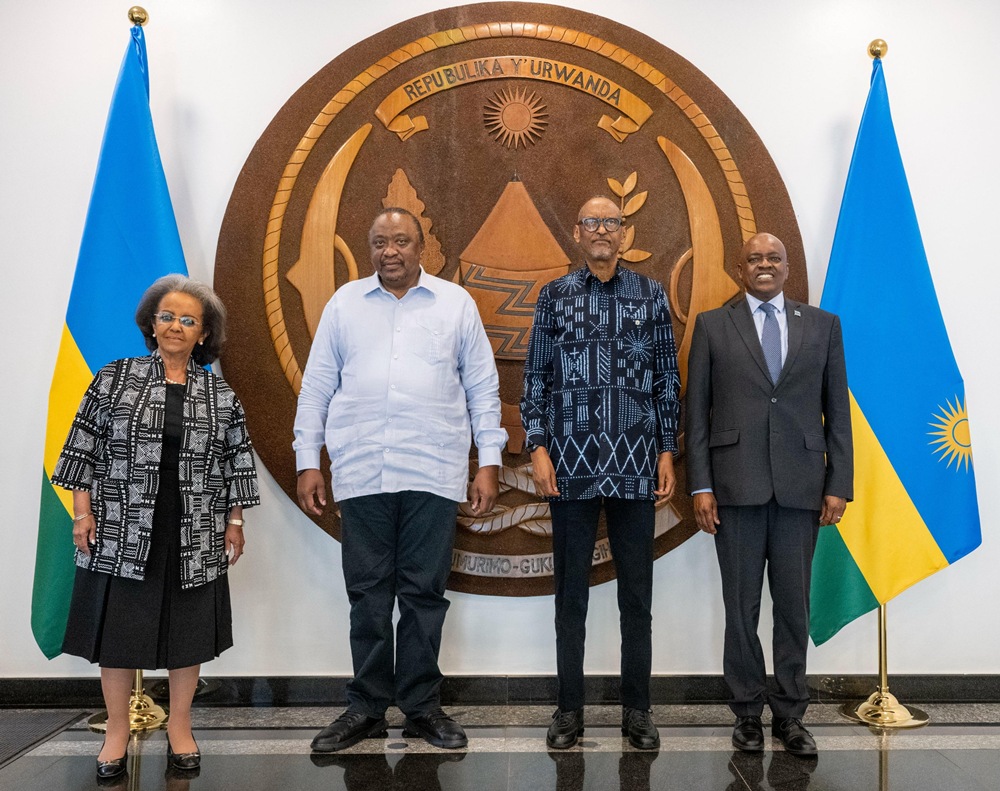
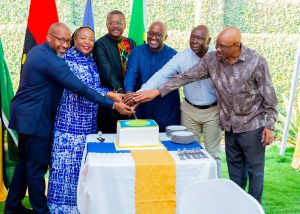
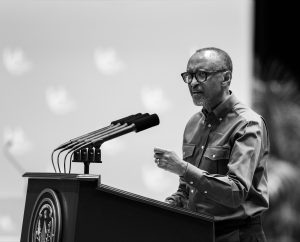
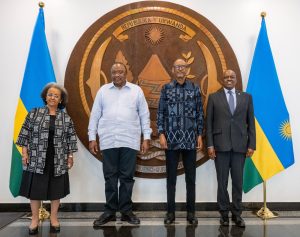
KIGALI — President Paul Kagame met on Wednesday afternoon at Urugwiro Village with a delegation from the African Union Panel of Facilitators for the peace process in eastern Democratic Republic of Congo, according to the Rwandan Presidency.
The talks focused on the AU-led process and next steps toward lasting peace and stability, including efforts to address the root causes of the conflict.
The delegation included former Ethiopian President Sahle-Work Zewde, who serves as deputy chair of the panel; former Kenyan President Uhuru Kenyatta; former Botswana President Mokgweetsi Masisi; and Yackoley Kokou Johnson, Togo’s deputy minister of foreign affairs.
The Kigali meeting formed part of a regional consultation tour.
On October 5, the same core group—Zewde, Kenyatta, and Masisi—held talks in Goma, the North Kivu city under the control of the Alliance Fleuve Congo/March 23 Movement (AFC/M23).
They met representatives of the UN stabilization mission (MONUSCO), the UN humanitarian office (OCHA), the International Committee of the Red Cross, the Expanded Joint Verification Mechanism Plus, and the AFC/M23 political leadership, including coordinator Corneille Nangaa.
In a statement issued Wednesday, the panel said the Goma engagements allowed it to hear perspectives on the security and humanitarian situation and on measures needed to build confidence.
READ ALSO: AU Facilitators Meet AFC/M23 Leaders in Goma as Army Reports Fresh Defections in North Kivu
It reaffirmed that lasting peace requires political dialogue and encouraged continued good-faith engagement in the Doha process.
The facilitators called for strict respect for ceasefire commitments, full cooperation with verification mechanisms, and restraint from actions that could undermine negotiations. They stressed the urgent need to protect civilians—particularly women and girls—prevent sexual and gender-based violence, ensure accountability, and guarantee safe humanitarian access.
The panel also reaffirmed support for the sovereignty, unity, and territorial integrity of the DRC, stating that these principles must produce tangible improvements for affected communities. Outcomes of the consultations will be conveyed to the AU mediator and the Congolese government.
The panel’s work sits within a broader architecture established in 2025.
A joint East African Community–Southern African Development Community summit created the facilitators in March 2025; the African Union later designated Gnassingbé as mediator.
In July 2026 the panel, meeting in Gaborone, adopted a six-month roadmap running through December that covers political dialogue, military and security issues, humanitarian access, engagement with armed groups, natural resources, and civil-society inclusion.
Parallel tracks include a July 2025 Doha declaration in which the Congolese government and AFC/M23 committed to a permanent ceasefire and further negotiations, and a December 2025 Washington agreement between Kinshasa and Kigali.
Despite these commitments, fighting has continued in parts of North and South Kivu.
AFC/M23 forces control substantial territory seized in a rapid offensive the previous year.
Kinshasa and several international actors accuse Rwanda of backing the group, a charge Kigali denies; Rwanda maintains that its security concerns center on the presence of the Democratic Forces for the Liberation of Rwanda (FDLR), a group linked to the perpetrators of the 1994 genocide against the Tutsi.
Congolese officials have separately advanced a process for FDLR disarmament and cantonment.
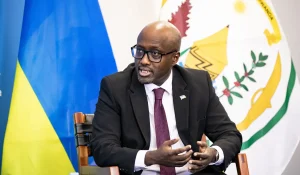
After meetings with Rwandan Foreign Minister Olivier Nduhungirehe and with Kagame, the facilitators were expected to continue to Kinshasa for consultations with the Congolese government.
The panel’s statement indicated it would keep pressing civilian protection, confidence-building, and implementation of existing agreements as the primary path forward.
About The Author


SUBSCRIBE TO OUR NEWSLETTER