Beyond Borders, Beyond Barriers: A Mission of Humanity in Uganda
In Uganda’s refugee settlements, the Purple Vest Mission, a humanitarian initiative, is helping local leaders turn inclusion from an aspiration into a lifesaving practice.
By Jamie Lassner
Sanctuary is not the same as safety. For families who have fled conflict and persecution, the next emergency can expose dangers that remain invisible until escape becomes impossible. A flooded path may trap a wheelchair user. A siren may never reach someone who is deaf. The confusion of an evacuation may revive trauma for a person who has already survived displacement.
These are not peripheral complications of disaster response. They are tests of whether the systems designed to protect human life have accounted for the people most likely to be missed.
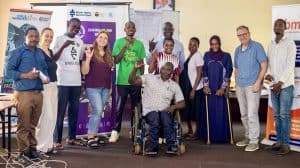
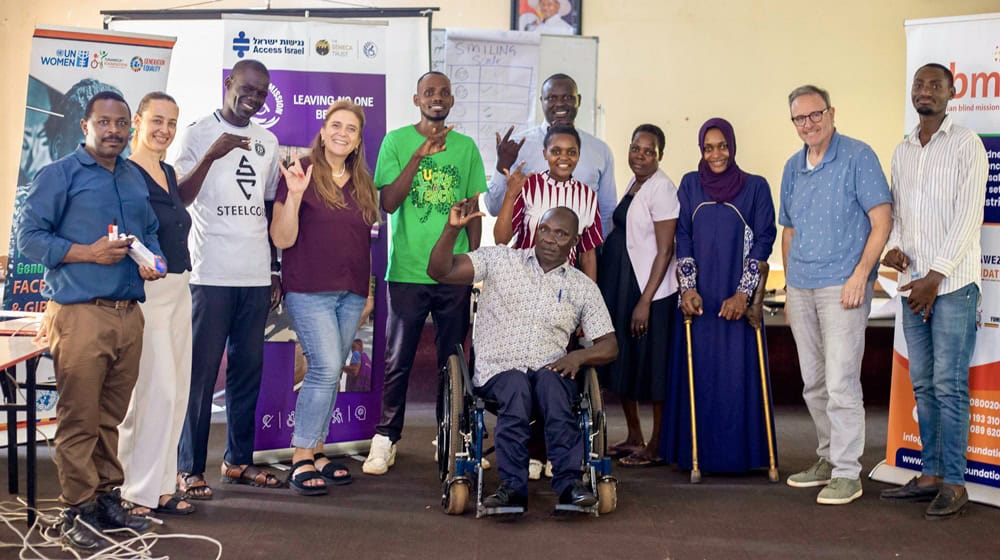
In Uganda, which hosts Africa’s largest refugee population, that distinction carries exceptional weight. Access Israel, in partnership with the Tunaweza Foundation and with support from the Seneca Trust, recently concluded four days of intensive Purple Vest Mission training for humanitarian leaders representing refugee settlements across the country.
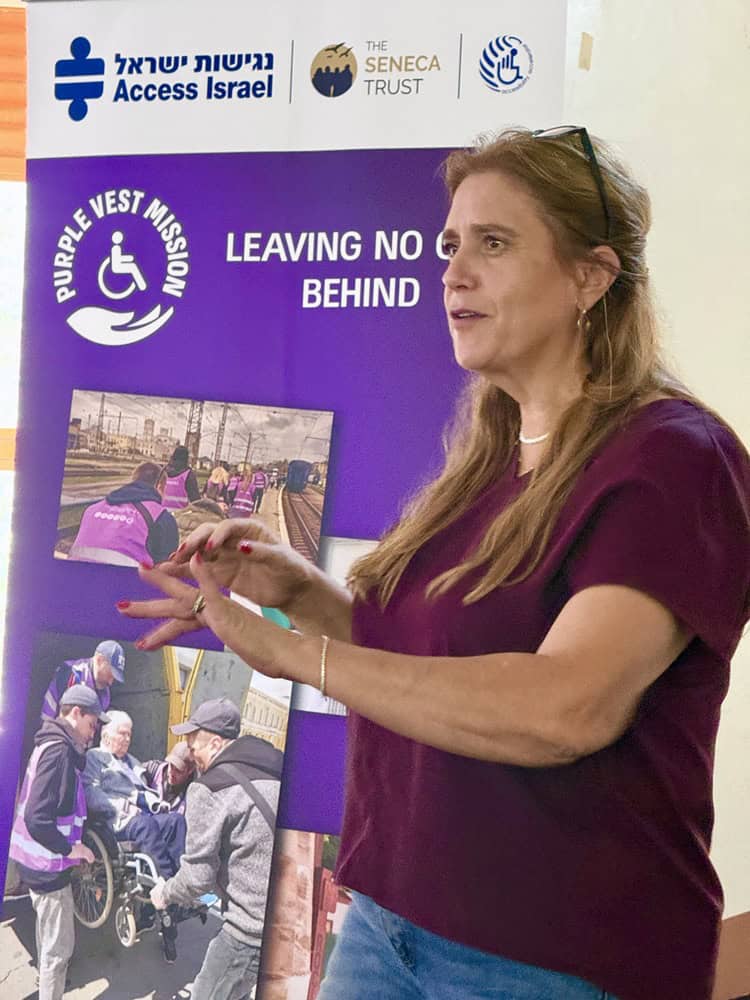
The training was led by Access Israel; their employees and Purple Vest Mission volunteers. The aim was not simply to impart techniques, but to build the judgment and local capacity needed when conventional emergency procedures fall short.
From Crisis Experience to Practical Capability
Developed and headed globally by Access Israel, the award-winning Purple Vest Mission (PVM) has been shaped by responses to war in Ukraine, earthquakes in Turkey, and emergencies in Israel. Thousands of volunteers have been trained around the world, and the initiative has helped facilitate the safe evacuation of over 10,600 people with disabilities during conflicts in Ukraine and Israel. Its experience offers a compelling proposition: an emergency response cannot be considered effective when those facing the greatest barriers remain outside its design.
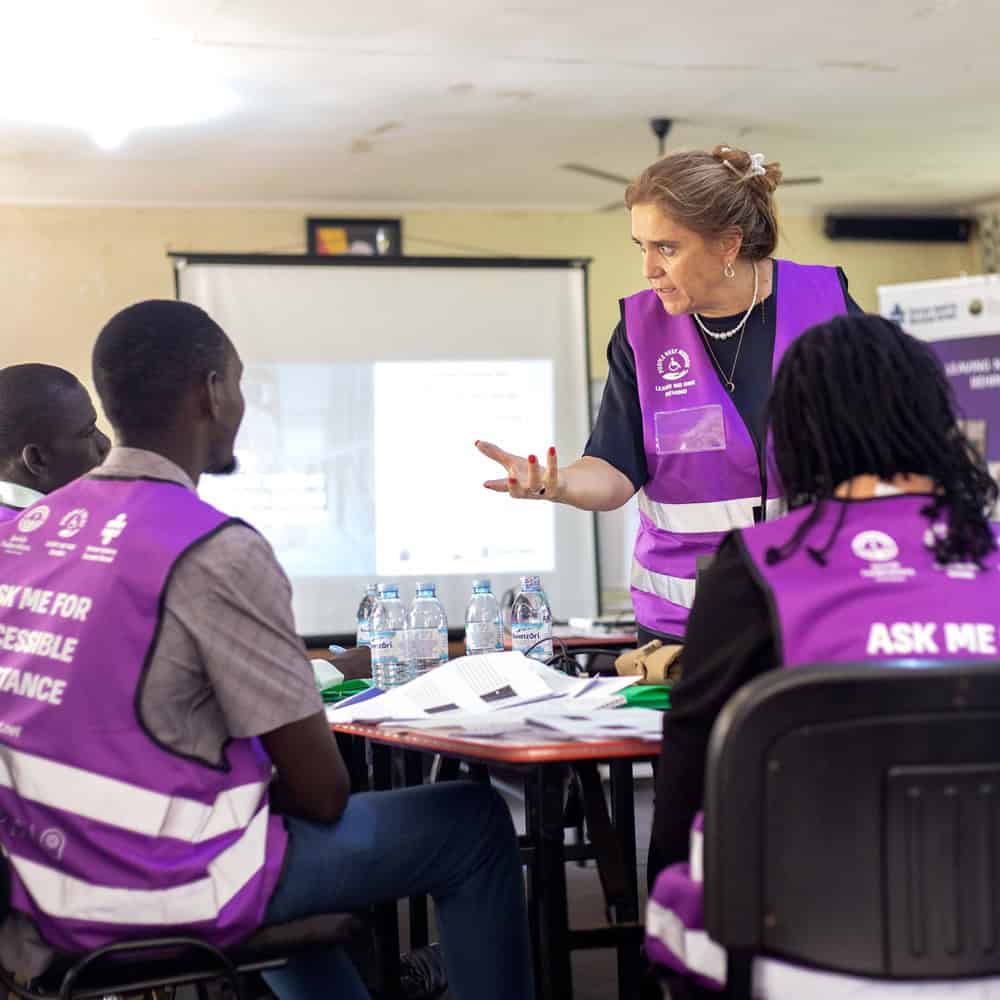
In Uganda, that proposition was examined through realistic scenarios, experiential exercises, inclusive communication, and trauma-aware response techniques. Floods, drought, mudslides, and extreme heat were considered alongside the constraints of terrain, infrastructure, mobility, and access to information. Just as importantly, local leaders brought their intimate understanding of settlement life to the discussion, testing international methodologies against the conditions in which they must actually work.
Michal Rimon, CEO of Access Israel and lead lecturer, saw in the participants’ commitment “the very essence of the Purple Vest Mission.” Their openness to new methodologies and willingness to share hard-won experience were, she said, “deeply inspiring.” What mattered most was not the intensity of the four days themselves, but their lasting impact: “The true significance of this training lies in its potential to become lasting, locally led capacity that protects lives long after the program concludes.”
The Power to Act, the Right to Be Included
The program challenges a persistent assumption in humanitarian practice: that people with disabilities and older persons are primarily people to be rescued. They are also experts in the obstacles they encounter, essential contributors to evacuation planning, and agents of their own preparedness. In settlements where stigma and inaccessible environments can leave individuals isolated, that change in perspective is consequential.
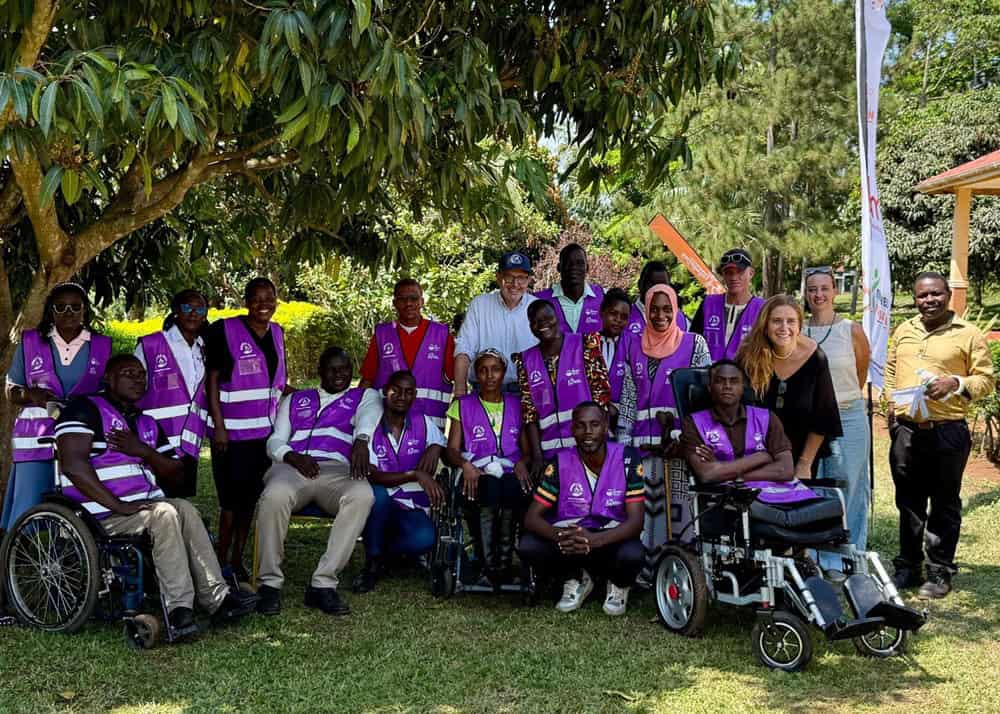
For Tunaweza Foundation, the next stage is multiplication rather than dependence. Victo Nalule described the ambition to develop “a network of trainers to reach over 300 trainers across Uganda’s refugee settlements,” with the potential to create “a ripple effect of knowledge, preparedness and safety.” The intention is to embed capability where it is needed, in the hands of people who know their communities and will remain there long after visiting instructors depart.
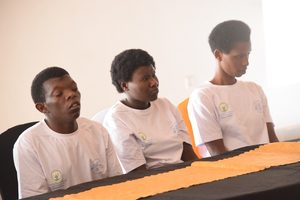
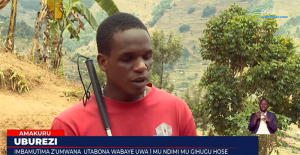
That shift is also personal. Kakooza Paul, an iHub Coach with Tunaweza Foundation who is blind, described a transformation in his understanding of disability “from sympathy to dignity, rights, and accessibility.” The training gave him, he said, “practical skills and the confidence to support persons with disabilities before, during, and after disasters.” His resolve to champion inclusive preparedness so that every person is “safe, included, and valued” speaks to an outcome no certificate alone can measure: a changed understanding of responsibility, coupled with the means to act on it.
A Standard Every Institution Should Meet
The sophisticated, customized scenarios were set in Uganda’s refugee settlements; the implications are global. A school may have meticulously rehearsed evacuation procedures yet be unprepared for a student overwhelmed by alarms. A workplace may have a safety manual that assumes everyone can descend stairs. A house of worship may welcome congregants of every ability without having established how each will reach safety in a crisis.
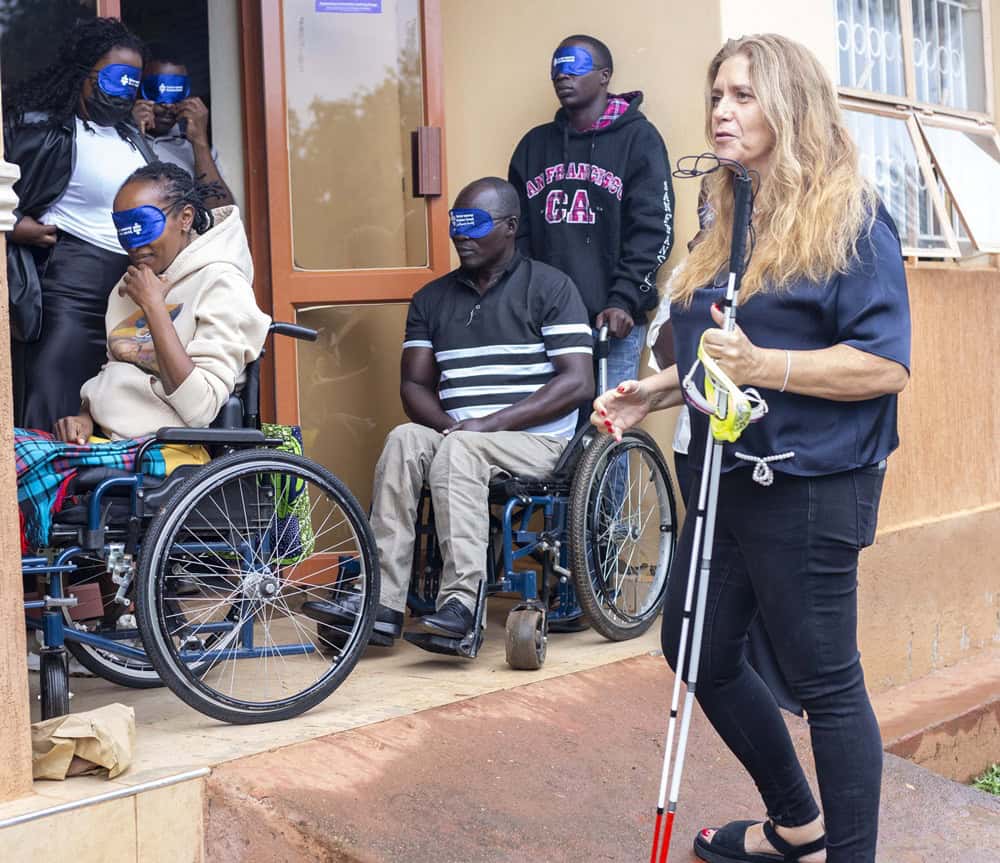
The gap is not necessarily a lack of concern. It is the distance between general intentions and the precise demands of a real emergency. Purple Vest Mission training addresses that distance through disability-informed planning, experiential learning, and practical response skills that governments, schools, businesses, humanitarian agencies, municipalities, and faith institutions can adopt.
Rimon contends that disability-inclusive preparedness must become “an essential standard for every institution responsible for human safety.” Through Access Israel and its global volunteers, including its collaborative North American partner, Accessibility Accelerator, she sees an opportunity for institutions to convert a stated commitment to inclusion into “practical, lifesaving capability.” Her benchmark is exacting: “The greatest measure of preparedness is not how many people can evacuate independently, but whether every person has a meaningful opportunity to reach safety.”
What Remains After the Training
There is a particular resonance in an Israeli-born initiative, forged through adversity, finding fresh purpose among Ugandan leaders supporting displaced communities from across East Africa. Yet the significance lies less in the distance traveled than in the quality of the exchange. Experience gained in one crisis becomes useful only when it is adapted with humility to the realities of another.
The most important results may be nearly invisible: a warning delivered in a form someone can understand; an evacuation route reconsidered before the rains; a volunteer who notices the person others have passed by. Each is a small act of foresight with potentially immense consequences.
The four days in Uganda were therefore neither an endpoint nor a ceremonial achievement. They were an investment in decisions still to be made by local leaders under conditions no classroom can fully reproduce. They also leave a clear challenge to every institution entrusted with people’s safety: preparedness must be judged by those it reaches, not merely by the plans it produces.
The greatest legacy may be a life saved years from now by someone whose name never appears in a report.
Safety Must Include Everyone. Leave No One Behind.
Jamie Lassner is a proud volunteer of the Purple Vest Mission and Executive Director of Accessibility Accelerator, an independent U.S.-based nonprofit organization and collaborative partner of Access Israel.
About The Author


SUBSCRIBE TO OUR NEWSLETTER