“Total Failure”: What Joseph Kabila Told the UN Chief Behind Closed Doors in Rebel-Held Goma
In a high-stakes meeting that has already sent ripples through regional diplomacy, former Democratic Republic of Congo president Joseph Kabila sat down with the head of the UN peacekeeping mission in Goma on November 3, 2026. The encounter, held in the eastern city controlled by his newly formed Front for the Refoundation of the Nation (FRN), marked the first formal talks between Kabila and MONUSCO chief James Swan since the former president took the helm of the rebel-linked movement.
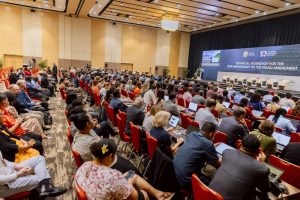
Swan, the UN Secretary-General’s Special Representative, arrived in Goma the day before with a senior team that included military and political advisers. Opposite him sat Kabila, flanked by FRN vice-presidents Corneille Nangaa and Bertrand Bisimwa and other senior figures. What began as routine consultations on civilian protection and ceasefire monitoring quickly turned into a pointed exchange over the future of the UN mission, the fragile Doha peace process, and the very rules of the game in Congolese politics.
The Message from Kabila’s Side
After the meeting, FRN vice-president Bertrand Bisimwa briefed the press with unusually direct language. He described MONUSCO’s nearly three-decade presence in Congo as a “total failure” and made clear the movement does not want the mission’s mandate renewed when it expires next month. In the FRN’s view, another extension would change nothing on the ground. The group is prepared to accept limited logistical support for ceasefire verification mechanisms, but it firmly rejects any redeployment of UN forces into territory it controls.
Bisimwa also confirmed that the FRN considers itself the direct successor to the former AFC/M23 coalition and remains committed to the Doha negotiations facilitated by Qatar. At the same time, he accused the government in Kinshasa of repeatedly violating the ceasefire and failing to honor its commitments. He listed multiple fronts where fighting has allegedly resumed and warned that the FRN will respond if its forces or civilians come under attack.
A Constitutional Red Line
Perhaps the most consequential warning concerned President Félix Tshisekedi’s reported plans to change the Congolese Constitution. Bisimwa told Swan that the Doha agreements are built on the current constitutional framework. Any attempt to rewrite those rules, he argued, would cause “the entire peace process to collapse.” He asked the UN envoy to carry that message to the Security Council and the broader international community.
MONUSCO’s Stance
From the UN side, the emphasis remained on practical mandate issues: protecting civilians, keeping humanitarian corridors open, and supporting the Expanded Joint Verification Mechanism that monitors the ceasefire. Swan separately met with officials of that verification body. MONUSCO has repeatedly stressed that such contacts with armed groups do not amount to political recognition; they are necessary to carry out its tasks amid ongoing fighting.
Why This Meeting Matters
The timing is sensitive. Only days earlier, the International Contact Group for the Great Lakes—including the United States, United Kingdom, and European Union—issued a joint statement rejecting the use of armed violence to pursue political goals, a clear reference to the FRN. Kabila himself faces a death sentence in absentia and U.S. sanctions, while Kinshasa has long accused him of aligning with the rebellion.
The Goma talks therefore sit at the intersection of three volatile issues: the survival of the Doha peace process, the future of one of the UN’s longest-running peacekeeping missions, and the risk that domestic political maneuvers in Kinshasa could unravel months of diplomatic work. With fighting still flaring across eastern Congo and millions of people displaced, the conversation between the former president and the UN’s top official in the country is being watched closely across the Great Lakes region. Whether it produces any measurable de-escalation remains an open question.
About The Author


SUBSCRIBE TO OUR NEWSLETTER