Progress towards universal healthcare coverage in lower- and middle- income countries has stalled and is at risk of reversal

- People who live in countries that invest more in universal access to healthcare live on average 16 more years in good health compared to those that don’t
- Countries with universal access to healthcare report half as many deaths per 100,000 compared to those without
- Investment in healthy ageing could save 150 million lives globally and generate $3.2 trillion in economic returns, with a return of $16 for every $1 spent
New research by the International Longevity Centre (ILC), supported by Amgen, finds that over the last two decades, access to universal healthcare in low- and-middle-income countries (LMICs) increased by 60%. This has led to a 25% reduction in healthcare inequalities between LMICs and high-income countries. But high-income countries still outperform LMICs by 22 percentage points.
And LMICs are ageing faster than their high-income counterparts. Of the world’s one billion people aged 60 or over, 70% live in LMICs. By 2050 it is projected that there will be 2.1 billion people over 60 and 80% will reside in LMICs. For this reason, LMIC governments must take steps to account for the challenges that come with demographic change if they want to further improve access to healthcare.
The ILC report Achieving Universal Health Coverage in LMICs published today recommends:
- strengthening national health schemes so that accessing care doesn’t become a financial burden
- investing in primary health services, where 90% of healthcare including vital preventative services can be delivered
- ensure that all age groups, including older adults’ healthcare outcomes are measured
Without such a focus, the globally agreed goal of achieving universal access to healthcare by 2030 is at risk of failure.
Universal access to healthcare guarantees all people access to the quality health services they need across the life course without financial hardship. But without accounting for the impact of demographic change on healthcare accessibility and health outcomes, the world could face an economic loss of $3.2 trillion by 2050.
ILC’s Healthy Ageing and Prevention Index, which ranks 153 countries on six metrics of healthy ageing, highlights the link between ageing and universal access to healthcare. ILC analysis of the index shows that:
- People who live in countries that invest more in universal access to healthcare live on average 16 more years in good health compared to those that don’t
- Effective infectious disease management correlates with fewer deaths.
- Investments in non-communicable disease (NCD) management lead to lower mortality rates
- Greater focus on maternal and child health improves fertility rates and life outcomes
Alarmingly, global progress in achieving universal access to healthcare has stalled since 2015, and the number of people paying out of their own pocket for healthcare has risen.
Anna van Renen, ILC’s Research and Policy Officer and co-lead of the project, said:
“Low- and middle-income countries should be proud of the significant progress they’ve made towards UHC.
But these countries are ageing rapidly. Leaders in Low-and-middle-income countries need to rethink how they can deliver health services that meets the needs of everyone.
Governments must make healthcare more affordable, strengthen the delivery of preventative services through primary care, and improve health data collection.
However, if funds and support can’t be rapidly mobilised to fill the gap left by the US funding freeze or ultimate withdrawal, years of progress are likely to be reversed, placing the health of millions at stake.”
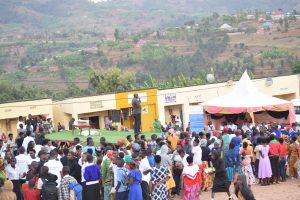
In collaboration with HelpAge International, the ILC spoke to 125 older adults in Mongolia, Rwanda and Zambia to better understand their healthcare experiences. The findings highlight significant barriers:
- Long distances and inaccessible routes hinder physical access to healthcare facilities.
“Sometimes, we have to travel 180 km to the provincial centre to get our illness checked.” 67-year-old man from Bayandun, Mongolia
- High costs of healthcare, transport, and medicine force difficult trade-offs between care and financial security
“Some medications that aren’t covered with health insurance. If the patient can’t afford to pay, they forgo the medication, even if important for them.” 57-year-old woman from Kigali, Rwanda
- Resource shortages, insufficient geriatric services, and unclear information exacerbate healthcare inequities
“[Health workers] write a prescription when there are no drugs. They recommend an X-ray when the equipment is broken down.” 75-year-old woman from Lusaka, Zambia
- Ageism and lack of autonomy in healthcare decisions limit the rights of older adults
“I had a leg problem that required a metal implant. The doctor asked me why they should bother putting in the implant since I was no longer of any use.” 52-year-old man from Musanze, Rwanda

NB. Chad, Sierra Leone and Somalia are ranked 151 to 153 on the ILC Index but are not included here as the low scores skew the analysis
About The Author


SUBSCRIBE TO OUR NEWSLETTER