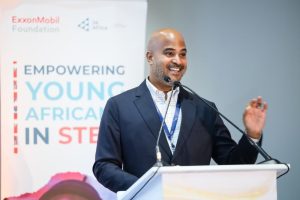
Joel Benson & Alif Naaba: Changing the Narrative of the Sahel through Arts

By Ange de la Victoire DUSABEMUNGU
Kigali-Rwanda — Award-winning Nigerian documentary filmmaker and virtual reality content creator, Joel Akachukwu Benson, is on a mission to reshape global perceptions of the Sahel region. Known for his critically acclaimed virtual reality film “Daughters of Chibok,” Benson has on Friday, 21st February, 2025, alongside Alif Naaba, singer-songwriter from Burkina Faso participated in a webinar discussion aimed at “changing the narrative” about the Sahel.
For decades, the Sahel—a vast region stretching across Africa—has been synonymous with conflict, hunger, and disease.
But according to Benson and Alif Naaba, this single-story narrative overlooks the extraordinary resilience, talent, and potential of its people.“I am Sahel. I am African. I am Black. And I am passionate about anything that has to do with the continent,” Benson declared during the webinar.
He emphasized the need for a balanced perspective when telling African stories. While acknowledging the region’s challenges, he stressed that it is equally important to highlight its strengths, opportunities, and incredible human capital.
“One of the words I would love to use to describe the Sahel is hope,” Benson said.
“The hundreds of millions of young Sahelians today represent the future of the region. We have some of the smartest people in the world. We have the youngest populations in the world. We have some of the most beautiful people in the world. And all of that represents hope.”
Daughters of Chibok: A Story of Awareness, Not Fear
In 2019, Benson made headlines with Daughters of Chibok, a groundbreaking virtual reality documentary about the 2014 Chibok school girls kidnapping in Nigeria. The film, which won the Best VR Story award at the Venice Film Festival, placed viewers in the shoes of the affected families, fostering deep emotional connections with their stories.
However, during the panel discussion, Benson was asked whether films like Daughters of Chibok reinforce negative stereotypes about the Sahel rather than presenting a “good image” of the region.
In response, the filmmaker clarified that his goal was not to create fear but to raise awareness and inspire action.
“I believe as a storyteller, I have a responsibility to project my people in the right light,” Benson said.

Award-winning Nigerian documentary filmmaker and virtual reality content creator, Joel Akachukwu Benson,
“Telling an honest and well-rounded story presents a more balanced picture. Yes, Daughters of Chibok highlights tragedy, but it also sheds light on resilience, courage, and the undying spirit of mothers fighting for their lost daughters.”
Benson argued that hiding harsh realities does not serve the region’s interests; instead, telling its full story—including both struggles and triumphs—is the key to change.
“We cannot deny our challenges,” he explained.
“But we can ensure that they do not define us.”
The Power of Storytelling to Transform Perceptions
Through his work at Virtual Reality Film Studios VR 360 Stories in Lagos, Benson continues to champion innovative storytelling as a tool for social change. He believes that film and virtual reality have the power to transport audiences beyond headlines, allowing them to see the Sahel not just as a land of crises, but as a region of potential and promise.
With a firm belief in the power of young people to shape the future, Benson calls for more investment in education, technology, and creative industries across the Sahel.
“We have strength in numbers and in intellect,” he said.
“The best side of us is much larger than the challenges we face.”

Shifting the stage to Alif Naaba, the visionary Burkinabé artist and founder of Rencontres Musicales Africaines (REMA), believes that the initiative is transforming perceptions of the region through music, digital training, and cultural initiatives. With overwhelming support from young talents and communities, Naaba believes that real change is on the horizon
According to Naaba, REMA has successfully connected the Sahel through music and training, unlocking potential in an often-overlooked region.
In a single week, the initiative trained over 422 young people in various digital fields, equipping them with skills for the modern creative economy. But the impact of REMA goes beyond education. Over 52,000 young people participated in REMA events this year, demonstrating an unprecedented enthusiasm for cultural expression and artistic innovation. This surge of interest underscores how deeply music resonates as a vehicle for hope and transformation
“Everyone supports what we are doing,” Naaba remarked proudly, emphasizing that REMA’s vision is gaining traction across borders. Plans are already in motion to expand into Mali and Senegal, amplifying the festival’s reach and further uniting the Sahel’s artistic community
A New Vision: ‘I Am Sahel’
Naaba’s ambition extends beyond music. His dream is to reshape the global perception of the Sahel through a movement called “I am Sahel.” This initiative focuses on mapping and showcasing the region’s rich artistic, musical, and digital assets, demonstrating that the Sahel is more than just a zone of crisis—it is a hub of creativity and resilience
“We must celebrate the richness of the Sahel,” Naaba declared. By bringing global attention to the region’s vibrant arts scene, REMA seeks to redefine how the world sees this part of Africa
Using Music to Heal and Inspire
Naaba’s commitment to transformation through music is not new. Reflecting on his performance of Ngwino Ubeho during the 15th commemoration of the Genocide against the Tutsi in Rwanda, he described it as one of his most profound experiences.
“That moment has lived within me ever since,” he shared. Performing a song of resilience and hope in the aftermath of tragedy cemented his belief that art has the power to rebuild not just places, but people too.
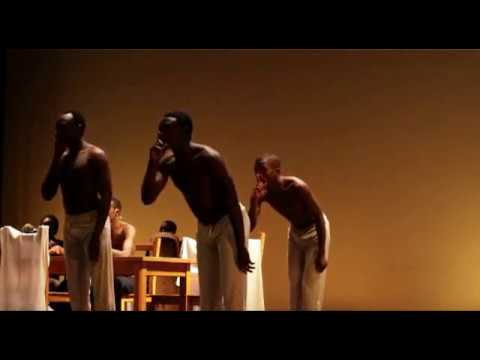
In 2008 and 2009, following his meeting with the Rwandan playwright and director Odile Gakire Katese, he composed the music that celebrates the 15th anniversary of the Genocide against Tutsi , in the play Nguino Ubeho .
This philosophy continues to drive his work in Burkina Faso today. Through initiatives like Voices for Peace, Naaba and his team have carried music into conflict zones, uplifting communities in eight cities that have been devastated by violence.
His mission remains clear: wherever there is suffering, music can bring life back.
Shaping the Future of the Sahel
Looking ahead, Naaba has outlined three key pillars for lasting change in the Sahel:
1. Encouraging and promoting youth initiatives – Young creatives are at the heart of the region’s transformation, and fostering their talents is essential.
2. Amplifying visibility for African creatives – The Sahel is home to global music icons like Youssou N’Dour, Alpha Blondie, and Salif Keïta, but many emerging artists remain undiscovered. Increasing their exposure is critical.
3. Education and empowerment – Young artists must be equipped with the knowledge and confidence to embrace a new narrative—one where the Sahel’s cultural strength takes center stage.
Naaba believes this approach will challenge outdated stereotypes and allow the Sahel to be seen in its true light—a land of creativity, culture, and resilience.
About The Author


SUBSCRIBE TO OUR NEWSLETTER