Seed Resilience Project: 84,000 Rwandan farmers to be empowered through access to high quality seeds

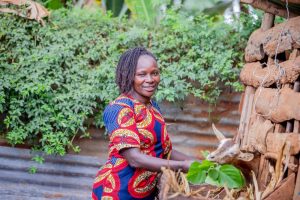
Uwamahoro Micheline, a professional farmer of vegetables and fruit, member of Gwiza cooperative located in Nzige Sector, Rwamagana District. She is in her cabbage nursery
At least 84,000 local farmers will be provided with access to high quality seeds through the Seed Resilience Project launched by the International Seed Federation (ISF) in partnership with the Rwanda Agriculture and Animal Resources Development Board (RAB) in August 2023, at Horticulture Center of Excellence (HCoE) located in the City of Kigali.
The five-year flagship project aims to help Rwanda build a sustainable seed system to enable its farmers to choose from a wide selection of high-quality seed options.
Currently, the project is conducting open-field and greenhouse trials on beetroot, broccoli, cabbage, carrot, cauliflower, sweet pepper, hot pepper, and tomato varieties using varieties from local and global seed companies, as well as international research institutes, to identify those best suited for the Rwandan context.
According to Michael Keller, Secretary General, ISF, the goal is to bring information around about what improved varieties means and provide the farmers with the choice to buy improved varieties, be able to continue to farm and have a sustainable business model in the face of climate change.
“We have to adapt our varieties to climate change, we need fully to improve our seeds to be more resilient to droughts, pests and diseases which are dramatically increasing throughout in Africa. If we are unable to provide innovation and improved varieties, and to increase the trust for farmers, we cannot increase our fight against food and nutrition insecurity.
This is our goal; this is our objective. We are working together with the farmers, the Ministry of Agriculture, but also with all those involved in empowering farmers in the fields”, he said.
Most vegetable seeds needed in Africa are imported from far which make them expensive. Commenting on this challenge, Michael Keller said, “No country is seed independent. That means all the countries should also import seeds from other countries. They may go to Europe, Asia. I think this is not an issue. The most important thing for us is that we can move seeds without too much hurdles. This is one of the discussion with the Minister of Agriculture to see also how we can improve the capacities of seed production here in Rwanda.”
Gatete Aimable, Coordinator of the Horticulture Center of Excellence, RAB lauded the project intervention, highlighting it will contribute to the country’s move to always try different varieties which can suit the demanding market.
The Seed Resilience Project is being implemented by NGO Fair Planet dedicated to improving smallholder farmers’ livelihoods through access to high-quality seeds, agricultural training, and market opportunities, in Eastern Province.
Uwamahoro Micheline, a professional farmer of vegetables and fruit, member of Gwiza cooperative located in Nzige Sector, Rwamagana District, has been equipped with skills to do the kind of local nurseries of cabbages as modern nurseries are not affordable. She praises the skills she gained and promises to share with her neighbours.
“Since we are collaborating with Fair Plant, we are ready to be more professional, willing to learn more and share with other farmers the knowledge acquired from Fair Planet”, she said.
Felix Bonaccueil, a sweet pepper farmer using greenhouses who recently joined the project, said he is ready to receive seeds tested from the Horticulture Centre of Excellence to be planted in his already cleared land and hope to get good yield.

Trial data results in 2023-2024 showed remarkable achievements:
- Carrot yielded nine times higher than the national average (1332kg vs c. 13000 kg);
- cabbage yielded five times higher than the national average (1400kg vs. 7000kg per 0.1 hectare)
- Tomato yields more than eight-fold higher than the national average (900kg vs. c. 8000kg)
- Onion yields over four times higherthan the national average (971 kg vs. c.4300 kg)
- Pepper yields nearly six times higher than the national average (360 kg vs. c. 2100 kg per 0.1 hectare)
- Potato yields more than double the national average (750kg vs. c. 1750kg)
The capacity building phase of the project is aimed at providing 84,000 farmers access to high quality seeds and improved farming practices, which should lead to a sustainable increase in yields, crop quality and incomes. It will advance the capacity of the local extension service by sharing knowledge and training methodologies with 600 local trainers and is projected to improve the livelihoods of over 360,000 people.
Some of the participants of African Seed Trade Association (AFSTA) toured the Horticulture Center of Excellence dedicated hub for advancing horticultural production in Rwanda on March 6, 2025, to witness its current interventions and achievements.
The International Seed Federation (ISF) is the voice of the global seed industry. It has represented the interests of its members since 1924 and represents 96% of the international seed trade today.


PHOTO CREDIT: Henry Joël/ISF
About The Author


SUBSCRIBE TO OUR NEWSLETTER