Rwanda Reignites Fight Against Malaria on World Malaria Day

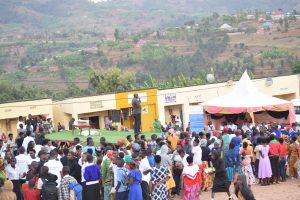
Rwanda joined the rest of the world in marking World Malaria Day on April 25, holding a national event in Ndera Sector, Gasabo District—currently the area with the highest malaria burden in the country. The event was held under the theme “Malaria Ends with Us: Reinvest, Reimagine, Reignite,” and served as a rallying call for renewed commitment to eliminating malaria at every level, from national policy to grassroots action.
Speaking at the event, Prof. Claude Mambo Muvunyi, Director General of the Rwanda Biomedical Centre (RBC), emphasized the growing threat malaria continues to pose both globally and locally.

“Malaria is a disease that concerns the whole world. Every year, more than 200 million people suffer from it,” said Prof. Muvunyi. “In Rwanda last year, about 800,000 people suffered from malaria, and 80 people lost their lives. You understand that malaria is a serious problem.”
Gasabo District, where the event was held, has emerged as a hotspot. “In March alone, Gasabo had more than 13,000 malaria cases—the highest in the country,” he noted.
Although Rwanda had successfully reduced malaria cases by 90% for over five years, recent figures show a concerning reversal. “Since last year, cases have begun to rise again. But the Rwandan government continues to implement a range of strategies, and we are confident we will overcome this resurgence,” said Prof. Muvunyi.
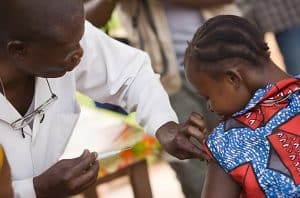
Those strategies include indoor residual spraying, village-level treatment programs, public awareness campaigns, and nationwide distribution of mosquito nets. The government has also introduced new antimalarial drugs to counter growing resistance to older medications.
Prof. Muvunyi highlighted a recent initiative in Kigali, where all household members in 15 sectors were screened and treated. “Thanks to that program, we identified 769 index cases. We then tested 2,326 family members and found 626 additional cases that we would have otherwise missed,” he said.

Dr. Jules Mugabo Semahore, Head of Malaria and Neglected Tropical Diseases at the World Health Organization (WHO) Rwanda, stressed the broader societal and environmental dimensions of the malaria challenge.
“Malaria is not just a health burden; it affects social cohesion,” Dr. Semahore said. “With climate change and increasing human activity, ecosystems are shifting, and so are disease patterns. Everyone is called upon to create collective and creative solutions to end malaria.”
He also urged Rwanda’s Ministry of Health to increase budget allocations for malaria response and called for sustained collaboration between health stakeholders.
Rwanda’s malaria journey has seen significant progress. Between the 2016/2017 and 2023/2024 fiscal years, reported cases dropped from 4.8 million to 620,000. Malaria-related deaths also saw a steep decline during that period.
However, recent data from RBC shows that the number of cases is once again rising. In 2024, Rwanda recorded 802,428 malaria cases, up from 432,000 during the same period in 2023. October alone saw 112,000 new cases, with 89% reported across just 15 districts.
Gasabo District currently leads with 15,409 cases, followed by Kicukiro (10,473), while Nyarugenge ranks fifth with 5,161 cases. Notably, over half of October’s cases—around 58,000—were recorded in just 25 sectors spread across Gisagara, Bugesera, Gasabo, Kicukiro, Nyanza, Nyamasheke, and Nyagatare.
In response, Rwanda has stepped up distribution of insecticide-treated bed nets. Since 2020, PBO and G2 nets—more effective against resistant mosquitoes—have been deployed, with another rollout phase underway.
Still, behavioral challenges persist. In high-risk zones, inconsistent use of bed nets and delays in seeking treatment remain common. Outdoor workers like farmers, miners, and night guards are particularly vulnerable. Pregnant women and young children, among the most at-risk, are targeted through routine net distribution during antenatal and immunization visits.
Despite the setbacks, Rwanda’s determination remains strong. Officials are confident the country can achieve its goal to reduce malaria cases by 75% by 2025—so long as prevention, treatment, and surveillance continue to improve.
In a bid to boost prevention efforts, Rwanda introduced drone-based larvicide spraying in swampy areas in 2020, complementing indoor residual spraying and directly targeting mosquito breeding grounds.
“Malaria ends with us,” said Prof. Muvunyi, echoing the day’s theme. “With collective responsibility and renewed energy, we will beat this disease.”


About The Author


SUBSCRIBE TO OUR NEWSLETTER