From Survival to Self-Reliance: Sudanese Refugees Rebuild Lives in Rwanda

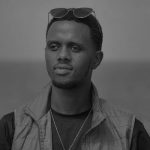
Yusif, a Sudanese refugee in Mahama camp, sells phone accessories from his small shop. (UNHCR)
When fighting erupted in Khartoum, Sudan, in April 2023, Yousif had no choice but to flee with his wife and two young children. Leaving behind their home and all their belongings, the family endured a long and exhausting journey through South Sudan and Uganda before finally arriving at Mahama Refugee Camp in eastern Rwanda in June 2024.
“The situation was bad. We left everything behind us: our home, our possessions,” Yousif recalled. “We came to Rwanda to seek protection and safety. Thank God, Rwanda welcomed us with open arms. It offered us shelters, safety, access to health services, food, and drinks.”
Yousif’s family is among the more than 12 million people displaced by the war in Sudan. Over the past two years, more than 1,400 Sudanese have sought asylum in Rwanda, according to UNHCR.
Struggling to Start Over
Life at Mahama Camp offered security but little certainty. With no work, Yousif struggled to provide for his family and spent months relying entirely on humanitarian aid. The lack of activity deepened his sense of loss and made it harder to adapt to an unfamiliar environment where even language was a barrier.
But earlier this year, Yousif’s life took a turn. Through a livelihoods program run by the UN Refugee Agency (UNHCR) and Caritas Rwanda, with support from the Mastercard Foundation, he received training and a cash grant to start a business.
In February, Yousif opened a small shop inside the camp, offering haircuts, phone accessories, and perfumes—skills he had carried with him from Khartoum. Beneficiaries like him received 800,000 Rwandan francs in start-up capital alongside training in business planning, bookkeeping, and marketing.
“In the beginning, when I received this money, I told my family that this is capital we are going to use for work. We are not going to eat it or misuse it,” Yousif said. “Things are now going well, compared to the beginning when we came.”
A New Sense of Independence

The program has also empowered others. Samia, a 40-year-old former primary school teacher, fled Sudan in July 2024 and arrived at Mahama Camp. Six months later, she launched a phone-charging business using two solar panels, inverters, and batteries purchased with the grant.
“When the sun is there, things are going well. I may earn 5,000 or 6,000 Rwandan francs a day,” she said. “I’m depending on my business. In the past, when I didn’t have a business, things were tough. But now, because I’m able to gain something, I can save, buy what I need, and even buy some food for myself. So, this business is helping me a lot.”
Her story reflects a broader challenge: while some refugees are beginning to rebuild their lives, many others in Mahama still rely heavily on dwindling humanitarian assistance. Samia believes expanding livelihood programs is crucial to reducing vulnerability across the camp.
“I saw for myself that with support, my life turned around,” she said. “So if someone else, like my neighbours, gets support, their life is going to improve. And they’ll be able to do something.”
As global humanitarian funding continues to shrink, aid agencies stress that supporting refugees to become self-reliant is essential for long-term resilience. Refugees like Yousif and Samia say the opportunity to rebuild through work not only sustains their families but restores a sense of dignity lost in displacement.
“There are so many people who have dreams of starting a business, but what’s holding them back is support,” Samia said. “If there’s anyone who can help, I encourage them to do so because it can change someone’s life.”
About The Author

SUBSCRIBE TO OUR NEWSLETTER