Jean Claude Habimana: From Climate Crisis Survivor to Science Communication Expert

HABIMANA Jean Claude with crop farmer Mukarwego Agatha in Southern Province of Rwanda
It all started in January 2002
In January 2002, the residents of Rubavu experienced a night of unprecedented fear. Simultaneously, across the border in the Democratic Republic of Congo, Mount Nyiragongo erupted, emitting flames and lava. The sky above Rubavu was illuminated by an ominous red hue, creating eerie shadows over the surrounding hills, while the ground trembled with alarming intensity. Although the lava did not enter Rwandan territory, the sense of panic was palpable. Families evacuated their residences in the middle of the night, some barefoot, clutching children and limited possessions. Commercial establishments closed, educational institutions ceased operations, and trade activities came to a halt. Consequently, Rubavu, typically a vibrant and lively town, devolved into a deserted one overnight.
For young Jean Claude Habimana, then merely a boy, the eruption represented more than a natural catastrophe; it served as a personal awakening. He perceived the fear evident in the eyes of his neighbors, the helplessness exhibited by parents who lacked answers for their children, and the subsequent silence once the tremors ceased. This event marked his initial understanding of the fragility of human life when challenged by nature’s force. The vivid memory of the crimson sky and the quivering earth remained with him. Many years later, he would reflect upon 2002 as the inception of a journey-the inaugural thread in the narrative that ultimately directed him towards a career in science communication.
Floods of 2003: A District Washed Away
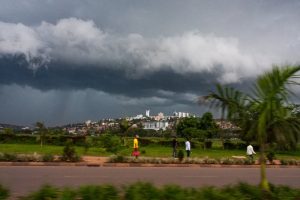
Just one year later, Rubavu experienced another catastrophe. In 2003, intense rains inundated the region continuously for days and nights. When the water could no longer be contained, rivers exceeded their banks, and floods swept through villages. Soil erosion inflicted severe damage on local markets, resulting in road closures and submerged farmland. Entire communities were rendered stranded. Houses collapsed under the weight of mud, and fields once abundant with crops were buried under sludge.
Jean Claude recalls walking through villages where families sat by the roadside, their possessions washed away. Children sat on broken furniture, silently observing the ruins of homes that had stood for generations. Farmers, who had just days earlier been preparing their fields in hope, now faced despair as their crops and livestock were lost. To him, the floods represented more than an environmental crisis; they constituted a human tragedy, depriving people of dignity and security.
The experience profoundly influenced him, leading to the realization that disasters not only devastate landscapes but also annihilate stories, aspirations, and futures. His primary concern was the dissemination of information; individuals were often unaware of the events, their causes, or the appropriate preparations. This lack of communication inspired him to undertake a mission: to serve as a voice capable of transmitting these stories beyond the villages and districts to audiences who could act.
The Night of Fear: Nyundo Arts School Floods in 2007
In 2007, disaster returned to Rubavu, this time with an intensity that shook even those who had grown accustomed to hardship. Heavy rains lashed the district, triggering floods and landslides that swept through homes, fields, and schools. For the first time, Nyundo Arts School, a pillar of cultural education in Rwanda, was struck in the middle of the night. Students awoke to the terrifying sound of rushing water. Dormitories flooded within minutes, panic spreading rapidly. Many young individuals screamed in fear as they scrambled out of their beds, barefoot, clutching whatever they could obtain: a book, a blanket, a pair of shoes. Some waded waist-deep through muddy water; others fled outside into the darkness, soaked and trembling. Teachers and parents hastened to quell the chaos, but the damage had already been inflicted, leaving scars that extended well beyond the physical realm. This event served as a stark reminder that even institutions dedicated to fostering creativity and education were vulnerable to the fury of climate extremes.
For Jean Claude, observing the fear experienced by those students was a transformative experience. It became apparent to him that disasters were not isolated incidents but part of a broader narrative that required proper documentation. Without such narratives, communities would remain silent and inadequately prepared.
A Calling Born from Crisis
These three catastrophes, the eruption of 2002, the floods of 2003, and the Nyundo school floods of 2007, constituted the foundation of Jean-Claude’s life purpose. While many moved forward, endeavouring to forget, he chose to remember. He recognized that mere survival was insufficient; what was essential was transforming survival into proactive measures.
The silence that followed each disaster disturbed him most. Few platforms existed to elucidate what had transpired, why it had occurred, or what lessons could be derived. Families restored their lives with resilience, yet their stories seldom transcended the hillsides of Rubavu. Jean Claude resolved to alter this. He determined that communication could no longer be regarded as a luxury; it must become a vital lifeline.
This represented a crucial milestone in Jean-Claude’s development, as he commenced to perceive himself not solely as a survivor but also as a prospective communicator, an individual who would articulate disasters, convert community experiences into compelling narratives, and ensure that leaders, policymakers, and international actors paid attention.
Science Belongs to Everyone
When Jean Claude later entered the realm of science communication, he carried those memories as a source of inspiration. He frequently states, “If science is not explained in a language that farmers, families, and communities can understand, then it is not fulfilling its purpose.” His passion is not purely academic; it is deeply personal. Having observed how insufficient communication exacerbated fear and confusion during crises, he committed himself to simplifying science into stories, images, and language that are accessible and usable by the general populace.
His work has consistently dismantled barriers between scientists and the larger community. Rather than producing technical reports laden with jargon, Jean-Claude emphasizes human stories, such as farmers rehabilitating degraded land, women celebrating the installation of new water tanks, and youth leading savings groups. Through hundreds of articles aimed at a general audience on different platforms, he has established a reputation as one of the communicators capable of bridging the divide between policy and grassroots communities.
The Catastrophe of Climate Change
Jean Claude’s commitment exists because the climate crisis is undeniable. Across Africa, climate change is no longer a distant threat; it is a present catastrophe. He has seen parched lands in Kenya where livestock collapsed from hunger, women walked miles for a single jerrycan of water, and once-green hillsides lay barren. He has reported on droughts that have shrunk harvests, floods that have swept away homes, and families forced into displacement. To him, these are not statistics. They are human lives. Every article he writes, every documentary he produces, every communication strategy he designs is anchored in this conviction: the climate crisis must be communicated in ways that drive action, not apathy.
Leadership Through Words and Stories
What sets Jean Claude apart is how he responds. Others may remain silent, but he writes. Others may document for reports, but he tells stories. Over the years, he has authored hundreds of non-scientific articles and produced numerous communication pieces that convey complex science in accessible terms. He has written about farmers transforming barren land into lush green oases with tree-based solutions, about women empowered through climate-smart innovations, and about young people becoming champions of resilience.
A Journey Across Borders
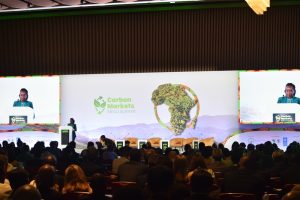
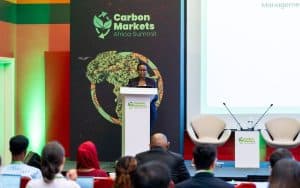
Jean Claude’s passion has carried him beyond Rwanda. As a Global Leadership Fellow at Cornell University in the USA, he learned to sharpen his storytelling for global audiences. His travels have taken him to the United States, Egypt, Kenya, Uganda, Zambia, Zimbabwe, Ethiopia, and across many districts of Rwanda. In every country, he saw how climate challenges echoed and how solutions could be shared across borders.
He has stood in workshops with scientists, sat in policy meetings with ministers, and shared stories with farmers far from home. Each experience reinforced his belief that Africa’s challenges are interconnected and that communication is the bridge linking solutions across the continent.
Recognition and Awards
Jean Claude’s leadership has been recognized with fellowships, awards, and invitations. He has been celebrated as one of Africa’s rising stars in science communication, recognized for weaving together science, journalism, and community voices. From his early recognition as an outstanding environmental journalist in Rwanda to his appearances on international speaking platforms, his credibility has continued to grow. These awards are not just accolades; they are testaments to the power of communication done with heart and purpose.
A Pioneer in East Africa
Today, Jean Claude stands among the recognized science communicators in the East African Region. In a region where science communication is still in its early stages, he has carved out a pioneering role. He is not only documenting; he is redefining how science is communicated. His leadership extends to classrooms, conferences, and global congresses.
A Vision for Tomorrow
Jean Claude’s journey from survivor to science communicator is far from complete. His vision is of an Africa where science communication is not an afterthought but a cornerstone of climate resilience. He dreams of a continent where young people grow up not only hearing about climate problems but also about solutions they can see, touch, and live.
For him, the communicator’s role is not just to inform but to inspire; not just to report but to transform. And in every article, documentary, and speech, he carries forward the same conviction: “We cannot wait for tomorrow to tell these stories, because the changes are happening today, and the world needs to hear them.”
Rwanda as an Inspiration in Climate Action
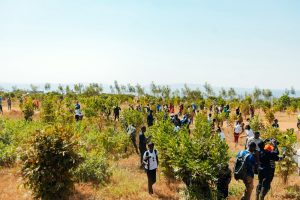
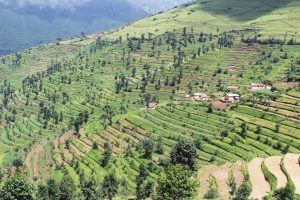
Part of Jean Claude’s drive also comes from Rwanda itself, a country often hailed as a continental leader in climate change adaptation and mitigation. Despite its vulnerability, Rwanda has pioneered practical and implementable measures, including restoring over 2 million hectares of degraded land through the Bonn Challenge, banning single-use plastics, and investing in community-led restoration of degraded landscapes. These initiatives are not just policies on paper; they are visible in terraced hillsides that resist erosion, in clean cities that stand as a model for Africa, and in communities that are better prepared for floods and droughts. For Jean Claude, this national vision has been a constant source of inspiration. It reinforces his belief that with the right communication, Rwanda’s example can inspire not only its own citizens but also other nations across Africa and beyond.
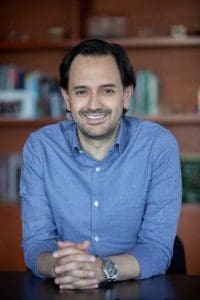
Jean-Claude Habimana is a science communicator and environmental journalist expert with an academic record, including a bachelor’s and master’s degree (finalizing thesis) in Communication and Media Studies from the University of Rwanda, where his research focused on constructive environmental journalism. He is a Global Leadership Fellow from Cornell University and currently serves as the Communication and Membership Officer at the International Union for Conservation of Nature (IUCN). His professional work experience also includes collaborations with the United Nations Food and Agriculture Organization (FAO), USAID, the Fojo Media Institute, and Radio Salus, among others.
About The Author


SUBSCRIBE TO OUR NEWSLETTER