Kayonza: Rwinkwavu Residents Claim Newly Planted Trees Are Degrading Their Farmland, MP Pledges Action

Residents of Gihinga Cell in Rwinkwavu Sector, Kayonza District, say their farmland has begun to lose fertility and structure after trees were planted alongside their crops, leading to a sharp drop in agricultural yields. The concerns were presented to a delegation of Members of Parliament who recently visited the area, with residents hoping for a thorough assessment and a long-term solution from the relevant authorities.
Residents Report Declining Soil Fertility
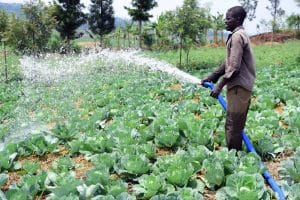
Several farmers in Gihinga Cell have voiced concerns that the trees introduced into their farms have produced unintended negative consequences on their harvests. According to them, the soil has gradually become compacted and less fertile, affecting crop growth that was previously stable before the tree-planting initiative was introduced.
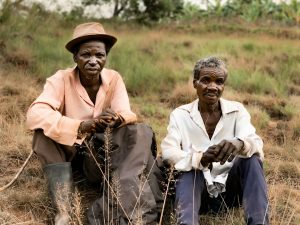
Mukandayisenga Clarisse, a local farmer, explained that the problem became evident shortly after the trees were planted. “The soil changed completely; it no longer has strength. Our crops don’t grow well and this has caused us serious losses. We need agricultural officials to come and help us restore the productivity of our land,” she said.
Another farmer, Habineza Jean Damascène, noted that the situation has disrupted farming activities across the community. “Some crops have completely failed, and others are growing poorly, something we had never experienced before. We want a detailed assessment of the trees that were planted to determine whether they are responsible for degrading our soil,” he added.
Authorities Promise to Look Into the Issue
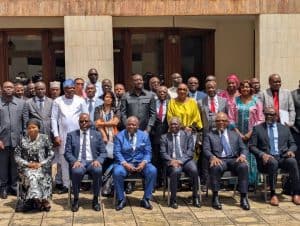
The complaints were formally presented to a delegation of Members of Parliament who were touring Kayonza District to assess local development challenges. MP Pierre Nizeyimana, who was part of the delegation, assured residents that the matter would be addressed at a higher level. “We will examine your concerns together with the agricultural authorities. Once the underlying cause is identified, we will work towards a sustainable solution,” he said.
According to the Kayonza District leadership, several ongoing projects aim to improve agricultural productivity and protect the environment, including irrigation infrastructure and soil conservation schemes. These initiatives are designed to help farmers cope with the effects of climate change but must also be implemented in ways that consider the specific needs and livelihoods of local communities.
Kayonza District Mayor, Nyemazi John Bosco, recently emphasized the importance of collaboration between the district and development partners in improving farming systems and preserving the soil. “We want every project implemented in this district to make a tangible difference in people’s lives. We will continue to work with all stakeholders to ensure that issues like this do not reoccur,” he said.
Tree-Planting Policy: Intended Benefits, Unintended Consequences
In recent years, the government has encouraged agroforestry and the planting of trees alongside crops as part of a broader effort to combat soil erosion, improve land management, and mitigate climate change. However, some residents of Rwinkwavu argue that the tree species introduced in their farms were not suited to the local soil conditions, limiting their benefits and instead creating new challenges.
Agricultural experts note that such initiatives must be accompanied by proper community engagement, soil analysis, and technical guidance to ensure they are implemented appropriately. Farmers in Gihinga say some of these steps were not followed adequately in their area.
What Residents Are Asking For
Residents are calling for a specialized assessment to determine whether the tree species planted in their farms are indeed the source of soil degradation. They are also urging that future agricultural projects be paired with extensive farmer training so that communities can better protect and manage their land.
While tree-planting and sustainable agriculture remain essential pillars of Rwanda’s rural development strategy, the concerns raised in Gihinga highlight the need for deeper evaluation before introducing new tree species or farming practices. Residents now await the findings and recommendations of both parliamentarians and technical experts, hoping for solutions that will restore their farmland and secure stable crop yields for the future.
About The Author


SUBSCRIBE TO OUR NEWSLETTER