The Washington Accords: An attempt to remodel a house while it is still shaking from an earthquake

TOP AFRICA NEWS Reporter
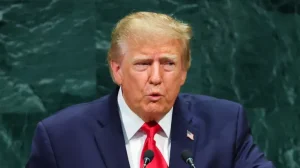
On December 4, 2025, a historic diplomatic shift occurred in Washington, D.C., as President Donald J. Trump hosted the leaders of the Democratic Republic of the Congo (DRC) and Rwanda for the signing of the “Washington Accords for Peace and Prosperity.” The agreements represent a significant evolution in U.S. foreign policy toward the Great Lakes region, moving beyond traditional peacekeeping to a strategy heavily reliant on economic integration and private sector investment to cement stability.
The Diplomatic Architecture
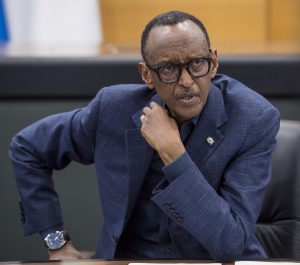
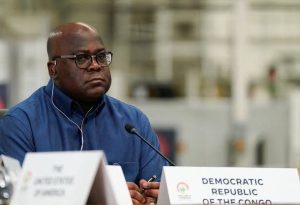
The core of this new diplomatic framework is the “Washington Accords,” signed by DRC President Felix Tshisekedi and Rwandan President Paul Kagame. These accords do not stand alone; they serve to reaffirm and implement the specific peace commitments made by both parties in the earlier agreement from June 27, 2025.
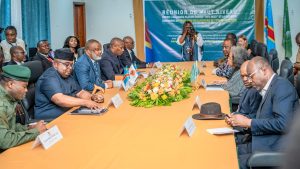
The gravity of the occasion was underscored by the high-level international witnesses present, including the heads of state of Angola, Kenya, Burundi, and Togo, as well as high-ranking officials from the African Union, Qatar, and the UAE. This robust attendance suggests a coordinated international pressure campaign to ensure regional buy-in, particularly from neighbors who have historically held stakes in the DRC’s stability.
Alongside the trilateral accords, the U.S. cemented its own bilateral ties, with Secretary of State Marco Rubio signing a Strategic Partnership Agreement and a security Memorandum of Understanding (MOU) with the DRC, as well as a Framework for Shared Economic Prosperity with Rwanda.
The Economic Engine: REIF

This includes cross-border collaboration to protect wildlife and secure parklands, potentially demilitarizing contested wilderness areas.
The most distinct feature of these accords is the Regional Economic Integration Framework (REIF). The participating governments posit that the “root causes of conflict” can be addressed by transforming the region’s vast natural wealth from a driver of violence into a mechanism for shared growth.
The REIF focuses on five critical pillars:
1. Mineral Supply Chains: The framework aims to formalize artisanal mining and establish traceability to eliminate conflict financing and smuggling. The goal is to create “transparent and responsible” supply chains that allow U.S. companies to source critical minerals securely.
2. Infrastructure: Projects aim to connect the region to global trade routes, specifically linking the mineral-rich interior to international markets.
3. Energy: The deal seeks to expand electricity access to power both homes and industrial growth.
4. National Park Management & Tourism: This includes cross-border collaboration to protect wildlife and secure parklands, potentially demilitarizing contested wilderness areas.
5. Public Health: Establishing cross-border protocols to prevent disease outbreaks.
The Strategic Value of the Lobito Corridor
A critical component of this economic strategy is the Lobito Corridor, a trans-African railway project connecting the DRC to the Atlantic port of Lobito in Angola. In a joint statement, the U.S. Government and the European Commission reaffirmed their commitment to this infrastructure, viewing it as the “cornerstone of long-term stability” for the region.

The strategic intent is clear: by linking the DRC to the Atlantic, the U.S. and EU aim to secure “new avenues for two-way trade” and “transparent supply chains” for critical minerals. The U.S. and EU have expressed readiness to finance proposals to rehabilitate the DRC portion of the corridor to ensure it synchronizes with the Angolan side. This infrastructure is designed to physically cement the DRC’s economy into a Western-facing trade network.
Despite the optimism of the signing ceremony, U.S. officials remain pragmatic regarding the difficulties ahead. Secretary of State Marco Rubio emphasized that while the agreements provide the infrastructure for cooperation, “the implementation is going to be critical”.
Rubio explicitly managed expectations regarding the timeline for peace, noting that “like any war, like any conflict, there’s going to be ups and downs, and there’s going to be stops and starts”. He drew a direct parallel to the situation in Gaza, warning that progress may not be as fast as desired. However, the Secretary stressed that the U.S. engagement would extend beyond merely “ending a war” to building a partnership based on “mutual prosperity”.
Analysis: A Gamble on “Peace Through Profit”
The Washington Accords represent a gamble that economic incentives can succeed where purely political or military interventions have failed. By involving the private sector and emphasizing “local ownership” through annual summits and technical working groups, the framework attempts to build a constituency for peace among local entrepreneurs, provincial authorities, and civil society.
The success of this initiative relies heavily on the “transparent” formalization of the mineral trade. If the REIF can successfully divert mineral wealth away from armed groups and into formal, taxable, and investable channels, it would starve insurgents of funding while integrating the region into the global supply chain for critical U.S. industries.
The Washington Accords differ from previous attempts at peace in the Great Lakes region by placing economic integration at the forefront of the security strategy. The involvement of the U.S. private sector and the development of the Lobito Corridor suggest a long-term American strategic interest in stabilizing the DRC’s mineral supply chains.
However, as Secretary Rubio noted, signing documents is distinct from compliance. The true test will be whether the economic benefits can materialize fast enough to disincentivize the violence that has plagued the region for decades.
To view this situation simply: The Washington Accords are attempting to remodel a house while it is still shaking from an earthquake. The blueprints (the Accords) and the building materials (the REIF and Lobito Corridor) are high quality, and the architects (the U.S., DRC, and Rwanda) are committed. However, the structural integrity of the final build will depend entirely on whether the foundation—the implementation of peace on the ground—can settle firmly enough to support the weight of the new economy.
About The Author


SUBSCRIBE TO OUR NEWSLETTER