Green Climate Fund Commemorates a Decade of Global Action With Release of Comprehensive Impact Report

INCHEON, South Korea – November 2025: Ten years after the approval of its first projects, and marking the 10th anniversary of the Paris Agreement, the Green Climate Fund (GCF) has released its comprehensive impact report, “A decade of global climate action: Building resilience, transforming lives,” detailing how it has provided the financial means for developing countries to realize their climate ambitions. The report confirms the Fund’s pivotal role in global climate action, capturing the tangible results of a shared commitment to confront the climate crisis,,.
Established under the United Nations Framework Convention on Climate Change (UNFCCC), the GCF was envisioned as a crucial mechanism for mobilizing and channeling climate finance, anchored in the principle of climate equity—that a safe climate future cannot be achieved if developing countries are left behind in the transition to low-emission, climate-resilient pathways,,.
The report showcases the rapid growth and scale achieved by GCF over its first decade, building a solid foundation of partnerships and investment,.
The GCF portfolio now stands at USD 19.3 billion invested across 134 developing countries,. This portfolio is associated with substantial co-financing, totaling USD 78.6 billion when combined with the USD 59.3 billion mobilized from partners,. GCF leverages public finance to unlock private capital, demonstrating a ratio of 4.5:1 for private sector finance, translating USD 6.9 billion of GCF funding into USD 31.3 billion in private co-financing,,.
In alignment with its mandate, GCF has focused significantly on helping vulnerable nations adapt to the unavoidable impacts of climate change. The Fund is now one of the largest sources of adaptation finance globally,. In grant equivalent terms, adaptation accounts for 59 per cent of the current portfolio, with mitigation at 41 per cent,.
The Fund has demonstrated a strong commitment to solidarity by allocating nearly two-thirds of its approved adaptation funding to Least Developed Countries (LDCs), Small Island Developing States (SIDS), and African states, surpassing the mandated 50 per cent target.
GCF’s investments have delivered significant human and environmental impact:
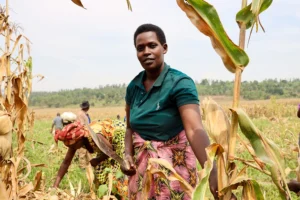
- Human Reach: Adaptation projects have reached 249 million people, including 96 million women and girls,,. This reach is comparable to protecting a population larger than Indonesia.
- Emissions Reduction: The Fund has achieved 95.9 million tonnes of carbon dioxide equivalent emissions reduction. This achievement is equivalent to taking nearly 22.4 million gasoline-powered cars off the road for an entire year.
- Ecosystem Management: GCF has supported the restoration and sustainable management of 33.2 million hectares of resilient ecosystem coverage,.
Case Studies: Driving Systemic Transformation
The report features 10 case studies that demonstrate how GCF projects are designed to drive systemic and transformative change across key result areas,. These projects move beyond isolated interventions to embed resilience and low-emission pathways into national strategies.
In Barbados, the Water Sector Resilience Nexus for Sustainability (WRSN-S) initiative catalyzed nationwide reform in water management, integrating solar power at the national water utility to improve energy efficiency and security,. Energy savings generated by the system were channeled into a Revolving Adaptation Fund Facility (RAFF), establishing a circular financing model that provides grants and micro-loans for vulnerable households,.
In Djibouti, the Red Sea Power project, a vital mitigation initiative, developed the country’s first 60 MW utility-scale wind farm and successfully deployed a blended-finance model to attract private capital,. This project boosted the country’s energy capacity by 50 per cent and advanced its goal of 100 per cent renewable energy by 2035,.
In Namibia, the Empower to Adapt project utilized GCF’s Enhanced Direct Access (EDA) modality to place climate finance directly in the hands of communities through the Community-Based Natural Resource Management (CBNRM) system,. This locally-led approach restored over 9 million hectares of degraded savannah and created more than 1,100 climate-resilient jobs,,.
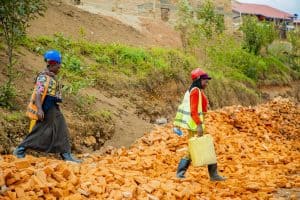
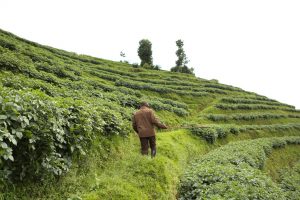
In Rwanda, the integrated Green Gicumbi project transformed vulnerable northern highlands by combining watershed restoration, sustainable forestry, and green construction. The initiative built climate-resilient settlements, restored 17,200 hectares of degraded land, and demonstrably reduced emissions by 214,632 tCO₂e, offering a replicable model for disaster relocation and climate-resilient development,,.
The GCF recognizes that the next decade will be decisive for achieving the goals of the Paris Agreement,. Building on its first ten years, the Fund is ready to scale up operations through its ‘50by30’ vision, aiming to efficiently and impactfully manage a USD 50 billion portfolio by 2030,. This represents a plan to more than triple financing by 2030, with a programming target rising up to USD 15 billion by 2035.
GCF Executive Director Mafalda Duarte emphasized that climate finance is fundamentally about building a more inclusive and sustainable world, grounded in the core principle of climate equity,,. The Fund is committed to accelerating reforms that deliver speed, scale, and impact, ensuring climate finance reaches those who need it urgently,.
About The Author


SUBSCRIBE TO OUR NEWSLETTER