Congolese Refugees in Rwanda Call for International Justice Over Hate Speech by Gen Maj Sylvain Ekenge

Congolese refugees living in several refugee camps across Rwanda have intensified their calls for international legal action against former Armed Forces of the Democratic Republic of Congo (FARDC) spokesperson, Gen Maj Sylvain Ekenge, accusing him of promoting hate speech and ethnic discrimination against Congolese Tutsis.
The refugees say remarks recently made by Gen Maj Ekenge openly targeted Congolese Tutsis and risk fueling further violence, division, and persecution in eastern Congo. They argue that the statements reflect long-standing policies of exclusion and hostility toward a community that has endured decades of insecurity and displacement.
After similar demonstrations were held earlier in Mahama Refugee Camp in Kirehe District and Kigeme Camp in Nyamagabe District, refugees in Nyabiheke Camp (Gatsibo District), Mugombwa Camp (Gisagara District), and Kiziba Camp (Karongi District) joined the protests on January 2, 2026.
Participants said they deliberately chose to forgo festive celebrations, citing continued insecurity in their home country and a lack of confidence in the Congolese government’s ability or willingness to guarantee their safety upon return.
According to the refugees, the remarks made by Gen Maj Ekenge have further eroded hopes of repatriation, reinforcing fears that Congolese Tutsis are still viewed as a threat rather than as equal citizens.
Statements That Sparked Outrage
The controversy stems from comments made on December 27, 2025, when Gen Maj Ekenge appeared on the Congolese national television during a program discussing the security situation in eastern Democratic Republic of Congo, particularly in South Kivu Province.
During the broadcast, he made remarks perceived as demeaning and inflammatory toward Congolese Tutsis, including statements suggesting that marriage to a Tutsi woman should be approached with caution, implying that such unions could destabilize families and communities.
Refugees say this language is dangerous and deeply reminiscent of rhetoric historically used to justify ethnic violence, drawing parallels to hate narratives that preceded the 1994 Genocide against the Tutsi in Rwanda.
Although Congolese authorities later removed Gen Maj Ekenge from his position as FARDC spokesperson, refugees argue that the decision does not amount to accountability.
They insist that his dismissal is merely symbolic and fails to address the gravity of the statements or their potential consequences. Several observers of Congolese politics share the view that the remarks reflect broader state attitudes rather than a personal lapse.
As a result, the refugees are calling for Gen Maj Ekenge to be investigated and prosecuted before international judicial mechanisms for incitement to hatred and discrimination.
Refugees Share Painful Testimonies
Nyasamaza Nyirahumure, 39, originally from Minembwe, fled the Democratic Republic of Congo in 2007 due to violence linked to armed groups operating in the region. She said Gen Maj Ekenge’s remarks reopened deep wounds and shattered lingering hopes of returning home. “We had started to believe that peace agreements could allow us to go back,” she said. “But when such words come from the army spokesperson, it becomes clear that we are not welcome. We left behind more than ten hectares of land, cattle, and our livelihoods. Today, we live as refugees, while hatred continues to be spread by those in power.”
Uzamukunda Dyna, who fled Masisi in 2012, said years of insecurity, harassment, and the destruction of homes forced her to seek refuge in Rwanda. “We believed that this ideology would eventually disappear,” she said. “Instead, the government has shown us that discrimination against Tutsis is still deeply rooted.”
A Generation Raised in Exile
For young refugees born in camps, the statements have been particularly devastating. Uwimbabazi Gikundiro Mahoro, 20, who was born and raised in Nyabiheke Camp, said his generation feels trapped in uncertainty. “We want to return and see our country,” he said. “We were born in exile, but our parents always describe Congo as a beautiful place. Now we fear we may never belong there.”
Maniragaba Bosco, a refugee leader in Nyabiheke Camp, noted that many residents have lived in exile for over 20 years, while others have spent more than three decades away from their homeland. “When the army spokesperson speaks on national television, he represents the state,” Maniragaba said. “These words encourage hatred while our relatives are still being attacked. The world should not remain silent.”
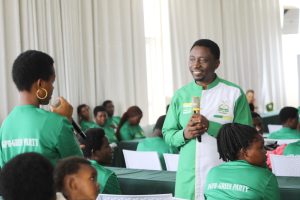
In Kiziba Refugee Camp, home to more than 14,000 Congolese refugees who fled violence in 1996, demonstrations began early on January 2, 2026. Refugees marched through the camp holding placards condemning ethnic discrimination and chanting messages calling for justice and peace.
Valentine Nyirabwiza, 32, who arrived at the camp as a toddler, said the remarks left her feeling rejected by the country she still considers home. “It is painful to live as a refugee for so many years and then be told, indirectly, that you do not belong,” she said. “We are asking the international community to listen to us and help us find justice.”
Ndarishize Benjamin, who has lived in Kiziba Camp for 30 years, warned that the rhetoric has real and immediate consequences. “These statements put lives at risk, especially women,” he said, adding that a fellow refugee was abducted shortly after the remarks were made and remains missing.
Nsengamungu Albert Methode, the manager of Kiziba Refugee Camp, described Gen Maj Ekenge’s removal from office as insufficient. “Removing him does not erase the harm caused by his words,” he said. “Justice requires accountability.”
Rwagasore Aimé, manager of Mugombwa Refugee Camp, questioned why Congolese Tutsis continue to be singled out in a country with more than 450 ethnic groups. “There is no justification for excluding one community,” he said. “We are all Congolese and deserve dignity, safety, and a place to call home.”
Congolese refugees in Rwanda are now appealing to international human rights organizations, the United Nations, and international courts to investigate the statements made by Gen Maj Sylvain Ekenge, ensure accountability, and address the broader pattern of discrimination against Congolese Tutsis.
They say justice, protection, and genuine commitment to equality are the only paths toward lasting peace and a safe, voluntary return to their homeland.


About The Author


SUBSCRIBE TO OUR NEWSLETTER