From Pigs to Prosperity: How Small Livestock Is Rebuilding Rural Resilience in Gicumbi

In the rolling hills of northern Rwanda, a quiet transformation is taking place inside household backyards and village farms. Small livestock often overlooked in large-scale agricultural debates has emerged as a powerful driver of resilience, nutrition, and income for rural families in Gicumbi District.
District authorities say the growing adoption of pigs, poultry, goats, and sheep is not only improving household welfare but also changing how communities recover from poverty and food insecurity.

Parfaite Uwera, Vice Mayor in charge of Economic Development in Gicumbi District, small livestock farming has proven to be one of the most practical and inclusive tools for socio-economic progress.
“Small livestock has played a crucial role in fighting malnutrition and household poverty,” Uwera said. “Through the distribution of small livestock to vulnerable families and complementary development programs, we managed to reduce poverty levels in the district by 13.3 percent in 2024 alone.”
Beyond livestock: building systems, not handouts
At the center of this transformation is the Partnership for Resilient and Inclusive Small Livestock Markets (PRISM) project, which district leaders credit for shifting support from one-time assistance to long-term economic empowerment.
Unlike traditional livestock donation schemes, PRISM combines animal distribution with training, veterinary services, market access, and continuous follow-up.
“The project does not stop at giving animals,” Uwera noted. “It provides technical guidance and regular monitoring to ensure families turn livestock into sustainable livelihoods.”
A household story of growth

For Elias Nizeyimana, a resident of Kirwa Village, Mubuga Cell in Miyove Sector, the impact of small livestock is visible in both his income and his confidence.
What started as a single pig received through PRISM has grown into a small but expanding farm.
“From one pig, I now own four pigs and two dairy cows,” Nizeyimana said. “The project follows up on us closely, and that support has helped me plan for the future. I believe I will continue progressing.”
Stories like Nizeyimana’s are increasingly common across Gicumbi, where small livestock is serving as a stepping stone toward diversified farming and financial stability.
Markets, nutrition, and jobs

PRISM Project Manager Joseph Nshokeyinka says the project has achieved 98 percent of its targets since its launch five years ago, with tangible outcomes across income, nutrition, and rural employment.
“This is not just talk,” Nshokeyinka said. “The results are visible in households and communities. Small livestock value chains have improved incomes, strengthened nutrition, and increased resilience among rural families.”
The project has so far reached over 33,000 residents, including beneficiaries who received animals and others engaged in related services. To support sustainability, PRISM has constructed 15 veterinary clinics, 15 small livestock markets, and modern pig slaughter facilities, reducing the consumption of uninspected pork.
Tackling malnutrition at the household level
Nutrition improvement remains a core objective of the project. Working closely with government institutions, PRISM has supported community-based education programs that encourage parents to provide balanced diets for children.
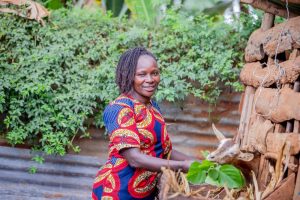
Through poultry farming, many households now have daily access to eggs, an affordable source of protein that was previously out of reach for vulnerable families.
“We are proud of how families are now able to feed their children better using what they produce themselves,” Nshokeyinka said.

Originally scheduled to conclude in September 2026, the PRISM project has been extended by three years, following strong results and renewed government and partner commitment.
“We have reached 98 percent of our goals ahead of schedule,” Nshokeyinka said. “The project will not stop here. Because of its impact, additional funding has been secured, and activities will continue in the next national budget cycle.”
PRISM operates across 15 districts nationwide, focusing on four key small livestock value chains: pigs, poultry, goats, and sheep. The project is funded by the International Fund for Agricultural Development (IFAD) and implemented by the Rwanda Agriculture and Animal Resources Development Board (RAB), with an initial budget of USD 45 million.
In Gicumbi, small livestock farming is proving that meaningful development does not always require large-scale infrastructure or heavy machinery. Sometimes, lasting change begins with a pig, or a handful of chickens, paired with the right support systems.


About The Author


SUBSCRIBE TO OUR NEWSLETTER