Rwanda Establishes Formal Fee Structure for Carbon Market to Enhance Transparency and Fund Climate Resilience

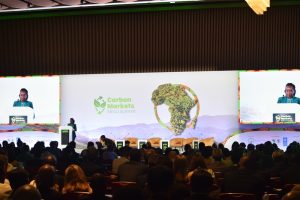
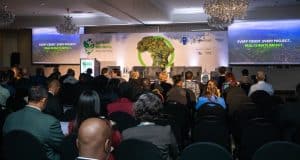
KIGALI, Rwanda – In a major step toward fulfilling its commitments under the Paris Agreement, Rwanda has officially established a formal fee structure to govern its carbon market. The new framework, enacted through Ministerial Instructions No 001/MoE/26, was signed by the Minister of Environment, Dr. Bernadette Arakwiye, on January 13, 2026.
The instructions aim to ensure transparency, fairness, and sustainability in the governance of carbon market activities while supporting Rwanda’s updated Nationally Determined Contributions (NDC).
Under the new regulations, the Rwanda Environment Management Authority (REMA) serves as the Designated National Authority (DNA). REMA is tasked with overseeing the approval and assessment of carbon projects to ensure they align with national sustainable development goals and maintain environmental integrity.
All fees collected through these activities are to be paid directly into the bank account of the National Fund for Environment (FONERWA), commonly known as the “Rwanda Green Fund”. This fund is responsible for mobilizing financial resources to support green growth and climate resilience across the country.
The instructions apply to all projects under the framework of Article 6 of the Paris Agreement, including cooperative approaches (Article 6.2) and the centralized mechanism (Article 6.4). The fee structure distinguishes between Article 6 projects and the Voluntary Carbon Market (VCM):
- Administrative Fees: Project developers must pay USD 1,000 to open an account, USD 1,500 for project registration and a non-objection letter, and USD 3,000 for an official letter of approval.
- Transaction and Authorization: For Article 6 projects, issuance confirmation is set at USD 0.2 per credit, while VCM projects are charged USD 0.1 per credit. Additionally, an authorization fee of 2% of Emission Reductions (ERs) applies to Article 6 projects.
- National Buffer and Global Mitigation: To manage risks such as non-permanence, 1% of authorized mitigation outcomes will be withheld for the Nation Buffer account of Rwanda. Furthermore, 2% of authorized units are dedicated to the Overall Mitigation of Global Emissions (OMGE).
A significant feature of the new instructions is the Revenue-Sharing (benefit share) model. For standard projects, 15% of authorized mitigation outcomes are directed toward domestic climate priorities.
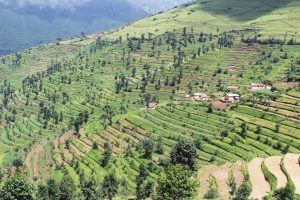
However, the requirements are more stringent for land-based projects where developers utilize farmers’ land or public land. In these cases, the revenue-sharing requirement rises to 30% to ensure that local communities, landowners, and stakeholders directly benefit from the emission reduction activities.
The establishment of these fees follows Rwanda’s active engagement in signing various cooperative agreements internationally. By formalizing these costs—including a USD 5,000 fee for the renewal of a crediting period—Rwanda is positioning itself as a regulated and reliable destination for climate finance and carbon trading.
These instructions are effective as of the date of their signature, signaling Rwanda’s immediate intent to scale its participation in global carbon markets while securing funding for its own environmental protection and adaptation programs.
About The Author


SUBSCRIBE TO OUR NEWSLETTER