Insured Farmers in Muhanga Urge Wider Uptake of Tekana Program

Unpredictable weather has long made farming in Rwanda’s marshlands a risky activity. A single hailstorm or flood can wipe out months of hard work, leaving farmers burdened with debt and uncertainty. In Muhanga District, however, members of KOKAR Cooperative say agricultural insurance has replaced fear with renewed confidence.
KOKAR Cooperative, which brings together around 500 farmers cultivating rice and maize in Rugeramigozi II marshland, says joining the National Agriculture Insurance Scheme (NAIS), locally known as Tekana Urishingiwe Muhinzi-Mworozi (“Smallholder farmer, feel safe, you are insured”), has been a game changer.
Naphtal Nzabihimana, an agronomist at KOKAR Cooperative, recalls how farming felt before joining Tekana.

“Before we joined Tekana, we farmed with fear,” Nzabihimana said. “Even when investing money, we always told ourselves that if the crops were destroyed, maybe the money would somehow come back another way. But now, when you invest and insure your crops, you have confidence. Even if disaster strikes, you know you will at least recover the capital you invested.”
That confidence was tested during the 2025 Season B, when a hailstorm hit part of the cooperative’s rice fields just as the crops were nearing harvest.
“We lost rice on eight hectares due to hail,” Nzabihimana explained. “The insurance company compensated us with Rwf 3.5 million.”
The losses did not stop there. Floods also damaged maize grown on three hectares.
“For maize, we were compensated Rwf 2 million. This support helped us recover and continue farming,” he added.
Currently, KOKAR Cooperative cultivates 40 hectares of rice and 30 hectares of maize, all of which are insured under the Tekana program.
Farmers speak from experience

For individual farmers, insurance has proven equally critical. Mediatrice Mukagendage, a member of KOKAR Cooperative, said her perspective changed after experiencing severe losses in 2023.
“There were heavy floods that destroyed our rice. That’s when I truly understood the importance of Tekana,” she said. “They came, assessed the damage, and compensated us. If we were not insured, the losses would have been devastating.”
Mukagendage now encourages fellow farmers to insure their crops.
“My message to other farmers is to insure their crops. Whatever disaster happens, you are supported and compensated for what you lose,” she said.
District pushes for wider coverage
Muhanga District authorities say stories like those from KOKAR Cooperative are helping change farmers’ mindsets, even though coverage remains low in some areas.

Eric Bizimana, Vice Mayor of Muhanga District in charge of Economic Development, said Tekana awareness efforts initially focused on cooperatives involved in agriculture and livestock.
“When Tekana started in Muhanga, we began by mobilizing agricultural and livestock cooperatives. We have more than 50 cooperatives in the district,” Bizimana said.
While not all cooperative members are insured yet, he noted that attitudes are gradually shifting.
“What is needed, and what we are doing, is to continue raising awareness so that more farmers and livestock keepers can join the Tekana program,” he said.
Despite progress, insurance coverage in Muhanga remains modest. Currently, about 10 percent of cattle in the district are insured. This year, the district targets insuring at least 3,090 cattle out of a total population of around 47,000.
Poultry insurance coverage is significantly higher, standing at over 80 percent, with about 8,000 poultry insured. Around 570 pigs are also covered.
In crop production, insured farmland includes 79 hectares of rice, 468 hectares of maize, representing about 15 percent of total maize farmland,17 hectares of Irish potatoes, and one hectare of soybeans.

Launched in 2019 by the Ministry of Agriculture and Animal Resources (MINAGRI), the National Agriculture Insurance Scheme (NAIS) is implemented by the Rwanda Agriculture and Animal Resources Development Board (RAB) through its Single Project Implementation Unit, in partnership with private insurance companies.
To make insurance affordable, the government subsidizes 40 percent of insurance premiums for smallholder farmers.
Since its launch, NAIS has insured about 189,734 farmers and livestock keepers, representing roughly six percent of Rwanda’s farming population. The government has invested Rwf 5.95 billion in premium subsidies, while Rwf 8.19 billion has been paid out in compensation, Rwf 3.57 billion for livestock and Rwf 4.62 billion for crops.
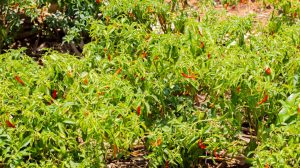
The scheme covers major crops including rice, maize, potatoes, beans, chili, soybeans, French beans, and cassava, as well as livestock such as cattle, pigs, poultry, and fish.


About The Author


SUBSCRIBE TO OUR NEWSLETTER