Beyond the Lab: Experts Urge Focus on the “Last Mile” of Innovation at ReSAKSS Annual Conference

AFRICAN UNION AGENDA 2063 — As the continent prepares for the landmark Kampala CAADP Declaration in 2026, experts convened at the ReSAKSS Annual Conference this week to issue a unified directive: Africa’s agrifood transformation hinges not just on new technology, but on the digital systems to track it, the financing to scale it, and the human capital to sustain it.
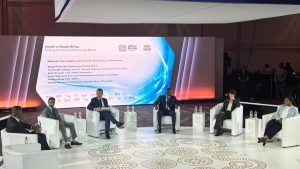
Held online from January 20-22, the conference launched the Annual Trends and Outlook Report (ATOR) under the theme “Moving the Technology Frontiers in African Agrifood Systems.” Organized by AKADEMIYA2063 and the African Union Commission, the event brought together policymakers and development partners to address the critical “last mile” gap preventing innovations from reaching smallholder farmers.
Bridging the Data-Policy Divide
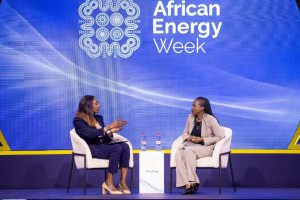
A recurring theme during the high-level closing panel was the vital role of robust data in driving political will. Hannah Scheuermann, an advisor at GIZ, emphasized that as the continent moves toward the new CAADP cycle, indicators hold immense power because “what gets measured is quite more likely to get done”.
However, Scheuermann warned that data availability alone is insufficient. She highlighted a “duality” of need: nations require high-quality data, but they also need the institutional capacity to translate that data into evidence-based policy. Citing GIZ’s collaboration with Humboldt University and partners in Kenya, she noted that strengthening modeling capacities is essential so that policy decisions actually reflect the evidence gathered.
From Manual Spreadsheets to Satellite Precision
Dr. Hamady Diop, the Post-Malabo Development Process Coordinator, argued that the mechanisms for tracking these commitments are in dire need of modernization. He called for a definitive shift away from manual Excel sheets toward the full adoption of the electronic Biennial Review (eBR), an automated system that flags errors instantly.
“We should not be relying on three-years-old survey[s] to measure dynamic issue[s] like climate resilience and crop productivity,” Diop stated, advocating for the integration of remote sensing and satellite data to provide near real-time information.
Diop also issued a stark warning regarding the sustainability of these systems. He cautioned against “projectized” initiatives where capacity erodes once funding disappears, citing the post-Maputo era as a cautionary tale. He urged countries to build long-term capacity to use technologies like drones for soil mapping, allowing nations to own and validate their own data rather than relying on external estimates.
Financing the “Agripreneurs”
While data informs policy, financing remains the fuel for deployment. Mr. Ayo Sotinrin, Managing Director of the Bank of Agriculture in Nigeria, addressed the financial barriers facing the youth and “agripreneurs” who are often excluded by traditional lending models due to a lack of collateral and high interest rates.
Sotinrin outlined the bank’s move toward “adaptive financing architectures,” which include blended financial instruments and risk-sharing arrangements designed to support innovators.
To bridge the gap between research institutions and the farm, Sotinrin advocated for “technology brokerage platforms.” He announced that the Bank of Agriculture is leveraging its network of 110 locations to establish innovation hubs staffed by extension workers who understand both technology and local contexts, providing hands-on training to farmers.
Invest in the Next Generation
Rounding out the discussion, Eng. Dr. Dorothy Okello, Dean of the School of Engineering at Makerere University, stressed that R&D cannot exist in a vacuum. She argued that innovation must be viewed through an “agri-food systems lens,” supported by policies, markets, and infrastructure.
Dr. Okello emphasized that to move from technology adoption to leadership, Africa must invest heavily in its human capital. She called for scaling up graduate education to address gender and generational gaps, ensuring the next generation of scientists is trained in interdisciplinary fields such as data science and synthetic biology.
“We need to connect with investors [and] entrepreneurs so that we are balancing the effort and energy that we are putting in terms of the R&D side with actually what is needed in the community,” Okello said.
As the conference concluded, the consensus was clear: the technology to transform African agriculture exists. The challenge for the next decade of CAADP implementation is to build the digital infrastructure, financial mechanisms, and human capacity required to deploy it effectively.
About The Author


SUBSCRIBE TO OUR NEWSLETTER