Livestock Farming as a Powerful Engine of Household Prosperity, Food Security, and Inclusive Growth in Gakenke District

Livestock farming has become one of the strongest pillars of socio-economic transformation and food security in the Gakenke district, directly improving the lives of tens of thousands of households while strengthening the local economy. From milk and meat production to egg collection and value-chain development, the sector continues to unlock opportunities, raise incomes, and restore dignity among farming families.
According to Gakenke district officials, Out of more than 93,000 households in the district, over 75,000 households equivalent to 80.7 percent are engaged in livestock farming. This remarkable level of participation highlights how animal husbandry has evolved from a traditional practice into a strategic pathway for poverty reduction and sustainable development. For many families, livestock is not only a source of income but also a form of savings, nutrition security, and long-term resilience.
Gakenke district is home to a vibrant and diverse livestock population.
Farmers collectively rear over 69,000 cattle, which anchor both milk and beef production. Additionally, there are more than 38,000 pigs, 35,000 goats, 17,000 sheep, and over 130,000 poultry, alongside other small livestock. This diversity enables households to participate in different value chains based on their capacity, ensuring stable income streams and reduced economic vulnerability.

Milk production is among the most organized and impactful sub-sectors. District operates six milk collection centers, which together receive about 12,700 liters of milk every day. These centers have transformed the lives of dairy farmers by guaranteeing a reliable market, improving milk quality, and reducing post-harvest losses.
One of the beneficiaries, Jonathan Ndizihiwe, a dairy farmer, says livestock farming has completely changed his household’s livelihood.
“Before joining the milk collection system, selling milk was a daily struggle. Today, I deliver my milk with confidence, earn stable income, and support my family’s needs,” he said. “We are grateful to the District leadership for investing in collection centers and extension services that help us maximize production.”
Egg production has also recorded impressive growth. A dedicated egg collection center receives more than 60,000 eggs daily, reflecting the rapid expansion of poultry farming. This sub-sector has become particularly attractive to women and youth due to its low start-up costs and fast returns.
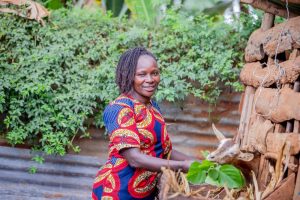
Eugenie Abizera, a poultry farmer, describes livestock farming as a life-changing opportunity.
“Poultry farming has enabled me to pay school fees, access health insurance, and save for the future,” she noted. “The support we receive from local authorities—especially training and access to markets—has helped us turn small initiatives into sustainable businesses.”

Meat production and processing further demonstrate the District’s progress in livestock value addition. The presence of two pig slaughterhouses, producing over 1,000 kilograms of pork per day, has created a ready market for pig farmers while ensuring hygienic and standardized meat processing. Meanwhile, one modern cattle slaughterhouse produces more than 4,000 kilograms of beef daily, significantly contributing to employment creation, trade, and local revenue.
Beyond production, the livestock sector has generated wide-ranging benefits across the value chain, including jobs in veterinary services, feed supply, transportation, processing, and marketing. It has also strengthened crop–livestock integration through manure use, boosting agricultural productivity and environmental sustainability.

About The Author


SUBSCRIBE TO OUR NEWSLETTER