Senators Raise Concerns Over High Cost of Animal Feed, MINAGRI Outlines Government Measures

Members of the Rwandan Senate have expressed serious concerns over the persistently high cost of animal feed, warning that the situation is pushing many livestock farmers into losses despite their heavy investment in animal husbandry.
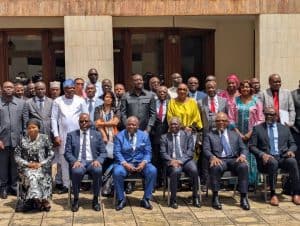
The concerns were raised during a plenary session of the Senate held with the Minister of Agriculture and Animal Resources (MINAGRI), focusing on existing measures to address ongoing challenges in accessing affordable and sufficient animal feed.
According to a report by the Rwanda Governance Board (RGB), 57.9 percent of citizens indicate that animal feed remains insufficient, both in terms of availability and affordability. This highlights a significant gap in the livestock value chain that continues to affect farmers across the country.
Senator Mukabalisa Domitille noted that the high price of animal feed does not correspond with the income livestock farmers earn from their products. “Livestock farmers buy animal feed at very high prices, yet the income they generate from milk, meat, or eggs does not match their investment. In reality, they feed animals, but the animals do not feed them,” she said.
Senator Mureshyankwano Marie Rose also raised concerns about the export of locally produced animal feed while the domestic market remains underserved. “It is worrying to see animal feed exported abroad while local farmers struggle to access it or are forced to buy it at extremely high prices,” she stated.
The Senators urged MINAGRI to prioritize local farmers by implementing policies and practical measures that reduce the cost of animal feed and enhance the sustainability of livestock farming in Rwanda.
In response, the Minister of Agriculture and Animal Resources, Dr. Ndabamenye Telesphore, assured the Senate that the Government has put in place various strategies to address the issue. “We are strengthening the capacity of local animal feed processing industries and increasing the production of crops used in feed manufacturing to reduce costs on the market,” he explained.
Dr. Ndabamenye added that the Government is also encouraging private sector investment in animal feed production to increase supply and improve quality.
Livestock farming remains a key sector for Rwanda’s economy, contributing about 3 percent to the national Gross Domestic Product (GDP). The Government’s goal is that by 2029, livestock farming will be modernized, profitable for farmers, and a significant source of national revenue.
Statistics from the Ministry of Agriculture and Animal Resources indicate that 50 percent of Rwandan households are engaged in livestock farming for the production of meat, milk, and eggs, underscoring the sector’s importance to livelihoods and national economic development.
About The Author


SUBSCRIBE TO OUR NEWSLETTER