New Report: Harmful Investments Outpace Nature Protection by 30 to 1

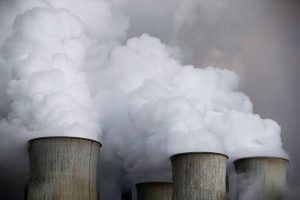
For every dollar the world invests in protecting nature, it spends thirty dollars destroying it, according to a new report by the United Nations Environment Programme (UNEP), exposing a massive imbalance in global finance that is accelerating environmental degradation.
The report, The State of Finance for Nature 2026, released today and based on 2023 data, shows that while investments harmful to nature have surged to US$7.3 trillion, funding for nature-based solutions (NbS) stands at just US$220 billion.
Of the nature-negative finance flows, US$4.9 trillion comes from private sources, concentrated mainly in utilities, industrials, energy, and basic materials. Public subsidies also play a major role, with US$2.4 trillion spent in 2023 on environmentally harmful support for fossil fuels, agriculture, water, transport, and construction.
In contrast, nearly 90 percent of NbS financing comes from public sources, reflecting growing government support but limited engagement from the private sector. Private investment in NbS reached only US$23.4 billion, accounting for just 10 percent of total NbS finance.
“If you follow the money, you see the size of the challenge ahead of us. We can either invest in nature’s destruction or power its recovery – there is no middle ground,” said Inger Andersen, Executive Director of UNEP.
“While financing nature-based solutions crawls forward, harmful investments and subsidies are surging ahead.”
The report warns that without a rapid shift in financial priorities, global efforts to halt biodiversity loss, mitigate climate change, and build resilience will fall short. To stay on track, investments in NbS must increase 2.5 times to US$571 billion per year by 2030, an amount that represents only 0.5 percent of global GDP.
To help governments and businesses navigate this transition, the report introduces the Nature Transition X-Curve, a new framework designed to guide the gradual phase-out of destructive subsidies and investments while scaling up high-integrity NbS across the economy.
The framework outlines how entrenched systems of production can be reformed, offering tailored options for both public and private actors across supply chains. It also charts pathways toward what UNEP describes as a “trillion-dollar nature transition economy.”
Examples already underway include greening urban spaces to reduce heat-island effects, embedding nature into transport and energy infrastructure, and producing emissions-negative building materials using captured carbon dioxide.
However, the report stresses that nature-positive investments must be locally grounded, respecting ecological conditions, cultural values, and social realities, while ensuring inclusivity and equity.
Calling for urgent action, H.E. Reem Alabali-Radovan, Germany’s Minister for Economic Cooperation and Development, said global finance must rapidly change course.
“The world’s financial flows need an urgent shift, from degrading the environment to investments in nature-based solutions. The private sector plays a key role in this,” she said, noting that German development policy supports partner countries in valuing natural capital to inform sustainable economic decisions.
UNEP concludes that reforming financial systems remains the most powerful tool to redirect markets toward sustainability, warning that without decisive action, investments will continue to undermine the very natural systems that economies depend on.
About The Author


SUBSCRIBE TO OUR NEWSLETTER