How Community Kitchens and ECD Centers Are Transforming Nutrition and Parenting in Musanze district

Early Childhood Development (ECD) remains a cornerstone of Rwanda’s long-term social transformation, as local leaders and development partners continue to invest in the wellbeing of young children and their families.
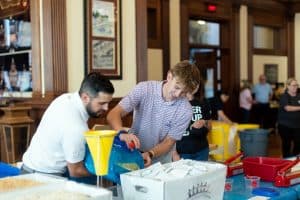
This commitment was clearly demonstrated during a community kitchen initiative at Apex ECD Center in Gataraga Village, Rubindi Cell, Gataraga Sector of Musanze district.
Participation of parents and caregivers from the community highlighted the shared responsibility of leadership, partners, and families in ensuring children grow up healthy, well-nourished, and ready to learn.
At The community kitchen (Igikoni cy’Umudugudu), where parents caring for children enrolled in the ECD center were trained to prepare balanced and nutritious meals using locally available foods. Through practical demonstrations, parents learned how to combine local ingredients to meet children’s nutritional needs without relying on expensive or imported foods.
Parents expressed strong appreciation for the initiative, saying it has changed their understanding of child nutrition. Uwabera Nadia, a mother whose child attends Apex ECD, said that her eyes opened to new possibilities.
“Before, I thought preparing a balanced diet for my child required money I did not have. Today, I learned that foods we already grow at home are enough to keep our children healthy and strong,” she said.
Another parent, Hatangiyaremye Didier, also testified to the impact of the program, especially on daily family practices.
“What we learned here will not remain at the ECD only. I am going to apply it at home so that all my children benefit. I now understand that good nutrition starts with knowledge, not wealth,” he explained.
To ensure sustainability, a kitchen garden (Akarima k’Igikoni) was established at the ECD center. The garden will supply fresh vegetables for children’s meals while serving as a learning model for parents to replicate in their own households. Parents said the garden gives them confidence that the ECD will continue providing nutritious meals even beyond the training period.
Participants were also encouraged to regularly enroll and send children to ECD centers, emphasizing that these centers play a critical role in early learning, social development, and proper nutrition. Local leaders noted that children who attend ECD centers are better prepared for primary education and experience improved health outcomes.
In addition, parents and caregivers received guidance on food hygiene and cleanliness, including safe food handling and feeding practices. Caregivers at Apex ECD reported that improved hygiene has already reduced cases of illness among children, allowing them to attend the center more consistently.
Vice Mayor Theobald Kayiranga praised parents for their commitment and urged them to put the acquired knowledge into practice. He stressed that investing in early childhood is one of the most effective ways to build a healthy and productive society, calling for continued collaboration between families, local authorities, and development partners.
For caregivers at Apex ECD Center, the initiative has strengthened their capacity and motivation to serve children better. They say the knowledge gained by parents has improved cooperation and trust between families and the center.
About The Author


SUBSCRIBE TO OUR NEWSLETTER