Gatsibo Marshland Farmers Called to Increase Toilets to Combat Bilharzia

Farmers working in marshlands in Gatsibo District have been urged to increase the number of toilets near farming sites as part of efforts to prevent Bilharzia, also known as schistosomiasis, a neglected tropical disease that remains a public health concern in Rwanda.
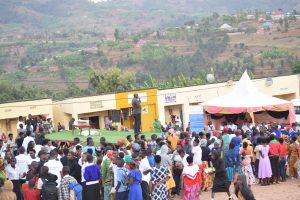
The call was made during a community awareness campaign held at Ntende Marshland, where members of COPRORIZ–Ntende Cooperative grow rice in Rugarama Sector, Gatsibo District. The campaign was organized by the Rwanda Biomedical Centre (RBC) in collaboration with the Rwanda NGOs Forum on HIV/AIDS, targeting the prevention of Neglected Tropical Diseases (NTDs), including Bilharzia.

Nathan Hitiyaremye, the NTD–WASH Coordination Officer at RBC, said Bilharzia remains widespread in marshland areas across the country, largely due to poor sanitation practices.
“Across Rwanda, we have identified Bilharzia in 1,013 administrative cells, representing about 47 percent of all cells nationwide,” Hitiyaremye said. “That is why we came to Gatsibo. Based on our data and field assessments, we found that COPRORIZ–Ntende Cooperative has relatively better toilet coverage compared to many other cooperatives and marshlands.”
He noted that increasing toilets near marshlands reduces the need for farmers to walk long distances in search of sanitation facilities or resort to open defecation, practices that significantly increase the risk of Bilharzia transmission.
“Bilharzia kills about 200,000 people every year worldwide and is the second deadliest disease in Africa after malaria,” Hitiyaremye said. “In Rwanda, we are prioritizing the construction of toilets to completely eliminate open defecation so that we can ultimately defeat Bilharzia.”
Farmers Report Improved Health
Members of COPRORIZ–Ntende Cooperative say the introduction of toilets near the marshland has already led to noticeable health improvements.

Souvenir Mukabugingo, a cooperative member from Kiriba zone, said illnesses related to intestinal worms, including Bilharzia, were common before toilets were installed.
“Before we had toilets near the marshland, even though they were few, we used to fall sick very often and visit health facilities frequently,” she said. “Since toilets were brought closer, we no longer suffer as much from intestinal worms, including Bilharzia.”
Mukabugingo added that open defecation in water or nearby bushes was common in the past, but the situation has significantly improved.
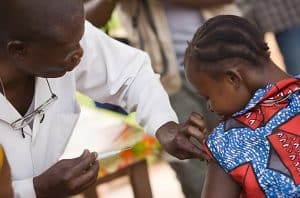
“Now, when someone is affected by Bilharzia, community health workers come and provide treatment,” she said.

Another cooperative member, Yvonne Maniraguha, echoed similar sentiments, saying poor sanitation had previously exposed farmers to repeated infections.
“Before we had toilets, we relieved ourselves in the bushes, and when it rained, waste would flow back into the marshland where we worked,” she said. “We would step in it and fall sick repeatedly. Personally, I used to go to the hospital about three times a month. Since toilets were built, we no longer suffer from intestinal worms.”

Wilson Ndorayabo, the Agricultural Manager at COPRORIZ–Ntende Cooperative, said the cooperative has made significant strides but acknowledged that more effort is needed.
“Across the entire Ntende marshland, which covers over 900 hectares, we have constructed 128 toilets,” Ndorayabo said. “Since implementing these measures, we have reached about 70 percent protection against Bilharzia, although there is still a long way to go to eliminate it completely.”
Gatsibo District Vice Mayor in charge of Economic Development, Jean Leonard Sekanyange, said the district continues to prioritize sanitation and disease prevention in marshland farming areas.

“We are continuously urging farmers working in marshlands, including rice farmers, to avoid open defecation, as it contributes to intestinal worms and poor hygiene,” Sekanyange said.
He noted that while the district has not yet achieved full protection against Bilharzia, awareness campaigns remain a key strategy.
Gatsibo currently has four fully developed marshlands used for rice farming, with plans to develop Kabeza and Warufu marshlands in the future.
On sanitation, Sekanyange said the district is not only focusing on ensuring every household has a toilet, but also on improving toilet standards.
“This year alone, we are constructing more than 200 modern toilets,” he said. “In collaboration with residents and cooperatives, toilets have been built near marshlands so that farmers and visitors can easily access them without walking long distances. Although the number is still insufficient, we have clear plans to increase them.”


About The Author


SUBSCRIBE TO OUR NEWSLETTER