Azolla and Hydroponic Fodder Offer Solutions to Animal Feed Challenges in Ngororero
Rising animal feed prices have increasingly put pressure on small-scale livestock farmers in Ngororero District. Pig and poultry farming, long viewed as a pathway out of poverty, has become more expensive to sustain. Today, however, a group of farmers in Nyange Sector is demonstrating how locally driven innovation can turn one of agriculture’s biggest challenges into an opportunity.
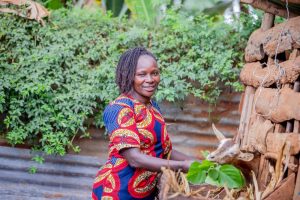
Through Azolla farming and hydroponic fodder production, members of the Duterimbere Bugabe I Self-Help Group are cutting feeding costs, improving animal health, and strengthening household incomes, drawing on skills gained through the Partnership for Resilient and Inclusive Small Livestock Markets Programme (PRISM).

“We used to spend a lot on animal feed,” recalls Beatha Dusabirema, President of Duterimbere Bugabe I. “One kilogram of commercial feed cost us about 800 Rwandan Francs. It was not sustainable.”
That changed after PRISM trained the group on how to produce their own livestock feed using affordable, locally available resources.
“With a blender feed that costs only 500 francs, mixed with Azolla, we can feed more than one pig,” Dusabirema explains. “It has made a big difference for us.”
Azolla: small plant, big impact
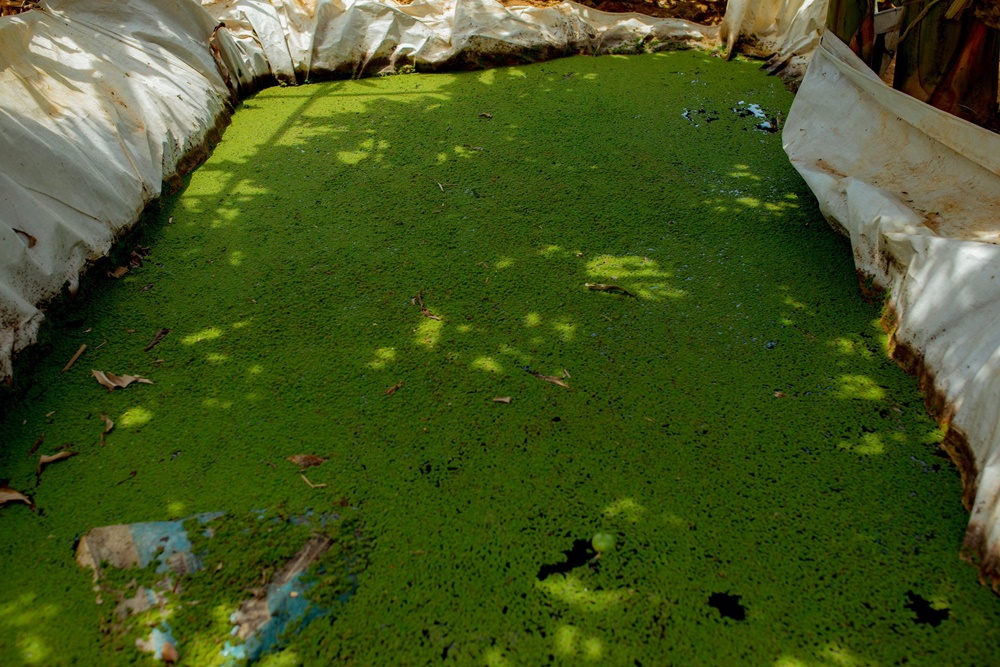
Azolla, a fast-growing aquatic plant rich in protein, has become a cornerstone of the group’s feeding system. Farmers cultivate it in shallow, plastic-lined ponds dug near their homes.

To prepare an Azolla pond, members dig a pit about 60 centimeters deep and line it with plastic sheeting. They then add ash from household kitchens, topsoil, and water before introducing Azolla seedlings. Within just seven days, the plant is ready for harvesting.
“Azolla acts like a natural protein supplement for pigs,” Dusabirema says. “It helps them grow faster and stay healthy, while reducing our dependence on expensive commercial feeds.”
Hydroponic fodder: feed without land pressure
Alongside Azolla, the group introduced hydroponic fodder production, a system that produces fresh green feed using minimal land and water, an important advantage in densely populated rural areas.

The process involves soaking maize and sorghum seeds, carefully washing them, and allowing them to sprout in controlled containers. After about nine days, the fodder is ready for feeding.
Farmers water the sprouts three times a day, morning, midday, and evening, until they mature. When feeding time comes, they combine Azolla, hydroponic fodder, and blender feed in equal portions.
“We mix half Azolla, half hydroponic fodder, and blender feed, then give it to pigs one by one,” Dusabirema explains. “It is affordable, nutritious, and easy to prepare.”
Duterimbere Bugabe I brings together 26 members, all supported by PRISM through training in good livestock management. Each member initially received 10 chickens (four cocks and six hens), while the group collectively invested one million Rwandan Francs to purchase a pig.
What began as a modest initiative soon evolved into a model of collective growth. As pigs reproduced, piglets were shared among members, ensuring that every household benefited while maintaining group unity.
The group also practiced “Passing on Gifts,” supporting fellow farmers organized under Duterimbere Bugabe II and extending PRISM’s impact beyond the initial beneficiaries.
As poultry and pig numbers increased, livestock shifted from being a side activity to a reliable source of income.

However, growth came with a new challenge: feed costs. Rather than slowing down, members turned to the skills and confidence gained through PRISM training.
By introducing Azolla and hydroponic fodder, the group dramatically reduced feeding expenses, improved animal health, and increased productivity.
“These solutions showed us that farmers can solve their own problems using local knowledge and affordable technologies,” Dusabirema says.
Today, group members are meeting basic household needs with dignity, paying health insurance, covering school fees, improving nutrition, and fighting poverty.
A model for Ngororero District

According to Fulgence Umuhire, Officer in Charge of Agriculture and Animal Resources in Nyange Sector, PRISM has been implemented in the sector for four years, supporting farmers with pigs, poultry, and continuous capacity building.
“The sector now counts around 4,800 pigs, a clear increase compared to the period before PRISM,” Umuhire says. “Farmers are not only raising more animals, but doing so with better knowledge, better care, and higher productivity.”
He adds that increased livestock ownership has also boosted manure availability for crop farming, strengthened food security, and contributed to wider economic development.
Umuhire notes that feed costs were once the biggest obstacle for pig farmers, but farmer cooperation and practical skills, especially Azolla and hydroponic feeding, have changed the situation.
“The Duterimbere group has become a model for other sectors,” he says. “They started with just 75 pigs supported by PRISM, and today the number has grown to over 4,800 across the sector.”

PRISM operates in five sectors of Ngororero District, Bwira, Kageyo, Kavumu, Matyazo, and Nyange, with the aim of strengthening small livestock farming, improving nutrition, and building resilient incomes.
Key achievements under the programme include the distribution of 20,700 chickens to 2,019 families, providing an entry point into poultry farming for thousands of households. In addition, 664 pigs were provided to 443 families, strengthening income generation through pig farming, while 1,332 goats were also distributed to 443 families, helping diversify livestock assets and improve household resilience.
Implemented by the Rwanda Agriculture and Animal Resources Development Board (RAB) and funded by the International Fund for Agricultural Development (IFAD), PRISM operates in 15 districts nationwide. Launched in 2021 with a USD 45 million budget, the programme focuses on pigs, poultry, goats, and sheep to reduce poverty and food insecurity.


About The Author


SUBSCRIBE TO OUR NEWSLETTER