Eastern Africa Leads Continental Growth but Rising Divergence Raises Concern

Eastern Africa is expanding faster than the rest of the continent, yet widening economic gaps between countries risk undermining regional integration, officials have warned.
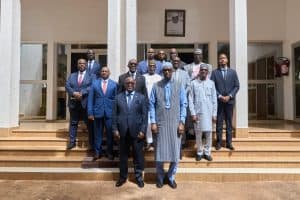
The United Nations Economic Commission for Africa (ECA), Office for Eastern Africa, convened Ambassadors and High Commissioners accredited to Rwanda for a high-level briefing on the region’s economic outlook. while growth is strong, it is uneven.
Mr. Ozonnia Ojielo, the UN Resident Coordinator in Rwanda, underscored the deep interdependence of African economies.
“What affects one of us inevitably affects us all. A shift in one market is felt in the next. A disruption in a single trade corridor sends tremors through the entire region,” he said, emphasizing the importance of coordinated economic policies.
Growth Above the Continental Average
Presenting the regional analysis, Andrew Mold, Director of ECA in Eastern Africa, noted that the region is recording growth rates of close to 6 percent, well above Africa’s projected average of 4.1 percent.
Forecasts from international financial institutions further suggest that in 2026, Africa’s economy could grow faster than Asia’s for the first time in recent history, signaling renewed global economic relevance for the continent.
Eastern Africa’s expansion has been driven by standout performances in several economies.
Rwanda posted quarterly growth exceeding 11 percent in its most recent results, marking one of the strongest expansions in the region. Tanzania followed with 6.4 percent growth in the third quarter of 2025, while Kenya maintained steady momentum at 5 percent over the same period.
Uganda recorded an early-year surge of 8 percent in the first quarter of 2025 before moderating to 4.8 percent by the third quarter.
However, growth has been far from uniform. Burundi posted a modest 2.6 percent growth rate, reflecting structural constraints and limited diversification. Meanwhile, the Seychelles, the region’s wealthiest nation with a per capita income of about $15,000, continued to experience volatility linked to its heavy dependence on tourism and fishing.
The “Divergence” Risk
Despite the encouraging headline figures, Mold cautioned against complacency.
“Historically, between 2010 and 2020, the continent experienced a period of convergence whereby poorer countries grew faster than their wealthier neighbours. However, from 2020 to 2024 this trend reversed. In Eastern Africa, the shift towards economic divergence has been even more pronounced,” he said.
Rising disparities, combined with increasing reliance on mineral exports and mounting social pressures, could complicate efforts to deepen regional integration under frameworks such as the African Continental Free Trade Area.
Uneven growth risks creating fragmented markets, weakening collective bargaining power and slowing progress toward shared infrastructure and digital transformation goals.
The session also addressed preparations for the 58th ECA Conference of Ministers, scheduled for 2–3 April in Tangier. Ministers of Finance and ICT were encouraged to participate actively under the theme: “Growth Through Innovation: Harnessing Data and Frontier Technologies for Africa’s Transformation.”
ECA reaffirmed its commitment to providing high-quality analytical support and working closely with governments and diplomatic missions to strengthen economic resilience, promote integration and unlock the region’s long-term potential.
About The Author


SUBSCRIBE TO OUR NEWSLETTER