Gishanda Dam to Shield Kayonza Farmers from Drought, Boost Irrigation on 200 ha

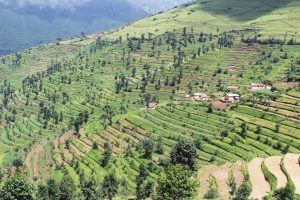
Farmers in Kabare and Rwinkwavu sectors of Kayonza District are looking to the ongoing construction of Gishanda Dam as a long-awaited solution to years of crop losses caused by prolonged dry spells.
The dam, being built under the Kayonza Irrigation and Integrated Watershed Management Project – Phase II (KIIWP2), is expected to irrigate 200 hectares of farmland once completed in June 2026. For many farmers, it represents more than infrastructure, it is a safeguard against drought and a pathway to higher productivity.

Papias Ngaboyamahina, a worker at ASSETIP involved in the construction works, said the project is designed to provide sustainable irrigation solutions in an area that has historically struggled with water shortages.
“This major infrastructure is part of efforts to provide long-term irrigation solutions for farmers who have struggled for years with water scarcity,” he said.
According to Ngaboyamahina, the Gishanda project has four main components: construction of the dam, installation of a pump station, development of the irrigation network, and construction of a water reservoir.
The project, which began in 2025, is funded with over 2.1 billion Rwandan Francs. Once completed, it will supply irrigation water to 200 hectares across Kabare and Rwinkwavu sectors, protecting farmers from drought risks and stabilizing agricultural production during dry seasons.
From Subsistence to Commercial Farming

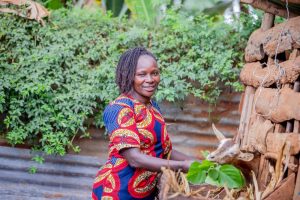
For farmers like Alphonsine Nyirahategekimana from Rwinkwavu Sector, who also serves as an official in charge of good governance at sector level, the dam brings renewed hope.
She said, “We are happy that the Government is implementing what we have long wished for, support that allows us to farm even when there is no rain. This water will help us irrigate our crops, especially the fruits we are planning to grow. It is important for us to farm without worrying about rainfall shortages. We are confident that we will work and develop ourselves.”
Nyirahategekimana explained that farmers were initially reluctant to shift from traditional banana farming to fruit production.
“At first, we did not see the value of growing fruits because we were used to cultivating bananas. We wondered how we would feed our children if we cut down banana plantations to grow fruits,” she said.
However, after receiving training and participating in study tours to areas practicing commercial agriculture, their perspective changed.
“Once we saw how fruit farming generates income, we understood that with money earned, one can buy other food and improve living standards. It changed our mindset,” she added.
Before the support from KIIWP2, agricultural productivity in the area was low. Farmers depended heavily on unpredictable rainfall and traditional practices that yielded limited results.
Through structured training, field visits, and continuous technical guidance, farmers have gained knowledge in modern farming techniques, improved land management, and climate-smart agriculture.

In Kabare Sector, Alexandre Sebazungu from Cyarubare Cell said the irrigation system will be transformative.
“We are waiting for this irrigation system to support our farming activities. The water will be pumped uphill and used on our farms, helping us cultivate and increase production,” he said.
He described the project as a major opportunity for the community.
“It is a great chance for us. We are ready to make good use of it, work hard, and improve our lives. We have confidence in this project,” Sebazungu added.

Jean de Dieu Rudacogora, a KIIWP2 Access to Finance Specialist, said the project will prioritize fruit production on a large portion of the prepared land.
“In the Gishanda Dam project, a large area is being prepared for fruit cultivation. The water will irrigate 200 hectares in Rwinkwavu and Kabare sectors,” he explained.
Broader Climate Resilience Efforts
KIIWP2 is jointly implemented by the Government of Rwanda in partnership with the International Fund for Agricultural Development (IFAD) through the Ministry of Agriculture and Animal Resources and executed under the Rwanda Agriculture and Animal Resources Development Board (RAB).
The project operates in nine drought-prone sectors of Kayonza District: Gahini, Kabare, Kabarondo, Murama, Murundi, Mwiri, Ndego, Ruramira and Rwinkwavu. It aims to improve food security and incomes for at least 40,000 rural households while strengthening resilience to climate change.
So far, 31,359 individuals have benefited from the initiative, with women accounting for 54 percent and youth 30.6 percent of participants. Ultimately, the project is expected to reach up to 180,000 people.


About The Author


SUBSCRIBE TO OUR NEWSLETTER