Scaling African Solutions for the Global Biodiversity and Climate Crises: A Retrospective Analysis of Transformative Action

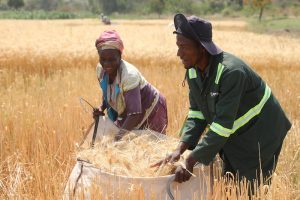
TREPA project employed both women and men to prepare the Tree Nurseries
The dual, interlocking crises of climate change and biodiversity loss severely challenged the African continent, but interventions spearheaded by the International Union for Conservation of Nature (IUCN) and host nations like Rwanda and Kenya demonstrated that the continent served as an incubator for highly effective, scalable conservation models. As the global community convened at the IUCN World Conservation Congress in Abu Dhabi in 2025, the policy frameworks and on-the-ground interventions deployed across Africa provided a vital blueprint for tangible results.
An analysis of these strategic initiatives reveals four core policy pillars that successfully advanced sustainable development and environmental resilience: the institutionalization of Nature-based Solutions (NbS), the democratization of conservation through community and gender empowerment, the deployment of innovative climate finance, and the adoption of integrated “One Health” and circular economy models.
Institutionalizing Nature-Based Solutions and Regenerative Agriculture
A central policy directive was the integration of Nature-based Solutions (NbS) into national agricultural and forestry frameworks. IUCN’s global NbS standards—consisting of eight criteria—served as a scientific blueprint for designing projects that benefited both human well-being and biodiversity.
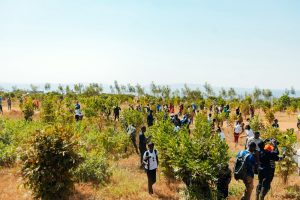
The transition to regenerative agriculture and agroforestry proved critical. In Rwanda’s Eastern Province, a region historically prone to severe droughts and landscape degradation, initiatives like the TREPA and AREECA projects transformed tens of thousands of hectares of degraded land.
By equipping smallholder farmers with agroforestry resources, these projects are expected to mitigate extreme weather impacts, improve soil health, and enhance food security. The effectiveness of these community-centric restorations was globally highlighted during the World Agroforestry Congress hosted in Kigali in May 2025, which demonstrated how agroforestry fostered poverty reduction and improved land health.
Democratizing Conservation: Community-Centric Action and Gender Equity
Conservation policies succeeded largely due to the explicit ownership of local communities and the equitable inclusion of women. The community-centric model ensured that local land users and farmers led the establishment of tree nurseries, ecosystem monitoring, and sustainable harvesting.
Furthermore, data released by IUCN in 2024 indicated a severe deficit in gender parity within environmental leadership, estimating that it could have taken up to 162 years to achieve equality in environmental ministries globally.
Because women bore a disproportionate burden of climate change impacts—especially in rural areas—empowering them was recognized as a strategic necessity. Policies reflected this urgency, such as Rwanda’s development of a Climate Change Gender Action Plan (ccGAP) in 2024, which ensured women were actively involved in executing climate adaptation programs across sectors like energy, agriculture, and forestry.
Unlocking Innovative Climate Finance
Achieving ambitious Nationally Determined Contributions (NDCs) requires mobilizing vast financial resources beyond traditional donor funding. Policy frameworks aggressively pursues innovative financial mechanisms, particularly Payment for Ecosystem Services (PES) and voluntary carbon markets.
The implementation of PES pilot programs—such as those in Rwanda’s Giciye catchment and at the Kiliba Dam—demonstrated a viable model where local communities were directly financially incentivized to manage and conserve ecosystem services. The hosting of the 38th meeting of the Green Climate Fund (GCF) in Kigali in 2024 marked a historic milestone for Africa, facilitating crucial discussions on funding resilience projects like TREPA. Additionally, collaborative frameworks were established to harness carbon markets, which will allow local communities to generate income while combating climate change.
Advancing “One Health” and Circular Economies
Finally, environmental policy transcended traditional conservation borders to address public health and marine pollution. The integration of “One Health” principles—recognizing the interconnectedness of human, animal, and environmental health—proved vital. Regional policies support cross-border collaboration, resulting in the development of a transboundary digital surveillance network in the Greater Virunga Landscape to prevent zoonotic disease spillovers across the Democratic Republic of Congo, Rwanda, and Uganda.
Simultaneously, the transition to a regenerative blue economy was bolstered by stringent policies against marine pollution. Initiatives like the IslandPlas project, backed by a $10 million grant, successfully leveraged circular economy innovations to drastically reduce plastic waste leakage into oceans across seven African island nations by empowering local, informal waste sectors.
The path forward required a departure from fragmented conservation efforts. By scaling Nature-based Solutions, prioritizing gender parity, unlocking innovative financing, and adopting holistic health and economic frameworks, policymakers should formulate robust responses to the climate and biodiversity crises. The African-led models presented and evaluated through the 2024-2025 conservation forums successfully laid the evidence-based groundwork required to ensure that both people and nature thrive.
“This article is part of the Top Africa News Development Impact Series examining African conservation and climate resilience initiatives.”
“Share this article with your network”
About The Author


SUBSCRIBE TO OUR NEWSLETTER