From Rising Costs to Record Harvests: Solar-Powered Irrigation Transforms Farmers’ Businesses in Bugesera District
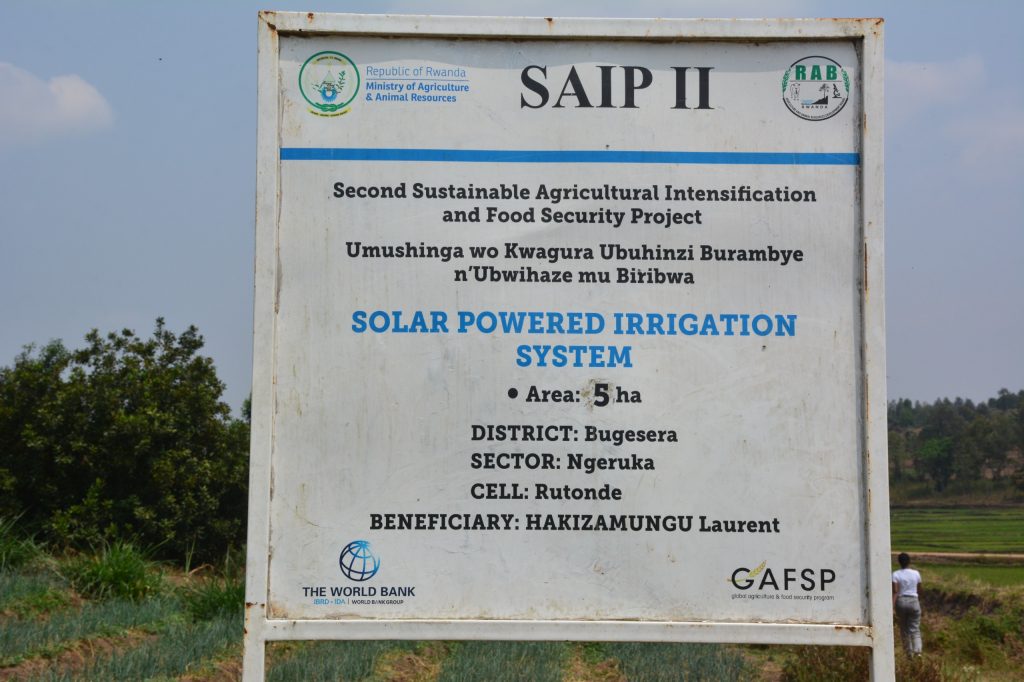
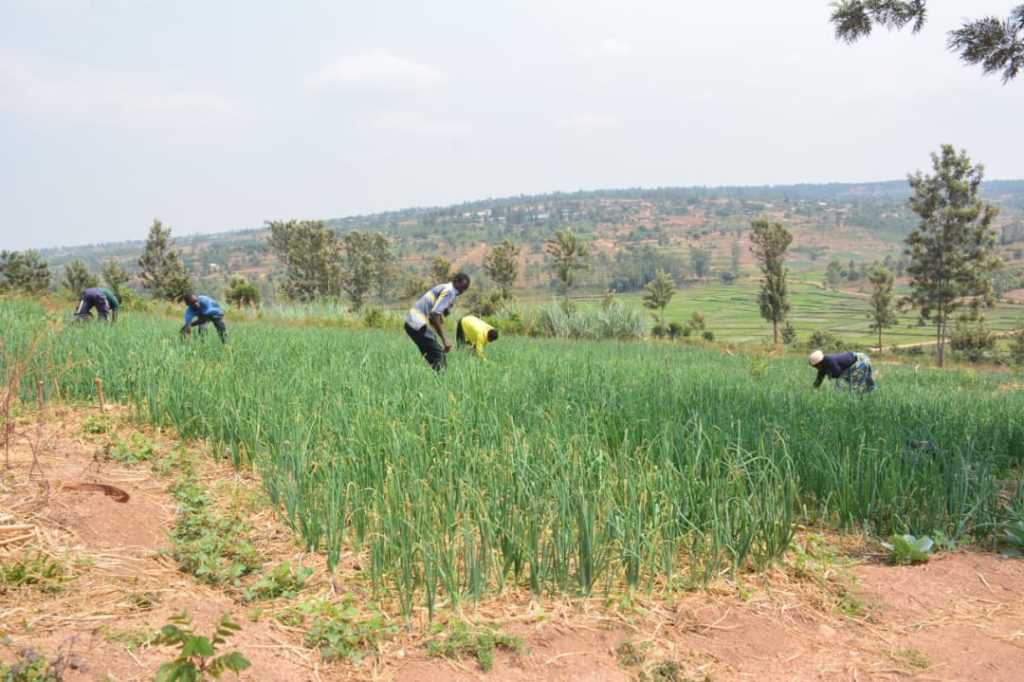
Farmers in Bugesera district are now experiencing a new era of agricultural growth. Through modern irrigation solutions, including solar-powered systems, farmers are expanding production, reducing operational costs, increasing harvests, creating sustainable jobs, and turning agriculture into a more profitable business that is resilient to climate challenges.
For years, many farmers struggled to maintain consistent production due to prolonged dry seasons and limited access to affordable irrigation technologies. However, the introduction of improved irrigation support is changing this reality by enabling farmers to produce efficiently throughout the year while reducing dependence on rainfall.
The transformation is being supported through the Sustainable Agricultural Intensification and Food Security Project (SAIP II), implemented by the Rwanda Agriculture and Animal Resources Development Board (RAB) through the Single Project Implementation Unit (SPIU).
Through the provision of Small-Scale Irrigation Technologies (SSIT), the project is helping farmers access reliable water sources, increase productivity, improve incomes, strengthen food security, and build resilience against the effects of climate change.
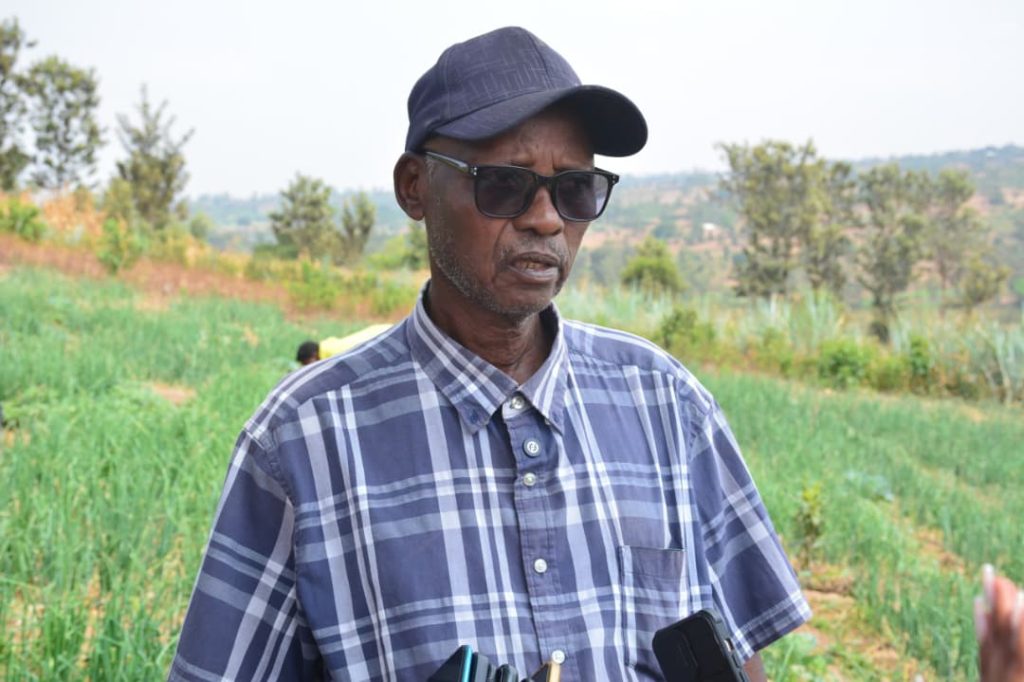
One of the beneficiaries is HAKIZAMUNGU Laurent, a farmer from Buhuha Sector, Bugesera District, who specializes in macadamia production. He says that before accessing modern irrigation support, farming required significant effort but generated limited returns because water availability remained a major challenge.
“Before we received reliable water access, we used ordinary fuel-powered pumps, but production remained low despite the effort we invested,” Hakizimungu explained. “The situation changed completely after we obtained sufficient water for irrigation.”
He says irrigation allowed him to expand his farming operations and significantly increase production.
“When I started, I was producing around five tonnes. Later, production increased to ten tonnes, and now I have reached between 15 and 20 tonnes. This progress has been possible because of modern irrigation, including a solar-powered system that supplies water efficiently,” he said.
The shift to solar-powered irrigation has also helped reduce production expenses.
According to Hakizimungu, fuel costs associated with traditional irrigation systems consumed a large part of the farm’s income and increased operational challenges.
“Fuel was one of the biggest costs affecting our farming business. Today, that burden has been greatly reduced because we are using a more efficient irrigation system powered by solar energy,” he said.
He added that the support received through SAIP II, in partnership with Bugesera District, gave farmers an opportunity to improve their agricultural enterprises and invest in long-term productivity.
The irrigation project required an investment of RWF 40 million, with the beneficiary contributing RWF 10 million, while the remaining investment was supported through the project.
Beyond increasing production, modern irrigation has also changed the way farmers view agriculture, shifting from subsistence farming toward commercial production.
According to Hakizimungu, access to reliable water has allowed farmers to plan production better, maintain crop health, and respond to market demands.
“Agriculture is now becoming a business. When you have reliable irrigation, you can plan, invest, and expect better returns because production is no longer controlled by rainfall alone,” he said.
Government Support Expands Access to Irrigation Technologies
According to Innocent Nzabamwita, Irrigation Engineer Specialist at RAB-SPIU, the Government of Rwanda has established subsidy programs to encourage farmers to invest in modern irrigation systems and overcome financial barriers.
“Farmers cultivating between 0.5 and 10 hectares receive a Government subsidy covering 50 percent of irrigation equipment costs, while they contribute the remaining 50 percent,” Nzabamwita explained.
He added that farmers adopting solar-powered irrigation systems benefit from stronger Government support because of the importance of renewable energy in sustainable agriculture.
“For farmers cultivating between five and ten hectares using solar-powered pumps, farmers contribute only 25 percent of the investment, while the Government subsidizes the remaining 75 percent,” he said.
Nzabamwita noted that these subsidies are making irrigation technologies accessible to more farmers, allowing them to increase production, improve incomes, and strengthen their ability to cope with climate change.
“The objective is to reduce the financial burden that prevents farmers from investing in irrigation technologies. By making these systems affordable, more farmers can adopt modern irrigation and transform their agricultural activities into profitable enterprises,” he said.
He explained that these efforts are aligned with Rwanda’s National Strategy for Transformation (NST2) 2024–2029, which aims to achieve annual agricultural growth of more than six percent and expand irrigated agricultural land from 74,375 hectares to 132,171 hectares.
SAIP II also emphasizes collective action by supporting farmer groups and cooperatives, ensuring that irrigation technologies reach more beneficiaries while strengthening cooperation in production, value addition, and market access.
Under the Small-Scale Irrigation Technologies component, the project continues to invest in expanding irrigation access across Rwanda. Phase I received an investment of approximately RWF 4 billion, while Phase II, currently ongoing, is expected to provide an additional RWF 6 billion.
About The Author


SUBSCRIBE TO OUR NEWSLETTER