Improved Maize Seeds Boost Productivity and Hope for Farmers in Eastern Rwanda

Farmers in Rwanda’s Eastern Province, particularly in Rwamagana and Kayonza districts, say newly introduced maize seed varieties are raising expectations for higher yields and increased income.
According to the farmers, the improved seeds mature faster, produce higher yields, and are more resilient to climate change, offering a promising boost to agricultural production in the region.
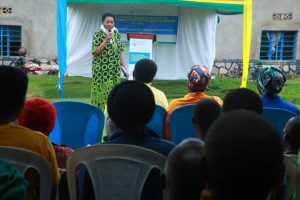
The remarks followed a field school visit held in Kayonza District on February 26, 2026, where farmers were introduced to new maize seed varieties and modern farming practices with support from agricultural experts and seed companies, including Western Seed Company Ltd.
The newly introduced maize varieties, WH 507 and WH 301, were selected after a series of field trials that demonstrated the hybrid seeds perform significantly better than the traditional varieties previously used by farmers. The seeds are part of efforts to expand farmers’ access to high-yielding and climate-resilient maize varieties.
While previous harvests were often modest, farmers say the new seeds are already showing encouraging improvements in both the quantity and quality of production.
Speaking to Top Africa News after the visit, several farmers expressed optimism about adopting the improved seeds and modern farming techniques.
One of the beneficiaries, Nsabimana Jean Nepo, said the new seeds represent a major shift from the varieties farmers previously relied on.
“The seeds we received during the field visit are excellent because they are different from the ones we used to plant. We are now going to change the seeds and planting methods we previously used, and we hope this will lead to higher yields,” he said.
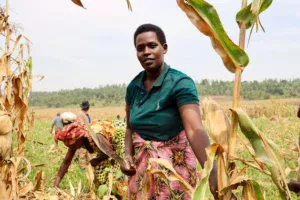
Another farmer, Uzamukunda Esperance from Kayonza District, said the training and knowledge shared during the visit encouraged her to experiment with modern seed varieties.
She added that the improved seeds could also help farmers better cope with the effects of climate change.
Niyigena Claver , a marketing officer at Western Seed Company Ltd, said the initiative was aimed at demonstrating to farmers, particularly those organized in cooperatives, that the company’s seeds can deliver strong yields when planted according to recommended agronomic practices.
He explained that the company offers several maize seed varieties suited to different climatic conditions and growing periods.
“We have many seed varieties. Some early-maturing seeds fall under the Haraka category. These require fewer inputs, mature quickly, and can produce yields of up to six tons per hectare,” he said.
Claver added that the company also provides varieties under the Amininka category, which mature between 135 and 145 days and require about three months of rainfall.
For high-altitude areas, the company promotes Milima varieties such as WH 605, which require about four months of rainfall and are designed to tolerate climate variability and resist common crop diseases.
Meanwhile, Savio Hakirumurame, Head of the Quality Assurance Department for Agriculture and Livestock at the Rwanda Inspectorate , Competition and Consumer Protection Authority (RICA), urged farmers to purchase seeds only from authorized suppliers to avoid losses caused by poor-quality inputs.
“We advise farmers to buy seeds from authorized suppliers such as Gro Deal. These suppliers are licensed and inspected by RICA to ensure that they provide products that meet the required quality standards,” he said.
Rwanda continues to promote modern agricultural practices to boost productivity and improve farmers’ livelihoods. Such initiatives also aim to help farmers adapt to climate change, reduce its impact on crops, and strengthen sustainable food security across the country.
Western Seed Company Ltd is among the seed producers working to expand access to improved maize varieties across East Africa. The company develops and distributes hybrid seeds tailored to different agro-ecological zones and rainfall patterns, helping smallholder farmers increase productivity and build resilience to climate variability through improved seed technologies and modern farming practices.


About The Author


SUBSCRIBE TO OUR NEWSLETTER