African Indigenous Governance Council Visits His Excellency Lieutenant General Seretse Khama Ian Khama in Gaborone

By Amb. Godfrey Madanhire
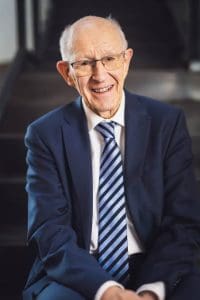
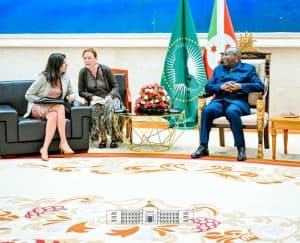
Gaborone, Botswana- Africa’s indigenous governance movement is gaining force and the African Indigenous Governance Council is pushing that momentum with purpose. On the 09th March 2026, the Council travelled to Gaborone for a high level engagement with His Excellency Lieutenant General Seretse Khama Ian Khama, Former President of the Republic of Botswana, a leader whose life stands at the intersection of royal heritage and national service.
The delegation was led by His Royal Majesty King Dr Robinson Tanyi, President General of the African Indigenous Governance Council. He was accompanied by Dr Litha Musyimi Ogana, frontline Commissioner on the Indigenous and Minorities Mandate in Africa, Country Rapporteur for the Kingdom of Eswatini and focal point on the African Union Theme of the Year 2025 within the African Commission on Human and Peoples’ Rights, together with Ambassador Godfrey Madanhire, Director of Communication and Partnerships-AIGC.
His Excellency received the delegation with the authority of a leader shaped by both ancestral duty and national responsibility. As a senior member of the Bangwato royal house and the son of Sir Seretse Khama, Botswana’s founding president and a paramount chief, he carries a leadership inheritance that predates the modern state. His presence reminded the delegation that African governance did not begin with ministries and parliaments. It began in the royal courts, the councils of elders and the cultural institutions that held communities together long before colonial borders were drawn.

His Royal Majesty King Tanyi honoured this heritage with a reflection that captured the essence of the moment. He described His Excellency as a door which experiences both the inside and the outside world, a leader who has lived the responsibilities of royalty and the demands of the presidency. The King emphasised that such leaders understand governance not as a technical exercise but as a duty to safeguard identity, dignity and continuity.
The engagement moved directly into the core of the African Indigenous Governance Council’s mission. His Royal Majesty King Tanyi spoke with conviction about the need to restore the authority of traditional leadership across the continent. He emphasised that indigenous governance is not a cultural ornament but a system built on accountability to the community, respect for elders, consensus building and moral responsibility. These principles have guided African societies through conflict, transition and nation building. They remain essential today.
Dr Litha Musyimi Ogana strengthened this message with the full weight of her continental responsibilities. She highlighted the African Commission on Human and Peoples’ Rights’ recognition of the African Indigenous Governance Council’s leadership as credible and principled. She spoke of the Commission’s commitment to supporting initiatives that elevate indigenous governance and protect the rights and dignity of communities whose leadership traditions continue to shape African life. Her remarks underscored a truth often overlooked in modern political discourse. Indigenous governanceis a functioning institution that resolves disputes, preserves culture, stabilises communities and provides moral direction where modern systems often fall short.
His Excellency, Former President Khama offered counsel that reflected decades of leadership experience. He encouraged the African Indigenous Governance Council to take its work directly to African communities and traditional authorities, ensuring that the movement remains rooted in the people it represents. He recommended that major gatherings be hosted on a rotational basis among African kingdoms and cultural regions, noting that such an approach strengthens participation, visibility and continental ownership. His guidance carried the authority of a leader who understands the responsibilities of heritage and the demands of statecraft.
The engagement echoed the leadership philosophies of Africa’s most respected traditional figures. The Asantehene Otumfuo Osei Tutu the Second whose counsel steadies Ghanaian society. The late King Moshoeshoe the First of Lesotho whose diplomacy forged unity. King Sobhuza the Second of Eswatini whose leadership anchored his nation through profound transitions. These leaders, like His Excellency, demonstrate that indigenous governance is a living institution that has shaped African societies for generations.
As the meeting concluded, the atmosphere remained charged with purpose. The African Indigenous Governance Council delegation expressed deep appreciation for His Excellency’s wisdom and his enduring commitment to Africa’s traditional institutions. The engagement affirmed that Africa’s governance future will be shaped by leaders who understand the continent’s cultural foundations and who recognise that indigenous governance remains one of Africa’s strongest assets.

The Gaborone visit stands as a bold reminder that Africa’s renewal depends on leaders who carry both ancestral heritage and national experience. And in His Excellency Lieutenant General Seretse Khama Ian Khama, the continent finds a statesman whose life reflects the leadership traditions that continue to guide Africa’s path forward.
Authored by His Excellency Ambassador Godfrey Madanhire,
Chief Operations Officer, Radio54 African Panorama, Pan-Africanist and Advocate for Sovereign African Governance,
Director of Communications and Partnerships-AIGC
About The Author


SUBSCRIBE TO OUR NEWSLETTER