This Week in Agriculture & Environment: Five Ways to Invest in Rwanda’s Circular Economy

Rwanda is actively transitioning from a traditional linear economy—characterized by an unsustainable “take, make, and dispose” model—to a regenerative circular economy. This shift is not merely an environmental imperative to mitigate climate change and resource depletion, but a strategic economic move championed by the Rwandan government. The circular economy is embedded in the country’s Vision 2050, the Green Growth and Climate Resiliency Strategy, and the recently launched 2022 Circular Economy Roadmap.
For investors, entrepreneurs, and Small and Medium Enterprises (SMEs), treating “waste as a resource” presents significant opportunities to drive profitability, foster innovation, and create green jobs. Here are five expert ways to invest in Rwanda’s multi-sectoral circular economy:
1. Transforming Food Systems and Upcycling Organic Waste
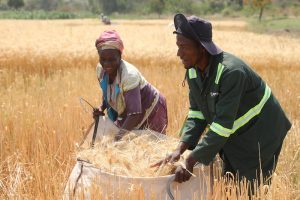
With approximately 60% of Rwanda’s population employed in the agricultural and food sector, addressing food loss is a massive investment avenue. Currently, around 30% of food produced in Rwanda is lost or wasted along the supply chain. Investors can finance SMEs focused on post-harvest preservation, such as processing, drying, and grinding fish to increase shelf life and retain nutritional value. Furthermore, there is a highly profitable market in upcycling organic waste; innovative businesses are already turning residues like chicken bones and fish remains into valuable animal feed.
2. Agroecology and Commercial Organic Fertilizer Production
While conventional inorganic fertilizers can temporarily boost production, they often act as “silent killers” that destroy long-term soil health and biodiversity. Investing in agroecological practices is a proven profit-making process because it minimizes the need for expensive chemical inputs. There is a high demand for locally produced, organic agricultural inputs. Lucrative investment opportunities include scaling up heap composting and vermicomposting (raising worms fed on crop residues and animal waste). These systems produce high-quality solid compost and “worm tea”—a liquid byproduct that serves as both a powerful fertilizer and a natural pesticide.
3. Renewable Energy Generation from Waste Biomass
Energy production through circular practices offers a robust return on investment while simultaneously mitigating greenhouse gas emissions, particularly methane released from decomposing organic waste. Investors can fund the infrastructure needed to produce biogas from animal manure and organic residues, transforming farm waste into a reliable source of renewable energy. Additionally, agricultural byproducts can be monetized as fuel; for example, technologies that convert coffee processing waste (like coffee husks) into fuel pellets provide a sustainable, high-demand alternative to traditional wood charcoal.
4. Sustainable Packaging and Biodegradable Materials
Rwanda made a highly successful, bold move to ban single-use plastics starting in 2008. As a result, there is a burgeoning, policy-supported market for alternative packaging. Investors can capitalize on the demand for producing biodegradable or reusable materials. Furthermore, local food processors are actively seeking sustainable packaging solutions—such as vacuum packing—to preserve product quality with minimal environmental impact and low energy usage. There are also opportunities to invest in infrastructure that manages legally produced plastics, ensuring waste collection points effectively separate decomposable and reusable materials.
5. Sustainable Fashion and Textile Recovery
The fashion and textile industry presents an untapped frontier for circular investments. Opportunities in this sector include establishing and scaling up clothing repair services, supporting sustainable fabric production, and developing infrastructure for textile waste recovery. Building on the long-standing Rwandan cultural practice of reusing and passing down clothes through families, innovative business models can formalize and commercialize textile circularity for a modern market.
The Knowledge provided through this article was gained from the recent Training from World Resources Institute Rwanda.
About The Author


SUBSCRIBE TO OUR NEWSLETTER