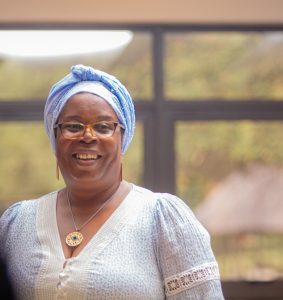
Empowering Women, Growing Economies: What ASA International Rwanda’s Model Reveals About Financial Inclusion

KIGALI – As Rwanda advances its agenda on financial inclusion and gender equality, the role of institutions bridging access to capital and opportunity is becoming increasingly central to inclusive economic growth.
Since its operations in 2016, ASA International Rwanda has reached over 48,000 members across more than 37 branches, disbursing more than $6 million in loans—70 percent of which have gone to women. While these figures reflect scale, they also point to a deeper transformation taking place at the community level.
Speaking during an International Women’s Day event that brought together stakeholders and beneficiaries, the institution highlighted both the economic and social impact of its work.
From Access to Transformation
For many beneficiaries, access to finance represents more than capital—it is a turning point.

Devotha Mukarusagara, one of the beneficiaries, shared how a modest loan enabled her to rebuild her life. Starting with a 200,000 RWF loan, she launched an agricultural activity that has since grown into a sustainable business.
“Before, I stayed at home without any source of income,” she said. “Today, I can pay school fees for my children, I have increased my capital to 1.5 million RWF, and I have even been able to buy a cow.”
Her journey illustrates how access to financial services, when sustained over time, can move individuals beyond subsistence toward stability and growth.
Financial Inclusion as a Driver of Social Change
Beyond economic gains, ASA Rwanda’s model demonstrates how financial inclusion can catalyze social transformation.
Mukarusagara noted that the support she received went beyond income generation, enabling her to build confidence and take on a leadership role within her community.
“It is not only about getting out of poverty,” she explained. “It also helped me gain confidence and become a Community Health Worker. Women must find solutions within themselves because they are in them.”
This highlights an important dimension for development practitioners: financial empowerment often leads to increased participation in community structures and decision-making.
Aligning with National Development Priorities
The initiative has also drawn recognition from government institutions, reflecting its alignment with Rwanda’s broader gender and development agenda.

Silas Ngayaboshya, Director General in charge of Gender Equality and Women’s Empowerment at the Ministry of Gender and Family Promotion, emphasized the importance of a holistic approach to empowerment.
“The value of women is built everywhere—in homes, in schools, in the media, in churches and mosques,” he said. “We need to ensure that both men and women are part of this transformation.”
He further noted the significance of ASA Rwanda’s work and called for continued dialogue to strengthen alignment with national priorities.
A Model for Scalable Impact
For development stakeholders, ASA Rwanda presents a practical model of how targeted financial services can generate both economic and social returns.

Christian Salifou, Managing Director of ASA International Rwanda, emphasized that the organization’s approach is rooted in long-term impact rather than short-term assistance.
“Giving is not just an act of charity; it is an investment in women’s capacity,” he said. “When a woman has access to capital, she can grow her business, support her family, and contribute to the economy.”
This approach reflects a broader shift in development thinking, where sustainable empowerment is achieved through investment in people’s productivity and potential.
Strengthening Internal Gender Inclusion
The organization is also working to improve gender balance within its own structure, with women currently representing 30 percent of staff and 27 percent of leadership.
While progress is ongoing, these efforts demonstrate a commitment to aligning internal practices with the broader goal of gender inclusion.
As conversations around inclusive growth and gender equality continue to evolve, the experience of ASA Rwanda highlights the importance of models that combine access to finance with measurable, long-term outcomes.
Its work illustrates that financial inclusion, when implemented strategically, can extend beyond poverty reduction to enable economic participation, social empowerment, and community resilience.
For stakeholders across the development ecosystem, the message is clear: empowering women is not only a social priority, but a pathway to broader economic transformation.
About The Author


SUBSCRIBE TO OUR NEWSLETTER


![Two women smile as one awards a crystal trophy at a Commonwealth Youth Programme event, with a blue backdrop behind them.”]},{](https://www.topafricanews.com/wp-content/uploads/2026/06/unnamed-5-300x200.png)