50% of Rwanda’s Malaria Patients Treated by Community Health Workers in 2024–2025

Community Health Workers (CHWs) treated nearly half of all malaria patients in Rwanda during the 2024–2025 fiscal year, underscoring their growing frontline role as the country battles a resurgence of the disease.
Data from the Rwanda Biomedical Centre (RBC) shows that out of 1,131,314 malaria cases recorded in 2024–2025, about 565,657 patients, equivalent to 50 percent, were managed by CHWs within their communities. The figures highlight a strategic shift toward decentralised care aimed at ensuring early diagnosis and treatment.

“Under the Ministry of Health guidelines, we aim to have a large proportion of the population treated by Community Health Workers so that patients can access care early and avoid severe malaria, which can lead to death,” said Epaphrodite Habanabakize, Malaria Prevention Senior Officer at RBC.
He noted that CHWs play a critical role in bringing services closer to the population, reducing both travel time and financial barriers.
“When a patient is treated by a Community Health Worker, who is also a member of their community, they are protected from developing severe malaria. Services provided at this level are free, which also eases the financial burden,” he said.
Although the national target is to have at least 60 percent of malaria patients treated at community level, Rwanda has so far reached 50 percent. In the first quarter of 2026, CHWs handled 45 percent of reported malaria cases, according to RBC data.
Habanabakize say efforts are underway to strengthen this network through additional training, equipment provision, and digital tools.
“We are working to ensure that all Community Health Workers transition from paper-based reporting to using mobile phones for real-time data submission,” he added.
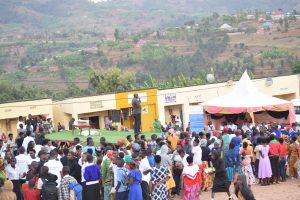
In Bugesera District’s Nyamata Sector, CHWs say their work has significantly improved access to timely care.

“We have played a major role in reducing malaria because people can now receive treatment nearby instead of spending hours waiting at health centres,” said Viateur Munderere, a community health worker.
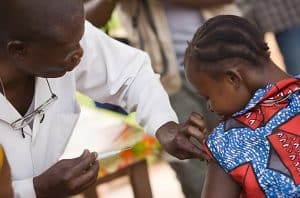
He explained that CHWs are trained to test and treat malaria at household level.
“When a patient comes to us, we conduct a blood test, and if the result is positive, we immediately provide treatment. We have been trained to identify symptoms, understand transmission, and guide prevention,” he said.
Beyond treatment, CHWs also educate communities on preventive practices, including eliminating mosquito breeding sites and properly using insecticide-treated bed nets.
For residents, this proximity has been lifesaving.

“Now when someone falls sick, they go directly to a Community Health Worker, who tests and treats them without needing to visit a health centre,” said Alphonsine Mukampfizi, a resident of Nyamata Sector. “As soon as I feel malaria symptoms, or even if I’m unsure, I first go to the Community Health Worker.”
Despite these gains, malaria cases in Rwanda have risen sharply in recent years. RBC data indicates that cases increased from 610,832 in 2023–2024 to 1,131,314 in 2024–2025. Although cases dropped to 928,616 in the first quarter of 2026, the numbers remain significantly higher than the 619,559 cases recorded in 2022–2023.
The national malaria incidence also surged to 76 cases per 1,000 people in 2024–2025, up from 45 per 1,000 in 2023–2024, signaling increased transmission.


About The Author


SUBSCRIBE TO OUR NEWSLETTER