Policy Brief: Addressing Rwanda’s Malaria Resurgence Through Integrated, Data-Driven Strategies

Rwanda is currently experiencing a concerning resurgence in malaria cases and incidence, necessitating swift, adaptive, and geographically tailored policy responses. Despite a robust public health infrastructure, variables such as environmental changes, human activity, and emerging biological resistance to traditional controls and medications are driving up the disease burden.
This brief outlines the current epidemiological landscape, evaluates recent successful intervention shifts—such as the Multiple First-Line Therapies (MFT) and the expanded role of Community Health Workers (CHWs)—and provides targeted recommendations to regain control over malaria transmission.
The Brief was prepared by Mr. Ange de la Victoire DUSABEMUNGU & Mr. Mutangana Emmanuel
The Current Epidemiological Challenge
Rwanda Malaria Trends & Regional Impact
Latest data highlights a sharp increase in malaria incidence and uneven regional burden across the country.
Regional Disparities
Recent data from the Rwanda Biomedical Centre (RBC) indicates a sharp increase in national malaria incidence, rising from 45 cases per 1,000 people in the 2023–2024 fiscal year to 76 per 1,000 in 2024–2025. The absolute number of cases nearly doubled over the same period, jumping from 610,832 to 1,131,314. Although the first quarter of 2026 showed a slight drop to 928,616 cases, this figure remains troublingly higher than the 619,559 cases recorded before the current surge in 2022–2023.
The burden of the disease is highly uneven across the country, underscoring the need for localized responses. Gisagara District recorded the highest burden nationwide with 216,350 cases, heavily contrasting with Nyabihu District, which recorded only 2,521 cases. Urban and peri-urban hotspots also present significant challenges; Kicukiro District accounts for roughly 7 percent of all national cases, with Gahanga Sector alone recording around 15,000 cases between July 2025 and March 2026.
Drivers of the Resurgence
The recent surge is multi-causal, driven by a combination of biological, environmental, and behavioral shifts:
- Biological Resistance: There is rising insecticide resistance weakening the efficacy of mosquito nets and indoor spraying, coupled with a shift in mosquito behavior to bite outdoors and earlier in the evening. Furthermore, there is early evidence of reduced effectiveness of Artemether-Lumefantrine (Coartem) due to artemisinin resistance.
- Human Activity & Environment: Activities such as rice farming, mining, construction, and water harvesting are actively creating new breeding sites. Fetching water from marshlands and storing it in homes where it stagnates has become a particularly dangerous breeding ground. Longer rainy seasons and proximity to water bodies, like Lake Muhazi, further exacerbate transmission.
- Community Vulnerability: Delays in seeking treatment, cross-border population movements, and reduced population immunity following years of previously low transmission compound the crisis.
Strategic Interventions and Early Successes
Strategic Malaria Response Interventions
Rwanda’s response combines pharmaceutical innovation, decentralized care delivery, and targeted vector control to reduce transmission and improve recovery outcomes.
✔ Improves recovery speed
✔ Reduces repeat infections
✔ Prevents severe malaria
✔ Reduces cost & travel barriers
✔ Coverage in 117 priority sectors
✔ Indoor spraying & Umuganda-based cleanup
To counter these challenges, the Ministry of Health and RBC have deployed adaptive, integrated strategies that are already yielding positive outcomes:
- Multiple First-Line Therapies (MFT): Introduced in October 2025, this strategy utilizes three different frontline treatments (Coartem, Pyronaridine-Artesunate [ASPY], and Dihydroartemisinin-Piperaquine [DHAP]) rotated annually across three distinct geographic zones. This diversification successfully prevents the malaria parasite from developing widespread resistance. Frontline health workers and patients already report drastically reduced repeat cases and faster recovery rates since the introduction of these new drugs.
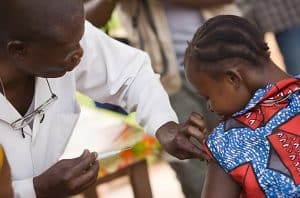
- Decentralized Care via Community Health Workers (CHWs): In the 2024–2025 period, CHWs successfully managed 50 percent of all malaria cases (approximately 565,657 patients) directly within their communities. By providing free, immediate blood tests and treatment at the household level, CHWs prevent severe malaria, save lives, and remove financial and travel barriers to care.
- Targeted Vector Control: Blanket geographic coverage has been replaced by data-driven distribution of mosquito nets targeting high-burden sectors. Authorities are distributing 2.9 million nets to 117 prioritized sectors. Indoor residual spraying and environmental cleaning—often integrated into mandatory community work (Umuganda)—remain vital strategies to clear hidden breeding sites.
- Policy Recommendations
To reverse the current incidence trajectory and safeguard public health, stakeholders must sustain vigilance and focus on the following priorities:
- Scale Up CHW Capabilities and Digital Infrastructure: The national target of treating 60 percent of malaria patients at the community level must be prioritized. This requires accelerating the ongoing transition of CHWs from paper-based reporting to mobile digital tools for real-time data submission, alongside continued training and equipment provision.
- Strictly Sustain the MFT Zonal Rotation: Unwavering adherence to the annual geographic rotation of the three primary malaria therapies is critical to safeguarding the efficacy of these medications and staying ahead of the growing global concern of artemisinin resistance.
- Enhance Behavioral Change Campaigns: Public awareness campaigns must extend beyond urging the correct usage of bed nets to actively addressing human-made breeding sites. Communities must be continuously educated on the dangers of stagnating harvested water, and integrated community activities like Umuganda should be heavily utilized to identify and clear hidden domestic breeding grounds.
- Strengthen Geographically Tailored Interventions: Resources, including indoor residual spraying, new net distribution, and specific outreach programs, must continue to be disproportionately allocated to high-burden districts like Gisagara, Gasabo, and Bugesera, while maintaining active surveillance in low-burden areas.
Rwanda Faces Malaria Surge — But Strategic Interventions Offer Hope
New data reveals rising malaria cases across Rwanda, alongside targeted interventions reshaping the national response.
📊 National Malaria Trends
📍 Regional Disparities
🛠 Strategic Response
Drug Innovation (MFT)
Three rotating treatments (Coartem, ASPY, DHAP) introduced in 2025.
- Prevents resistance
- Faster recovery
- Fewer repeat infections
Community Health Workers
Handled 50% of malaria cases (565,657 patients).
- Free local treatment
- Immediate diagnosis
- Reduced travel barriers
Targeted Prevention
Focused mosquito control in high-risk zones.
- 2.9M nets distributed
- 117 priority sectors
- Umuganda cleanup campaigns
About The Author


SUBSCRIBE TO OUR NEWSLETTER