Global Environment Facility Approves $232.5 Million in New Funding, Endorses $3.9 Billion Replenishment to Accelerate Environmental Action Through 2030
SAMARKAND, UZBEKISTAN—The 71st Council of the Global Environment Facility (GEF) concluded its meetings in Samarkand, Uzbekistan, with landmark decisions that are set to significantly boost international environmental finance through the end of the decade. Alongside the Councils for the Least Developed Countries Fund/Special Climate Change Fund (LDCF/SCCF) and the Global Biodiversity Framework Fund (GBFF), the governing bodies approved $232.5 million in new environmental financing.
This immediate funding supports 24 projects and programs across 22 countries:
- GEF Trust Fund: $144.3 million for 16 projects, expected to mobilize over $828 million in co-finance. This funding is directed toward five key areas, including biodiversity ($60.3 million), land degradation ($29.3 million), and international waters ($26.5 million).
- LDCF/SCCF: $67.7 million allocated for climate adaptation in the world’s most vulnerable nations.
- GBFF: $20.5 million for two projects focused on biodiversity conservation, with 39 percent of programming dedicated to Indigenous Peoples and local communities.
GEF-9 Endorsed: A $3.9 Billion Sprint to 2030
Beyond the immediate work programs, representatives from the GEF’s 186 participant countries endorsed the programming directions for the $3.9 billion ninth replenishment (GEF-9). This endorsement signals a powerful, multilateral commitment to funding global environmental goals from July 2026 to June 2030.
“This is a powerful demonstration of commitment to meeting international environmental goals through multilateral cooperation,” said Claude Gascon, Interim CEO and Chairperson of the GEF.
The GEF-9 replenishment introduces structural reforms aimed at making the fund faster, simpler, and more accountable, ensuring resources efficiently reach countries. Key strategic priorities include:
- Integrated Programs targeting systemic transformations across nature, food, urban, energy, and health systems.
- Blended finance at scale with an aspirational target of programming 25 percent of resources to mobilize private capital. Mr. Gascon noted that GEF’s blended finance operations already generate more than $18 in co-finance for each dollar invested.
- Strengthened support for vulnerable countries, with 35 percent of resources directed to support Least Developed Countries (LDCs) and Small Island Developing States (SIDS), and 20 percent to support Indigenous Peoples and local communities.
- Indigenous Peoples Initiative: GEF-9 will allocate $100 million to an Indigenous Peoples and local communities Conservation Initiative, quadrupling the amount from the previous investment cycle.
Progress and New Partnerships
The Council also reviewed significant progress in the current GEF-8 cycle, which is on track to surpass several key goals. For example, the area of protected oceans has reached 1.9 billion hectares—nearly twenty times the original goal of 100 million hectares—and greenhouse gas emissions reduction is above target, with 2.3 billion tons reduced compared to the 1.9 billion ton goal.
In a related development, the Rob Walton Foundation announced a partnership with the GEF on the opening day of the Council, aiming to help African governments mobilize up to $50 million in additional funding for the effective management of Africa’s Keystone Protected Areas.
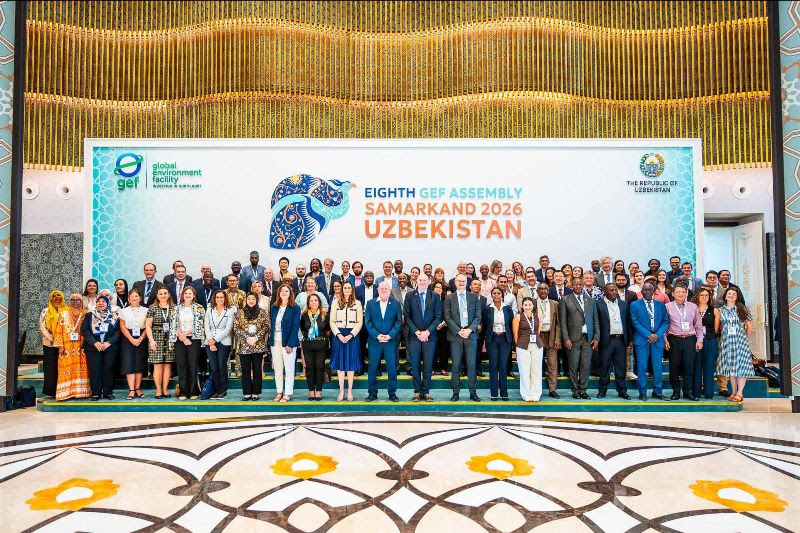
The 71st Council meetings took place ahead of the Eighth GEF Assembly, which brings together 1,900 registered participants, including policymakers and civil society, and will commence on June 4 in Samarkand.
About The Author


SUBSCRIBE TO OUR NEWSLETTER