Persistent Scientific Divides Risk Leaving Developing Nations Behind, New UNESCO Report Warns

PARIS – As world leaders, scientists, and ministers gather for the 2026 Global Conference of the International Decade of Sciences for Sustainable Development (IDSSD), a new report from UNESCO has issued a stark warning: persistent scientific divides continue to threaten to leave developing nations behind, despite significant global mobilization.
The report, released to coincide with the conference opening in Paris on July 15, 2026, assesses the progress made during the first two years of the International Decade of Sciences. While the scientific community has demonstrated an unprecedented response—mobilizing USD 50 million in confirmed funding and supporting projects across all 17 Sustainable Development Goals—the data reveals a sharp and concerning imbalance.
A Growing Disparity
Despite representing 17.5% of the world’s population, Africa accounts for less than 10% of the Decade’s initiatives. Furthermore, the report highlights that the issue is not purely financial. Among the participating initiatives, 40% cited coordination as their primary barrier, suggesting that structural and governance gaps are as critical to address as funding shortages.
“The world is not lacking scientific knowledge—what we need now are stronger systems to put that knowledge to work for people and the planet,” said Khaled El-Enany, Director-General of UNESCO. “Governments must now turn this momentum into policies, budgets, and measurable impact.”
Five Pillars for Reform
To realign scientific efforts with the Sustainable Development Goals (SDGs), the report outlines five structural reforms:
- Reforming Research Culture: Moving beyond the “publish or perish” model.
- Equitable Infrastructure: Expanding access to scientific resources so all countries can participate.
- Connecting Policy and Science: Establishing direct bridges between scientists and decision-makers.
- Restoring Trust: Rebuilding public faith in science through integrity and inclusion.
- Responsible Governance: Establishing frameworks for new technologies, such as AI and quantum science, before they outpace regulatory capacity.
Open Science in Focus
The report also examined the adoption of UNESCO’s 2021 Recommendation on Open Science. While progress has been made—60% of open science policies adopted over the last five years reference the recommendation—implementation lags behind. Although 79% of governments report having an open science policy framework, only 41% have concrete implementation plans, and a mere 33% have mechanisms in place to monitor the accessibility of scientific research.
Looking Ahead
Under the theme “Science in Action: Charting a Sustainable and Equitable Future for All,” the Global Conference will focus on bridging the divides between the North and South, addressing gender disparities in science, and ensuring research remains responsive to societal needs.
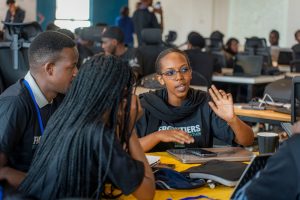
To highlight the future of scientific discovery, the conference features “Next Generations,” a photo exhibition by UNESCO and the AXA Foundation for Human Progress, profiling young researchers who are already shaping the global scientific landscape.
About The Author


SUBSCRIBE TO OUR NEWSLETTER