Meta-Africanism and the End of Bureaucratic Inertia: Insights from the Kigali Mindset Reset Forum
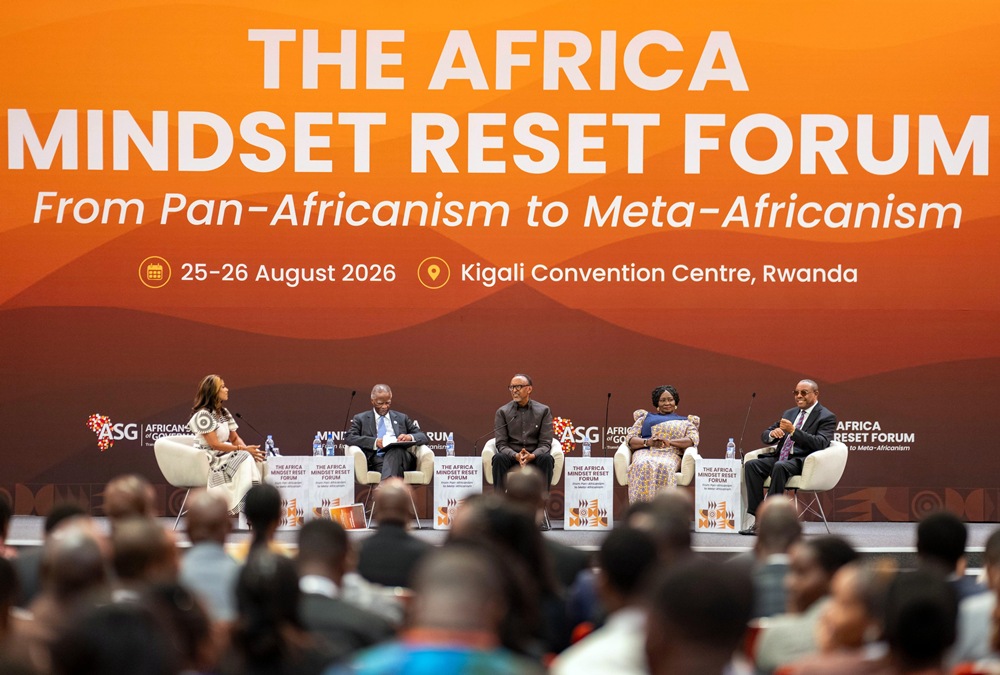
The Kigali Convention Center, a structure that stands as a glass-and-steel rebuke to the narrative of African incapacity, hosted a gathering of profound strategic gravity. With 2,500 participants on-site and thousands more connected via digital watch parties from Harare to Rabat, the inaugural Africa Mindset Reset Forum is no mere “talk shop.”
It is a high-stakes clinical intervention into the continental psyche. This was the launchpad for Meta-Africanism, a concept introduced by Francis Gatare, President of the African School of Governance. If traditional Pan-Africanism was the era of solidarity against the external—colonialism and apartheid—Meta-Africanism is the era of construction.
It is the shift from the poetry of resistance to the prose of developmental architecture. While Pan-Africanism gave us a flag, Meta-Africanism seeks to build the house. It is the necessary evolution from a shared consciousness of struggle to a disciplined agency of execution, moving the continent from “solidarity as a shield” to “collaboration as a competitive engine.”
The Evolution of African Solidarity
| Pan-African Foundations | Meta-African Imperatives |
| Solidarity: Unified resistance to external oppression. | Construction: Building the cognitive and developmental architecture for growth. |
| Liberation: Freedom from colonial and apartheid rule. | Collective Agency: Responsibility for self-directed, internal transformation. |
| Dignity: Reclaiming the African voice and identity. | Disciplined Execution: Translating aspirations into measurable, institutional results. |
This ideological pivot finds its most aggressive practitioner in President Paul Kagame, whose governance in Rwanda is effectively a living laboratory for this mindset reset.
President Paul Kagame: Confronting the “Execution Gap” and the Trap of Subtraction Neglect
President Paul Kagame provided a raw, candid assessment that stripped away the usual diplomatic veneer. His central thesis was the “execution gap”—the staggering distance between Africa’s abundant resources and its actualized development. Kagame’s governance is, in many ways, an exercise in applied trauma, forged in the crucible of his experience as a refugee at age four. This history has produced a leadership framework that rejects victimhood in favor of conscious, purposeful choices. He argued that the “Africa we want” remains a slogan because of a fundamental failure in behavior: a systemic addiction to “admiring others” rather than building the internal capacity to admire and collaborate with one another.

Kagame’s sharpest critique targeted what he termed “subtraction neglect.” In the logic of the African bureaucrat, progress is often equated solely with addition—adding more committees, more layers of approval, and more voluminous reports. This proliferation of bureaucratic bulk is not a sign of productivity; it is a sophisticated form of paralysis. By treating the process as the product, leaders often feel they are moving when they are merely running in circles. Real-world progress requires the boldness to “subtract”—to strip away the procedural barnacles that suffocate the ability to act. For Kagame, the shift from adulation to agency is non-negotiable:
- The Rejection of Victimhood: Moving from a “victim mentality” to a “fighter-victor” mindset that refuses to resign to fate.
- The Priority of Purpose: Identifying a singular life purpose and choosing a course of action regardless of the personal cost or historical weight.
- The Cultivation of Internal Value: Ceasing the reflexive adulation of external models and instead building systems where Africans admire and invest in each other’s capabilities.
- Strategic Engagement: Being ruthlessly selective in picking fights—ensuring they are just, necessary, and backed by the preparation required to win.
This internal mental shift is the only viable path to reclaiming African history from those who have written it for us.
VP Jane Naana Opoku-Agyemang: Reclaiming the Narrative through Educational Sovereignty
Vice President Jane Naana Opoku-Agyemang of Ghana argued that reclaiming African history is not an academic luxury; it is a prerequisite for economic agency. Her critique focused on “Educational Sovereignty,” positing that the current systems often facilitate a “moving away from ourselves.” When education distances children from their roots—their languages, their nutrition, and their heritage—it creates a systemic lack of confidence. This psychological displacement makes African leaders wait for external experts to validate or solve problems that locals are naturally positioned to address. For instance, while African crops were historically dismissed as “orphaned,” they are now globally studied as medicine; the tragedy is that Africans often only recognize their value once they are validated by the West.
To counter this, she called for a radical Domestic Mobilization to shatter the dependency mindset:
- Financial Autonomy: Terminating the practice of waiting for external donors to fund national budgets.
- Homegrown Intellectualism: Prioritizing research and curricula grounded in African realities rather than merely extending the footnotes of external research.
- Agent-Based Education: Re-orienting schools to produce “agents of change” who possess the localized confidence to innovate within their own borders.
Physical infrastructure is hollow if it is not born of a mind that is truly self-reliant.
Hailemariam Desalegn: The GERD Project as the Blueprint for Continental Agency
Former Ethiopian Prime Minister Hailemariam Desalegn offered Ethiopia’s transformation as the ultimate proof-of-concept for this agency. Once the “poster child of famine,” Ethiopia has repositioned itself as a regional energy giant through deliberate strategic defiance. This was achieved via three high-stakes moves:
- Massive Human Capital Mobilization: The deployment of 80,000 agricultural extension workers to revolutionize rural productivity.
- Strategic Defiance of Orthodoxies: The explicit rejection of IMF and World Bank prescriptions in favor of a developmental political economy.
- Domestic Capital Aggregation: Achieving a national savings-to-GDP ratio of 42%, a feat comparable to China’s most explosive growth years.
The Grand Ethiopian Renaissance Dam (GERD) serves as the “So What?” of this era. When international financiers refused to fund the project for political reasons, Ethiopia turned inward. By mobilizing domestic savings—from city cranes to “herd boys buying bonds”—the project bypassed Western finance. This shifted the collective mindset from scarcity to abundance. The 2016 El Niño drought provided the “Historic Triumph”: despite a devastating climate event, Ethiopia refused a single grain of external food aid, financing its own relief from domestic coffers. It was a formal declaration of independence from its own history of dependency.
Thabo Mbeki: Breaking Diplomatic Politeness and the $4 Trillion Capital Paradox
Former South African President Thabo Mbeki challenged the continent to embrace ethical leadership and “combatant” status against neo-colonialism. His most provocative point was the need to end “Diplomatic Politeness.” He argued that mutual accountability must now override the old shield of “absolute sovereignty.” In a modern, interdependent Africa, the failures of one nation are the contagion of the next; the continental “team” is only as strong as its weakest link. Accountability is not an infringement on sovereignty; it is a collective survival mechanism.
Mbeki, quoting Dr. Sidi Oulta, President of the African Development Bank, highlighted a startling economic paradox:
“Domestic financial resources have expanded significantly within banks, pension funds, and insurance pools… exceeding $4 trillion. Yet this growing capital base has not translated into the level of industrialization required… Africa’s binding constraint has shifted from capital availability to capital allocation.”
This paradox is the defining geopolitical challenge of our time. While Africa holds $4 trillion in domestic assets, it faces a $2.48 trillion infrastructure gap. Currently, the continent continues to export raw capital (savings) and raw materials while importing finished goods and external debt. With the external financing environment becoming increasingly “less reliable” and bilateral lending slowing, Mbeki emphasized that “Capital Alignment” is no longer a choice—it is a strategy for existential preservation. Africa must organize its own capital at scale to double its GDP by 2040.
Conclusion: The Long-Distance Commitment of a New Generation
The Day 1 Kigali Mindset Reset Forum concluded with a clear charge: transformation is a marathon, not a sprint. This shift from the solidarity of the past to the meta-construction of the future requires a level of discipline that spans generations. Thabo Mbeki’s “Marathon” charge to the youth—who made up 80% of the forum—was a call for endurance. He urged them to “stay in the struggle” for a lifetime, noting that the commitments made in youth must be run to the finish line if the “Africa we want” is to emerge.
Complementing this with Kagame’s military-inspired wisdom, the forum reminded the next generation to be “selective in picking fights.” True leadership is the ability to conserve energy for just causes and ensure that when a fight is chosen, it is executed with the preparation necessary for total victory. The Africa Mindset Reset journey is now an unstoppable movement. By replacing the dependency of the past with a mindset of agency and domestic mobilization, the continent is moving from being the recipient of global decisions to becoming the author of its own global agency.
About The Author


SUBSCRIBE TO OUR NEWSLETTER