Why Wadagni’s First Trip to Kigali Matters
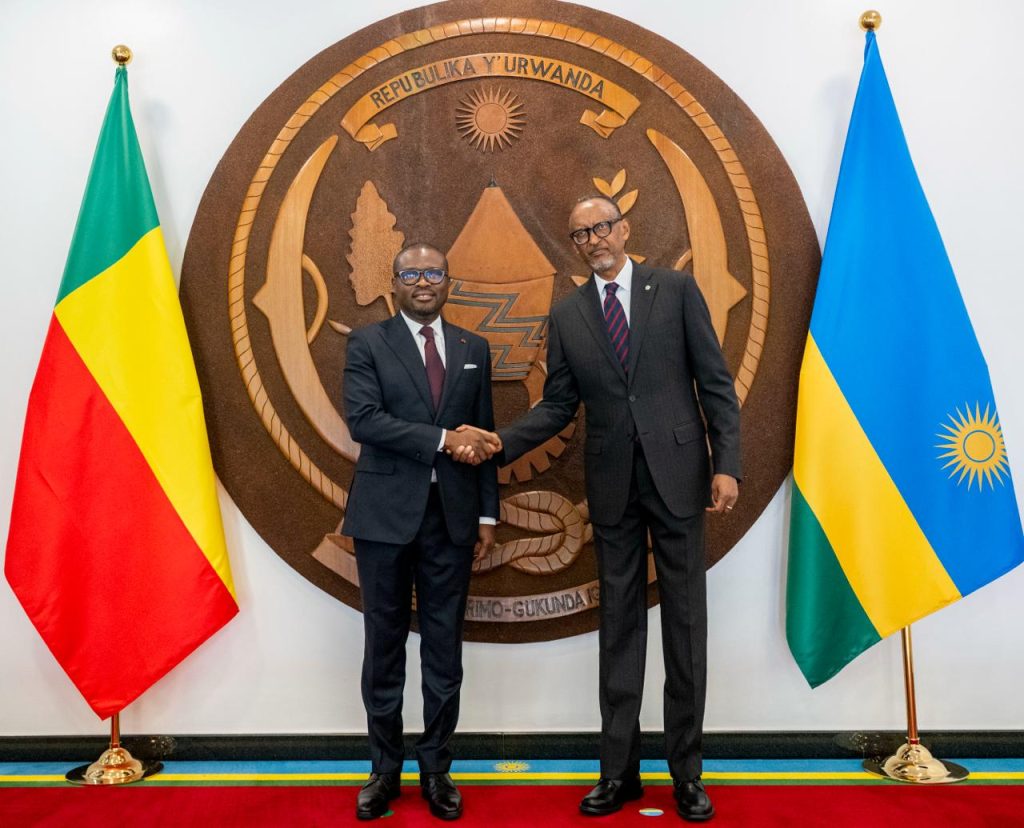
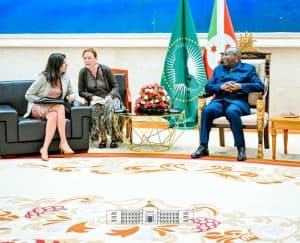
KIGALI — President Paul Kagame received Benin’s President Romuald Wadagni at Urugwiro Village on Wednesday, opening a two-day official visit that is less a courtesy call than a test of whether Cotonou’s closest extra-regional security partnership survives a change of president.
Wadagni took office on 24 May after winning the April election as the candidate of continuity. This is his first trip to Rwanda as head of state. The two leaders went straight into a private meeting. Beninese reports say the talks will focus on strategic relations, above all security and military cooperation against threats spreading from the Sahel.
That is why the visit matters.
The Rwanda–Benin relationship was built by Kagame and Patrice Talon, not by institutions. In April 2023, Kagame made a state visit to Cotonou and the two governments signed a package of instruments covering defence, digitalisation, agriculture, double taxation, local governance, tourism and investment. Kagame offered help “with no limit” on Benin’s northern borders. Talon spoke of training, coaching and, if needed, joint deployment.
Wadagni already knows that file. In September 2023 he sat in the same compound as Talon’s finance minister and special envoy. Rwanda treated the succession as serious enough to send Prime Minister Justin Nsengiyumva to Wadagni’s inauguration. Wednesday’s tête-à-tête is the first time the two presidents can decide, face to face, whether that architecture stays intact.
A new president can quietly downgrade a predecessor’s favourite partner. He can also keep the partnership and change its terms. Either choice would be news. The visit exists so that choice is made in Kigali, not by drift.
Merchandise trade between the two countries is still negligible. What Cotonou has wanted from Kigali is expertise against jihadist groups moving south from Burkina Faso and Niger. Talks in 2022 about a possible Rwandan troop deployment never produced a confirmed combat presence. Cooperation appears to have stayed in training and advice. That does not make the relationship symbolic. Benin’s north remains under pressure, and a failed coup attempt in December 2025 showed how quickly security failures become political ones.
Wadagni’s first months have been spent talking to neighbours: Nigeria, then Niger and Burkina Faso, then other coastal states. Those visits are about borders, trade corridors and the rupture between ECOWAS and the Alliance of Sahel States. Rwanda is a different kind of interlocutor. It is not a West African neighbour. It is a government that has already shown Benin a model of African military assistance outside former colonial channels.
If Wadagni still wants that option, this is the week to say so. If he prefers to lean only on ECOWAS, Western partners or his own expanded northern deployment, Kigali will hear that too.
The 2023 agreements promised more than security. So did a May memorandum between Benin’s investment agency and the Rwanda Development Board, signed in Kigali on the margins of the Africa CEO Forum. Digital government, urban planning, agriculture and aviation have been discussed for years. Direct air links and a once-floated airline partnership have not become a routine commercial fact.
Wadagni is a former finance minister. He is more likely than most new presidents to judge the relationship by whether those papers produce investment, skills transfer or logistics, not only communiqués. That is a second reason the visit matters: it is one of the few moments when both sides can be asked, in the same room, what has actually been implemented since 2023.
For Rwanda, hosting Wadagni so early in his term fits a wider pattern: Kigali as a security and governance partner for African states that want options beyond traditional Western patrons. For Benin, being seen in Urugwiro after outreach to Niamey and Ouagadougou is a way of saying Cotonou can talk to juntas in the Sahel and still keep a partnership with Kagame.
Neither country maintains a resident embassy in the other. Rwanda’s envoy sits in Accra. Benin covers Rwanda from Addis Ababa. High-level visits therefore do work that missions cannot. They reset political attention. They also expose gaps.
The meeting in Kigali will not remake West Africa. It will show whether a partnership sold as South–South strategy was personal to Talon, or durable enough to outlast him. That is the only question that makes a two-day trip to Kigali worth the journey.
About The Author


SUBSCRIBE TO OUR NEWSLETTER