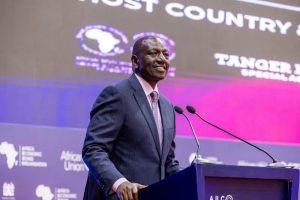
Ms. Kaori Yasuda, Country Representative for IUCN
, emphasized IUCN's unwavering commitment to supporting communities and districts in the creation of resilient and sustainable cities
By Ange de la Victoire DUSABEMUNGU
As part of the Africa Smart Cities Investment Summit (ASCIS2023) which took place in Kigali, on Thursday, September 7, 2023, the IUCN Rwanda convened experts to discuss nature-based solutions in African cities during an interactive session titled: “From Promises to Impact: Putting Climate Policies and Plans into Practice in African Cities.”
According to experts, Africa is experiencing a rapid and significant growth of its cities, with a large influx of people migrating from rural to urban areas in search of employment and improved living conditions.
Unfortunately, many of these migrants are classified as low-income or impoverished individuals who are forced to live in slums, making them highly vulnerable to climate-related risks such as flooding, landslides, and heatwaves.
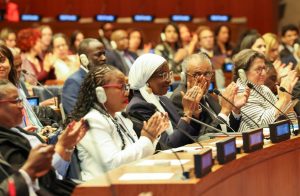
Minister of State of the Environment Dr. Claudine Uwera during the Africa Smart Cities Investment Summit
“While the rapid urbanization of African cities is threatened by climate impacts, it is crucial that we drive sustainable economic development and growth, offering opportunities for jobs creation, education, businesses, and innovation,” stated the Minister of State of the Environment Dr. Claudine Uwera during the Africa Smart Cities Investment Summit.
In her keynote address Dr. Uwera emphasized the importance of putting climate policies and plans into practice in African cities. With Africa expected to double its number of major cities by 2050, the continent’s contribution to global emissions is set to increase significantly. The Minister stressed the need for bold action to ensure that African cities do not accelerate climate change, but instead contribute to halting it.
Dr. Claudine Uwera during the Africa Smart Cities Investment Summit
“We must be part of the solution and neither the victims nor the problem,” stated the Minister. She highlighted the importance of smart urban planning and ambitious climate action plans in achieving the common goal of staying within the1.5 degrees’ Celsius target of the Paris agreement. These plans will focus on practical adaptation and mitigation actions in sectors such as water, spatial planning, energy, industry, building, transport, and waste management.
Her address also focused on Rwanda’s commitment to climate action and the need for tangible actions to create a sustainable future.
The Minister highlighted Rwanda’s involvement in key partnerships, including the Climate Action Planning Programme (CAP) funded by the Germany Federal Ministry of Environment, Nature Conservation and Nuclear Safety and embedded in the C40, a global network of mayors united in action against the climate crisis.
This partnership showcases Rwanda’s dedication to contributing to climate ambition by improving policies and increasing investments in renewable energies, green buildings, and e-mobility.
Speaking on Nature-based solutions, the Minister said “One notable example of Rwanda’s commitment to nature-based solutions is the creation of Nyandungu Ecopark.”
She said that “This park serves as a way to restore degraded ecosystems while establishing a green space in an urban environment.”
“Additionally, the Green City Kigali initiative, led by the Government of Rwanda is another example of Nature-based Solution in the City of Kigali fostering green urbanisation and creating a sustainable and inclusive neighborhood.” She added.
“If we are to attain prosperity, greening our cities is a must for a sustainable future hence our dignified living! It is time to evolve from good policies to tangible actions, making a difference to our people. “She said.
Also Ms. Kaori Yasuda, the IUCN Rwanda Country Representative, emphasized the need for cities and regions to build resilience in response to climate change and other societal challenges.
Yasuda highlighted the commitment of IUCN to collaborate with cities and national governments, such as districts in Rwanda, specifically Rubavu, to create a resilient and sustainable future. The organization aims to achieve this by deploying nature-based solutions and adopting a community participatory approach.
During her intervention, Ms. Kaori explained that IUCN focuses on integrating nature into urban and regional policies, ensuring that nature plays a vital role in sustainable cities.
“By scaling up the implementation of nature-based solutions, cities and urbanized regions can enhance their capacity to adapt to climate change, improve health conditions, contribute to restoration efforts, and promote economic development.” She said.
IUCN developed the first ever global standard for nature-based solutions
Ms. Yasuda mentioned that IUCN has developed the first ever global standard for nature-based solutions to support the design, implementation, and evaluation of NbS projects.
To demonstrate how nature-based solutions work on the ground in Rwanda, Yasuda referred to a recent flooding situation that occurred in Rubavu district of the western province in May 2020.
She said that “The flooding was caused by water coming from degraded lands in hilly and mountainous landscapes upstream, resulting in loss of lives.”
“In response to this recurring problem, IUCN implemented nature-based solutions to benefit the local communities.” She said.
Ms. Yasuda discussed the successful implementation of integrated water resource management projects in the Sebeya catchment area, covering four districts including Rubavu in the western province of Rwanda.
Sebeya Project as a Nature-based Solution
Funded by the Dutch Embassy in Rwanda from May 2019 to June2023, the project aimed to enhance catchment management and increase community and landscape resilience against the impacts of climate change.
“Led by the Rwanda Water Resources Board with technical assistance from IUCN, the initiative emphasized the transformation of developing ecosystems into climate and resilient landscapes while providing livelihood opportunities through forest and landscape restoration.” She explained,
“The Sebeya project showcases how nature-based solutions can transform developing ecosystems into climate and resilient landscapes with livelihood opportunities. It is a clear example of the benefits that can be seen in both the health of people and nature.” She said.
“The key to the success of this project lies in the participatory development of village land-based plans by the local community. Instead of imposing solutions from above, we empowered the local communities through a bottom-up approach. This ensured that the project was tailored to their needs and priorities.” She added.
Ms. Kaori also noted that “By combining both green and grey infrastructure, the Sebeya project effectively addresses societal challenges such as disastrous reductions and delivers on sustainable development goals like water and food security.”
“One example of the grey infrastructure implemented in this project is the lateral dike, which helps to control and redirect floodwaters. On the other hand, the flood retention area acts as a green infrastructure, absorbing excess water and reducing peak floods before they reach areas with human settlements and economic activities.”
What Next after Recent flooding in the Western Rwanda
In May 2023, the western part of Rwanda experienced a devastating natural disaster in the form of a massive flood. Many lives were lost, highlighting the urgent need for nature-based solutions to mitigate the impact of such disasters. Ms. Kaori Yasuda, emphasized the importance of scaling up these solutions to protect the local communities.
Yasuda stated, “Since this Sebeya project covered only30% of the entire Sebeya catchment, we think that more investment is needed in nature-based solutions as an integrated approach to the western part of Rwanda. With this said, we are planning to scale up the Sebeya project to other parts of Sebeya catchment and other catchments and basins in East Africa.” This ambitious plan aims to prevent similar tragedies in the future.
IUCN continues to support various Nbs in Rwanda
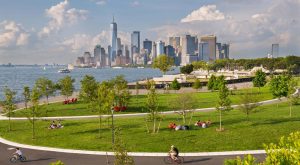
The International Union for Conservation of Nature (IUCN) is actively supporting various nature-based solutions in Rwanda, including urban and roadside tree planting, expanding urban green spaces, and promoting urban agriculture.
One of the initiatives that IUCN is currently involved in is the development of guidelines for the implementation of roadside and urban forestry in partnership with the Rwanda Forestry Authority and Ministry of Environment. This project aims to benefit biodiversity, habitat restoration, and ecosystem services in Rwanda. According to Yasuda, “The tree planting along roadsides and in urban areas has many benefits, such as air purification and dust collection, control of flooding and erosion, and providing habitats for important pollinators.”
Another key initiative being implemented is the promotion and management of urban green spaces to enhance the quality of urban life and promote sustainability.
Yasuda explains, “Urban green spaces play a crucial role in enhancing the quality of urban life and promoting sustainability. In this regard, IUCN is working with all four national parks in Rwanda to help Rwanda Development Board and other partners effectively manage and govern these protected areas using the conservation tool called IUCN Green List of Protected and Conserved Areas.” The Government of Rwanda has shown support for these efforts by backing the development of the Nyandungu Eco Park.
Ms. Kaori said that “This aligns with the goal of the IUCN Green List, which aims to promote effective conservation practices in urban settings and recognize the value of green spaces in enhancing our environment.
Forests are key to smart cities
Furthermore, Prof. Dr. Jean Ndwamungu from the University of Rwanda supports the idea of using nature-based solutions to make Rwandan cities smarter, more sustainable, and more resilient.
He emphasizes the importance of urban forestry in this process, as it can enhance the beauty of cities, reduce stormwater impact, and increase biodiversity by creating corridors for wildlife.
Dr Ndwamungu has participated in developing guidelines for urban tree planting, which prioritize the use of indigenous species that are well adapted to local conditions and offer multiple benefits.
He also advocates for investing in urban forestry and planting trees in different sites, including gardens, to improve soil fertility and increase forest products.
Additionally, he highlights the importance of restoring wetlands and increasing green spaces not only in Kigali but also in secondary cities across Rwanda.
Top Africa News.com is a Private shareholder Digital News Website managed by AFRICA NEWS DIGEST Ltd, a Domestic Company registered in Rwanda Development Board. Available on www.topafricanews.com, this website publishes stories from across Africa focusing on Environment, Natural resources, Livestock and Agriculture, Tourism and conservation, Youth, Sports and Culture, Peace Building, Health, Infrastructure and ICT, Security, Education, Business and Banking.
ID used to identify users for 24 hours after last activity
24 hours
_gat
Used to monitor number of Google Analytics server requests when using Google Tag Manager
1 minute
__utmv
Contains custom information set by the web developer via the _setCustomVar method in Google Analytics. This cookie is updated every time new data is sent to the Google Analytics server.
2 years after last activity
__utmx
Used to determine whether a user is included in an A / B or Multivariate test.
18 months
_ga
ID used to identify users
2 years
_gali
Used by Google Analytics to determine which links on a page are being clicked
30 seconds
_ga_
ID used to identify users
2 years
_gac_
Contains information related to marketing campaigns of the user. These are shared with Google AdWords / Google Ads when the Google Ads and Google Analytics accounts are linked together.
90 days
__utma
ID used to identify users and sessions
2 years after last activity
__utmt
Used to monitor number of Google Analytics server requests
10 minutes
__utmb
Used to distinguish new sessions and visits. This cookie is set when the GA.js javascript library is loaded and there is no existing __utmb cookie. The cookie is updated every time data is sent to the Google Analytics server.
30 minutes after last activity
__utmc
Used only with old Urchin versions of Google Analytics and not with GA.js. Was used to distinguish between new sessions and visits at the end of a session.
End of session (browser)
__utmz
Contains information about the traffic source or campaign that directed user to the website. The cookie is set when the GA.js javascript is loaded and updated when data is sent to the Google Anaytics server
6 months after last activity
Marketing cookies are used to follow visitors to websites. The intention is to show ads that are relevant and engaging to the individual user.
A video-sharing platform for users to upload, view, and share videos across various genres and topics.
Registers a unique ID on mobile devices to enable tracking based on geographical GPS location.
1 day
VISITOR_INFO1_LIVE
Tries to estimate the users' bandwidth on pages with integrated YouTube videos. Also used for marketing
179 days
PREF
This cookie stores your preferences and other information, in particular preferred language, how many search results you wish to be shown on your page, and whether or not you wish to have Google’s SafeSearch filter turned on.
10 years from set/ update
YSC
Registers a unique ID to keep statistics of what videos from YouTube the user has seen.
Session
DEVICE_INFO
Used to detect if the visitor has accepted the marketing category in the cookie banner. This cookie is necessary for GDPR-compliance of the website.
179 days
LOGIN_INFO
This cookie is used to play YouTube videos embedded on the website.
2 years
VISITOR_PRIVACY_METADATA
Youtube visitor privacy metadata cookie
180 days
You can find more information in our Cookie Policy and .