Global Tourism Hits Record Highs in 2025, but Uncertainties Loom for the Future

In Rwanda, former poachers now protect mountain gorillas through tourism-driven opportunities, Iby’Iwacu Cultural Village.
International tourist arrivals across OECD countries surged by an estimated 3.4% in 2025, reaching a record-breaking 847 million. This milestone builds upon a strong growth trajectory of 8.1% in 2024, signaling a robust recovery for the sector.
Despite the growth, a new report, OECD Tourism Trends and Policies 2026, highlights significant challenges that could reshape the industry. Geopolitical tensions—particularly the conflict in the Middle East—alongside shifting traveler behaviors and the impact of extreme weather, are creating an unpredictable landscape. These factors have disrupted global travel flows and increased costs, leading to dampened traveler confidence.
OECD Secretary-General Mathias Cormann emphasized the need for a collaborative approach to sustain momentum. “Governments and businesses need to work together to sustain this growth and build resilience,” said Cormann. He urged stakeholders to learn from recent crises to strengthen preparedness and ensure the sector continues to generate economic benefits like jobs and tax revenues.
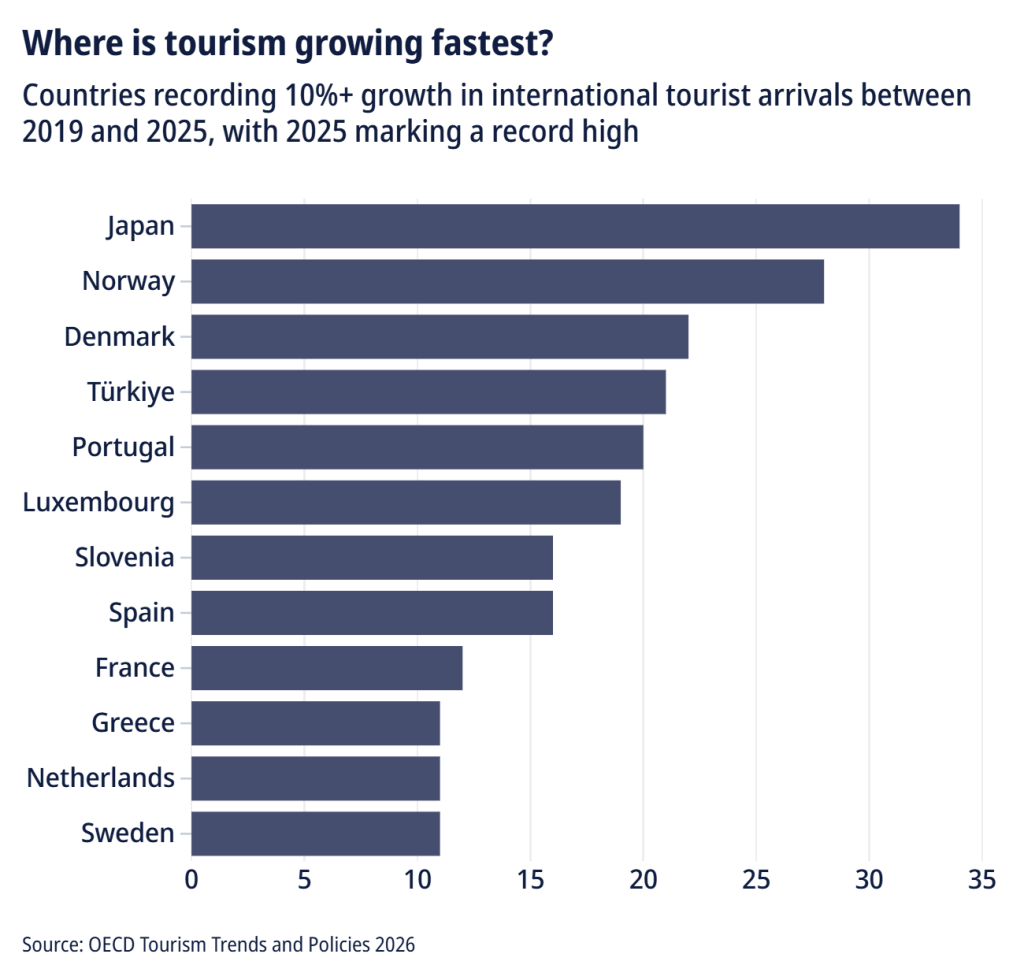
Uneven Recovery Across RegionsThe performance of the tourism sector has been inconsistent across different nations:
- Top Performers: Four countries saw double-digit growth in 2025, reaching record levels of inbound arrivals: Finland (up 16.5%), Japan (up 15.8%), Korea (up 15.7%), and Norway (up 12.5%).
- Struggling Markets: In contrast, several nations have yet to recover to pre-pandemic arrival numbers, including Canada (down 0.6%), Germany (down 0.8%), Ireland (down 2.8%), and the United States (down 5.5%).
- Impacted Regions: Countries in the Middle East, along with destinations heavily reliant on the Gulf for air connectivity, have been hit hardest by regional conflicts. Israel, for instance, remains 70.8% below pre-pandemic levels.
As the sector looks to 2027 and beyond, travelers are increasingly prioritizing safety, affordability, and convenience, often opting for familiar destinations or shorter, lower-cost trips. The OECD report advises that destinations must anticipate these evolving risks and adapt their strategies to maintain growth in an increasingly uncertain global environment
About The Author


SUBSCRIBE TO OUR NEWSLETTER