Soil Degradation Deepens Worldwide as Sustainable Practices Fall Behind
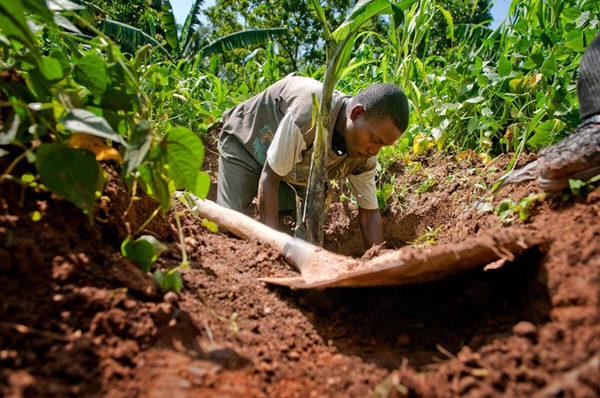
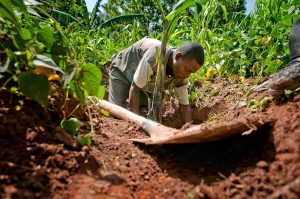
Soil degradation is worsening across many parts of the world, while the adoption of proven practices to protect and restore soils remains far below the level needed to safeguard food production, according to a new global assessment by the Food and Agriculture Organization of the United Nations (FAO).
The findings are contained in the Status of the World’s Soil Resources 2026, launched alongside new guidance developed by FAO and the United Nations Convention to Combat Desertification (UNCCD). The publications were presented at the 17th session of the Conference of the Parties to the UNCCD (COP17).
The assessment draws on scientific literature published between 2015 and 2025 and expertise from 75 countries. It updates FAO’s first global assessment of soil resources, published in 2015 through the Global Soil Partnership.
According to the report, more than half of the regional and subregional assessments reviewed show low or very low adoption of sustainable soil management practices.
The situation has also deteriorated in recent years. About 58 percent of assessments report a worsening trend since 2015, while only around 10 percent indicate improvement.
The findings highlight a growing gap between what is known about protecting soils and what is being implemented on the ground.
“We have much better evidence today about the pressures facing the world’s soils, and about the practices that can protect and restore them,” said FAO Deputy Director-General Beth Bechdol.
“But this report makes clear that proven solutions are still not being adopted at the pace and scale required,” she added, calling for greater knowledge, capacity and incentives to help farmers and other land users put sustainable practices into action.
Soil erosion among the biggest threats
Soils play a central role in global food systems. FAO says they underpin food security and are responsible for producing more than 95 percent of the food people consume.
Beyond agriculture, healthy soils help store and filter water, regulate the climate, support biodiversity and sustain livelihoods.
But growing pressures are placing these functions at risk.
Since 2015, the global population has increased by about 800 million people, while the harvested area of major crops has expanded by approximately 80 million hectares.
The report identifies urbanization, unsustainable agricultural practices, industrial activities, conflicts and pollution among the pressures contributing to land degradation and declining soil functions.
Soil erosion stands out as the most severe and interconnected threat identified in the assessment.
Across the seven regions examined, 81 percent of assessments rate erosion management as poor or very poor, while 65 percent report a worsening trend since 2015.
The report also highlights major differences in nutrient management between regions. Some agricultural areas are dealing with nutrient surpluses caused by excessive inputs, while others face nutrient depletion that limits agricultural productivity and threatens food security.
This, the assessment suggests, makes locally appropriate approaches essential rather than relying on a single solution for all farming systems.
Known solutions need to be scaled up
The assessment points to a range of practices that can help protect and restore degraded soils while maintaining or improving agricultural productivity.
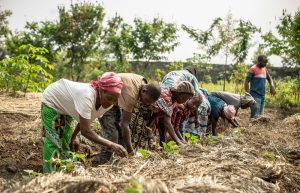
These include reduced tillage, integrated nutrient management, crop diversification, cover crops, organic amendments and agroforestry.
The challenge, however, is not simply identifying effective practices but ensuring they are adopted widely and consistently.
FAO and UNCCD’s new guidance therefore calls for coordinated action across governments, farmers, researchers and other stakeholders.
The report identifies five priorities for accelerating progress: stronger soil governance and legal frameworks; greater investment in education and capacity development; improved soil monitoring and data systems; stronger incentives for sustainable soil management; and more inclusive decision-making involving different sectors and stakeholders.
The assessment argues that soils should be treated as strategic assets rather than simply as a foundation for agricultural production.
About The Author


SUBSCRIBE TO OUR NEWSLETTER