From Subsistence to Market: How CDAT Is Transforming Rwanda’s Smallholder Agriculture
KIGALI, RWANDA — Across Rwanda’s farming communities, a shift is taking place in the way smallholder farmers produce, market and earn from agriculture.
Field assessments by the TOP AFRICA NEWS reporting team across several districts show how the Commercialization and De-Risking for Agricultural Transformation (CDAT) project is helping farmers move beyond subsistence production toward more productive and commercially oriented horticulture.
Implemented through the Rwanda Agriculture and Animal Resources Development Board (RAB/SPIU), CDAT combines improved seed distribution, technical training, marshland rehabilitation, organic fertilizer production and stronger market linkages.
The approach is beginning to produce measurable changes—not only in crop yields, but also in cooperative revenues, household assets and farmers’ ability to access more reliable markets.
Bugesera: When Chili Becomes a Commercial Enterprise
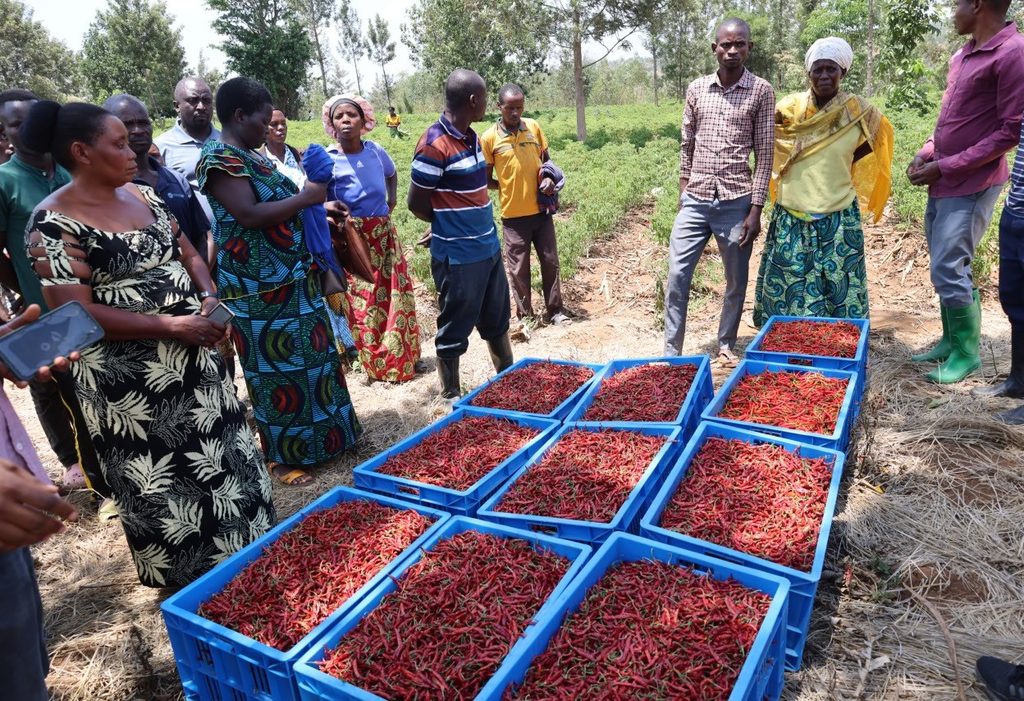
In Mareba Sector, Bugesera District, the experience of the IZMGM Cooperative illustrates how collective action can change the economics of farming.
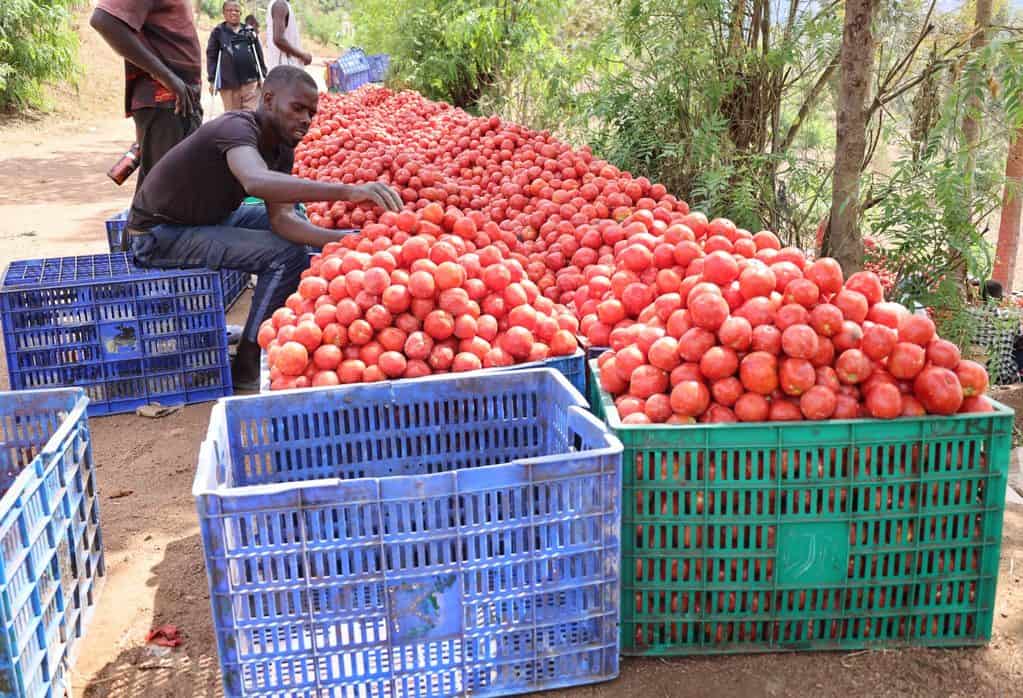
The cooperative has 470 members—282 women and 188 men—cultivating 210 hectares. Of this area, 40 hectares are devoted to vegetables, including 15 hectares of chili, five hectares of tomatoes and two hectares of French beans.
Before the CDAT intervention, farmers largely cultivated and marketed their produce individually. That limited their bargaining power and left them more exposed to unfavorable prices and post-harvest losses.
CDAT introduced a more coordinated approach, combining collective marketing with practical training and improved seed varieties.
The results have been significant.
Under the leadership of cooperative president NTABANGANYIMANA Beatha, seasonal cooperative income has risen from a previous maximum of about RWF 5 million to as much as RWF 32 million, as members increasingly harvest and market collectively.
For chili farmer Edouard Bamporiki, the transformation has also been visible at farm level.
A farmer from Bushenyi Cell, Bamporiki expanded his cultivated area from 20 ares to 1.2 hectares. With the improved Teja chili variety and modern agronomic practices, his production increased from about 4–4.5 tonnes per hectare to 11 tonnes per hectare.
Market access has also strengthened.
Through direct linkages with commercial buyers, including Spices Rwanda Company, the price received for fresh chili increased from approximately RWF 300–350 per kilogram to RWF 600 per kilogram.
The additional income has allowed Bamporiki to reinvest in his household and productive assets. He purchased a cow valued at approximately RWF 1 million, as well as pigs and goats. He also acquired property for RWF 6 million, which he is converting into a commercial rental building expected to be worth about RWF 15 million.
For farmers like Bamporiki, agriculture is increasingly becoming an enterprise rather than simply a means of subsistence.
Gisagara: Better Seeds, Healthier Soils and Higher Onion Yields
In Gisagara District, CDAT’s intervention in the Nyakanyeri scheme in Kigembe Sector has focused on several of the constraints that have historically limited production, including marshland challenges, poor-quality seeds and gaps in technical knowledge.
Across CDAT intervention areas, overall onion productivity has increased by 13.8 percent since 2022.
At the KORWAMUKI Cooperative, President Mukeshimana Xaverine has witnessed a sharp increase in production.
The cooperative’s onion productivity rose from 1.3 tonnes per hectare to six tonnes per hectare on its three hectares of production. Total harvest increased from four tonnes to 18 tonnes, while seasonal earnings climbed from approximately RWF 6 million to more than RWF 30 million.
The changes are not limited to cooperative-level production.
Farmer Mukazera Jeanine, from Akabacuzi village, has adopted compost production using farm waste rather than relying on costly transportation of livestock manure.
Cultivating 100 ares, her onion production increased from 200 kilograms to 900 kilograms.
Another farmer, Jean Baptiste Ndahimana of Agahabwa Cell, increased his onion harvest from 300 kilograms to an expected 500 kilograms.
For these farmers, higher agricultural income is also translating into household investments, including school fees for children and livestock purchases such as cattle, goats and pigs.
Ruhango: Certified Seeds Open the Door to Bigger Tomato Harvests
In the Kanyegenyege Marshland, which extends across Ruhango and Nyanza districts, tomato farmers have faced another fundamental challenge: the repeated use of saved, low-quality seeds.
CDAT has responded by supplying certified seeds, strengthening farmers’ knowledge of pest and crop management and establishing direct buyer pickup arrangements at production sites.
At ABIYUNZE-KINAZI Cooperative, which has 610 members—320 women, 290 men and 80 youth—, the expected impact is substantial.
According to cooperative president Bavakure Boniface, tomato yields are expected to increase from approximately 7–8 tonnes per hectare to 13–14 tonnes per hectare.
Project-level figures point to a broader productivity trend.
Chantal Muhoza, Horticulture Specialist at RAB/CDAT, reported that average tomato productivity in CDAT intervention zones increased from 14.9 tonnes per hectare in Season A of 2026 to 21.5 tonnes per hectare in Season B—a 44.3 percent increase, equivalent to an additional 6.6 tonnes per hectare.
For individual farmers, the impact is equally tangible.
Musabese Felecite, who cultivates 7.5 ares, increased her rice production from 300 kilograms to 500 kilograms. Meanwhile, her tomato income had already reached RWF 100,000 midway through the season, compared with approximately RWF 40,000 earned throughout the previous year, with crops still in the field.
The intervention is also affecting the market side of the agricultural value chain.
Produce trader Mukandayisabye Antoinette noted that the improved quality of tomatoes produced under the project has reduced spoilage during transportation, strengthening the competitiveness of locally produced tomatoes against imported varieties.
The Numbers Behind the Transformation
The experiences in Bugesera, Gisagara and Ruhango point to a common pattern: better inputs alone are not enough.
Productivity gains become more economically meaningful when improved seeds and agronomic knowledge are combined with organized farmers, functioning production systems and reliable markets.
| District | Main Crop | Cooperative/Scheme | Key Change |
|---|---|---|---|
| Bugesera | Chili | IZMGM Cooperative | Chili yields increased from 4–4.5 t/ha to 11 t/ha; seasonal cooperative income rose from RWF 5 million to RWF 32 million |
| Gisagara | Onion | KORWAMUKI Cooperative / Nyakanyeri Scheme | Cooperative yields increased from 1.3 t/ha to 6 t/ha; seasonal income rose from RWF 6 million to RWF 30 million+ |
| Ruhango | Tomato | ABIYUNZE-KINAZI Cooperative | Expected yields increased from 7–8 t/ha to 13–14 t/ha; project-area average rose from 14.9 t/ha to 21.5 t/ha |
Beyond Yields: Building Agricultural Businesses
The significance of CDAT’s intervention extends beyond the number of tonnes harvested.
In Bugesera, higher chili prices and collective marketing have strengthened cooperative revenues and enabled individual farmers to invest in livestock and property.
In Gisagara, improved onion production is helping households meet education expenses and build productive assets.
In Ruhango, improved seed quality and better market arrangements are helping farmers produce tomatoes that can compete more effectively in the marketplace.
Taken together, these examples suggest that commercialization is not simply about producing more—it is about connecting production to income, investment and opportunity.
A Model Built Around De-Risking
CDAT’s approach brings several elements of agricultural transformation together: improved inputs, farmer knowledge, rehabilitation of productive landscapes, soil fertility management and market connections.
That combination matters because smallholder farmers face risks at multiple points in the agricultural cycle. A farmer may have good land but poor seed, adequate production but limited market access, or a good harvest but insufficient post-harvest management.
By addressing several of these constraints simultaneously, the project is helping farmers move toward a more commercially oriented model.
Reaching Farmers Across Rwanda
The transformation is not confined to the three districts visited by the TOP AFRICA NEWS reporting team.
Across participating cooperatives in 15 districts, CDAT has distributed more than 4.5 tonnes of seed and established approximately 354 hectares of demonstration farms.
The emerging evidence points toward a model in which smallholder farmers can become more productive and commercially connected while strengthening their resilience to economic and climate-related pressures.
For Rwanda, where agriculture remains central to rural livelihoods, the stakes are significant.
The experience of farmers in Bugesera, Gisagara and Ruhango shows what can happen when improved technology, farmer organization, technical knowledge and markets begin working together.
The challenge ahead is to sustain these gains, expand them to more farmers and ensure that higher productivity continues to translate into lasting household income and rural economic opportunity.
Reporting by TOP AFRICA NEWS | Amplifying Development Impacts Across Africa.
About The Author


SUBSCRIBE TO OUR NEWSLETTER